Saudi Arabia's economic environment is promising and attractive for local and international investments
Written by: Ahmed Al-Shimi - Amlak - Special
The need to expedite the establishment of a supreme body to regulate the Saudi real estate sector
The growth of the real estate sector exceeds 20% this year if mortgage regulations are applied
The real estate sector is the most attractive for investments and feeds 100 economic activities
The Saudi economic environment is promising and attractive to local and international investments
Experts: Financial institutions must be structured to provide useful financing mechanisms
It is necessary to monitor the activity of real estate offices and speculation raises prices exaggeratedly
Higher body to regulate real estate eases the burden on institutions operating in the real estate sector
<Despite Saudi Arabia's vast oil reserves, accumulated financial surpluses and ambitious real estate development plans, housing is one of the most prominent issues plaguing the Kingdom, a large part of which is due to the lack of mechanisms and controls regulating the real estate market, most notably the government's slow implementation of mortgage regulations despite their approval more than a year ago, as well as the delay in establishing a supreme authority to regulate the real estate sector.
Building 160 thousand units
In addition to the lack of official databases on which to base plans for the real estate sector, while some data emphasize the need to build 160,000 housing units annually to meet the growing demand, other estimates indicate the need for 200,000 units annually, as this discrepancy leads to a lack of determination of the percentage of shortage in the real estate market.
Looking at the age groups, we find that the population aged (16-64 years) is constantly increasing, as their percentage in 2005 reached 63.5% of the total population, and in 2010 it was 66.6%, and is expected to reach 67.7% by 2015, which leads to a continued high demand for housing.
The housing issue in Saudi Arabia is clearly visible when comparing the homeownership rate compared to other emerging and advanced economies. In Saudi Arabia, the rate is 30%, while it is 98% in Singapore and 66% in the United States.
The high demand for housing, fueled by population growth and high expatriate labor rates, has kept growth expectations in the Saudi real estate sector high, and may exceed 20% this year, if the government implements mortgage regulations, which will shake up the real estate market and help banks offer financing tools that suit a large segment of citizens.
A supreme authority for the real estate sector
Real estate professionals are calling for the establishment of a supreme authority for the real estate sector - recommended by the Council of Saudi Chambers - to supervise the implementation of the general housing policy and encourage investment in this vital sector capable of creating investment and economic opportunities as the most active sector after the oil sector, in addition to its role as a window to promote the real estate sector in local and international markets.
The Supreme Real Estate Authority will reduce the burden on the various government institutions operating in the real estate market, such as the Ministry of Justice, Municipal and Rural Affairs, Commerce and Industry and the Saudi Monetary Agency, and will put an end to the confusion currently witnessed by the real estate sector, in addition to its role in mobilizing and directing huge investments in this vital sector properly, the same mechanisms followed by many countries that were suffering from a housing issue.
1.1 trillion riyals
Official estimates indicate that the volume of investments in the real estate sector reaches 1.1 trillion riyals, and contributes 55 billion riyals to the gross national product, as it is one of the most attractive sectors, and enjoys real investment opportunities, especially in the field of residential units, along with commercial offices and hotels.
Experts also call for the need to work on the structuring of financial institutions that play an effective role in providing mortgages and various financing mechanisms. Although the future prospects of the real estate sector are very bright, the veracity of these expectations depends on the extent to which the government regulates the real estate market and directs investments in low-cost housing units.
Although prices are subject to the mechanism of supply and demand, there are demands calling for the need to put a ceiling on land prices and rents, as some emphasize that a large percentage of the high prices are due to speculation and the activity of some illegal real estate offices that manipulate prices, calling on government agencies to monitor the activity and work of these offices to eliminate speculation that raises land prices in an exaggerated manner that is not commensurate with supply conditions, which abort attempts to bring about a recovery in the real estate market that greatly affects 100 other economic activities.
Attractive economic environment for investment
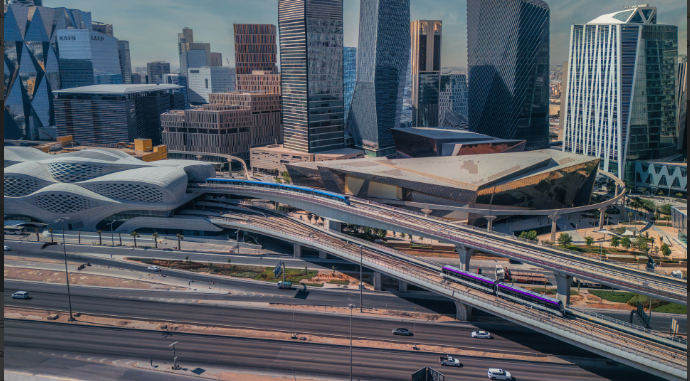
The newspaper praised the climate of political stability and security in the GCC countries in general and the Kingdom of Saudi Arabia in particular, stressing that the Saudi economic environment is promising and attractive to local and international investments, while at the same time praising the giant steps taken by the government in recent years, especially in real estate projects, with projects under construction in Jeddah alone, for example, estimated at 200 billion riyals.
The newspaper concludes its report by stressing that expediting the establishment of a higher authority or committee to regulate the real estate market is a vital necessity, in addition to expediting the implementation of mortgage regulations, as two basic conditions for unifying real estate policies and encouraging investments to increase the contribution of the real estate sector to GDP, and taking steps that will alleviate the housing issue, which is the most prominent economic and developmental issue facing the Kingdom at the present time.