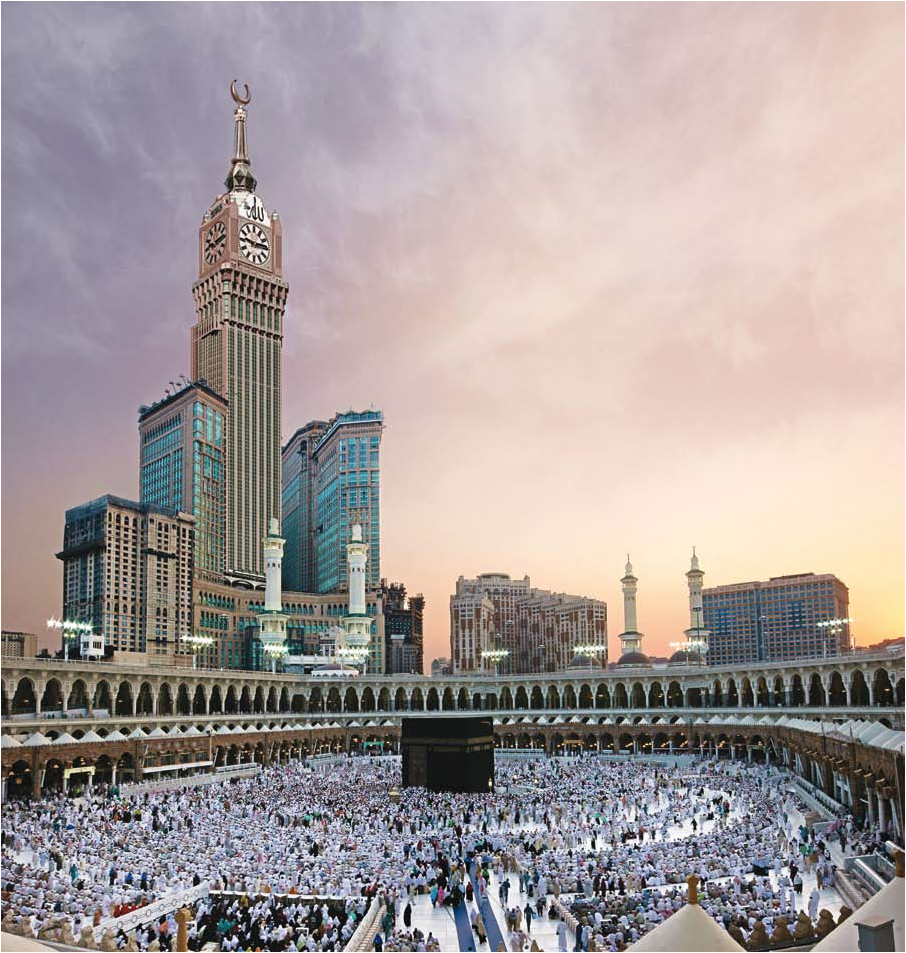

Rates in the hospitality and hotel sector in Mecca have surged significantly, generating the highest revenue to date, reaching $107—a 24.3% increase over last year— This is attributed to the rise in religious tourism before and during the current month of Ramadan, according to a 2017 report by Ernst & Young (EY) on the hospitality sector in the Middle East and North Africa region.
Decline in Riyadh’s hospitality market
Meanwhile, rates continued to decline in Riyadh’s hospitality market, which is experiencing widespread volatility in monthly performance, with revenue per available room falling from $130 in April 2016 to $106 in April 2017. This is attributed to a 10.9% decline in the average daily room rate in April 2017, along with a 5.8% drop in occupancy rates compared to the same period last year.
The recent report showed that the hospitality sector in the Middle East and North Africa region saw mixed results during April 2017, as total revenue per available room was affected by higher occupancy rates, while the average room rate declined at the same time.
Growth in Dubai’s Hospitality Sector
Youssef Wahba, Head of Real Estate Advisory Services for the Middle East and North Africa, explained that Dubai achieved growth across all key performance indicators, recording the highest revenue per available room at $273, an increase of 18.7% compared to the same period last year. The emirate also recorded the highest occupancy rate in April at 88%, and the highest average daily room rate of $310.”
Abu Dhabi Declines... Muscat Advances
Meanwhile, the hospitality market in Abu Dhabi recorded a 4.8% decline in revenue per available room in April 2017, which can be attributed to a decline in the average daily room rate from $133 in April 2016 to $120 in April 2017. However, occupancy rates rose by 4.5% in April 2017 compared to the same period last year.
In Muscat, the hospitality market saw a 7.7% increase in occupancy rates compared to the same period last year. This may be a result of the spring break and Easter holidays, as expatriates living in neighboring countries consider Muscat the ideal destination for a short vacation.
Jordan and Lebanon: Decline and Boom
Outside the GCC, the hospitality market in the Jordanian capital, Amman, saw a 5.3% decline in revenue per available room in April 2017 compared to the same period last year, However, Beirut benefited from the spring and Easter holidays, with occupancy rates rising by 13.2% to reach 68.8%, and the average room rate increasing by 14% to $148, Revenue per available room (RevPAR) jumped significantly by 40.9% to reach $102 compared to the same period in 2016.