
Despite the current major technological advances that affect all aspects of life, especially the economy, the latter remains strongly dependent on natural resources, primarily water. Since the dawn of history, people have settled near water sources, whether rivers, springs, oases or wells, in order to meet their basic needs, whether for agriculture or domestic uses (drinking, cooking, etc.).

About Rivers
The vitality of water to the economy has historically led to the emergence of what is known as ”water economics”, which means calculating its impact on growth rates and estimating the effects of its absence or scarcity on the economy, in all its agricultural, industrial or service activities.Water economics is the study of the impact of water on the economy. <The Global Risk Insight Group notes that even in the modern era, major corporations prefer to locate their headquarters in cities like Chicago over Michigan because of the availability or absence of water. 41% of the world's population is concentrated around rivers, and despite advances in infrastructure and delivery methods to cities, preferences continue to favor settling near water, even in high-tech developed nations.“
With the global population more than doubling in the last 50 years and renewable water resources declining in relative terms, it is vital to understand the nature of water consumption in different countries and its impact on the economy.
According to an FAO study, different industries consume 59% of water in developed countries, while there is no exact percentage of consumption in developing countries, but the proportion of water consumption for agricultural and domestic purposes exceeds industrial purposes in most countries.
According to the FAO study, water consumption for agricultural and domestic purposes exceeds industrial purposes in most countries. This is due to the abundance of water enjoyed by the majority of water countries, as most of them are classified as water-rich countries, which allows for increased use for industry (which is thriving in those countries), as well as the relatively efficient use of water in developed countries.
Water use is relatively efficient in developed countries.
Direct impact on growth
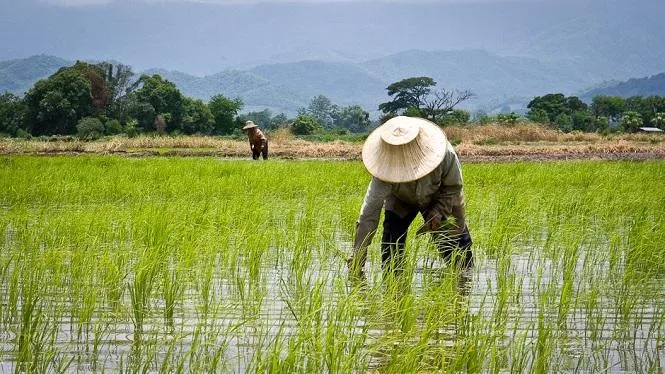
The proportion of water used in agriculture globally is estimated at 70% of fresh water (i.e. water that is not desalinated or reused), indicating the large proportion that developing countries consume in agriculture compared to developed ones.Direct impact on growth

According to a World Bank study, global warming and shrinking water availability could cost some economies up to 6% of GDP, due to the inability to provide water for agriculture or industry or even having to relocate factories or make infrastructure changes.
World Bank study suggests that global warming and shrinking water availability could cost some economies up to 6% of GDP. The Middle East and sub-Saharan Africa are at the forefront of countries at risk of losing significant proportions of their GDP by 2050 if they do not make drastic changes in the way water is used to impact agriculture, industry and public health.
Water shortages can cost some economies up to 6% in GDP. In sub-Saharan Africa, the World Bank estimates that these countries need to invest 3% of their GDP annually to improve irrigation, water use, dam construction, etc. in order to avoid a significant decline in the size of their economies.
However, investment in water and technology related to water storage and consumption in sub-Saharan countries does not exceed 0.3% of their GDP, signaling a potential escalation of their water scarcity crises and a downward spiral of economic decline and even humanitarian crises.
Sub-Saharan countries need to invest 3% of their GDP annually in order to improve irrigation and water utilization methods, build dams, etc.
A Growing Global Crisis
<In contrast, countries that have improved their water use by reducing losses by 25% have improved their GDP by 3-4% due to abundant water, such as in South Africa, which the FAO cites as an example. <The country introduced a new irrigation system and extensive programs to improve water use in households and industries, reducing irrigation water use from 80% in the early 2000s to 62% in 2016, without affecting agricultural yields, with public health and industry benefiting from the savings.
World Resources estimates that 37% of the world's countries are at "significant pressure" on their water resources, one-third are at "acceptable risk“, 30% are at ”water abundance“, and 20% are at risk of falling in ”water security“ as population increases. <Two-thirds of the world's population will be at risk of experiencing moderate to severe water shortages by 2025, especially if population growth rates and agricultural, industrial and household consumption remain unchanged. <In countries with ”high water stress“, 80% of water is used in agriculture to try to feed their populations, but this leaves industry and domestic use with only 20% of water resources, pointing to a growing crisis in those countries.
Singapore and water optimization
Singapore is one of the most water-starved countries in the world, with no lakes in the city-state and no rivers to rely on for irrigation or industrial uses.Singapore is one of the most water-starved countries in the world. Rainwater harvesting systems provide 20% of the country's water needs, 40% is imported from Malaysia, 30% is contributed by ”graywater“ (meaning reused water after purification), and 10% is contributed by seawater desalination.
Singapore is one of the most water-starved countries, with no lakes in the city-state and no reliable rivers for irrigation or industrial use. Water-abundant countries are confined to Europe and Canada, while some countries vary internally. In China, some areas are considered water-abundant, as is the case in the United States, but some areas of the two vast countries are water-scarce.
For example, China suffered a severe drought in 2006 that destroyed more than $300 million worth of crops and affected the resources of 95 million Chinese, prompting the Chinese government to approve a large compensation program for those affected by the drought.
For example, China suffered a severe drought in 2006 that destroyed more than $300 million worth of crops and affected the resources of 95 million Chinese.
Attempts to confront the crisis
<The FAO monitors countries” attempts to use water efficiently, using a combination of market mechanisms and the “welfare state,” raising water prices for heavy users while subsidizing water conservation.
In this context, the World Bank emphasizes the need to invest in water extraction, rainwater harvesting, water reuse and seawater desalination. In one of its reports on sustainable development, the United Nations points out the importance of achieving 50-60% of reused (gray) water in households and factories, allowing for significant savings in renewable water and improving public health and even economic activity.
In this context, the World Bank emphasizes the need to invest in water extraction, rainwater harvesting and seawater desalination technologies. This water can be used for multiple purposes such as cleaning, laundry, and sewage, leaving more space than clean water for drinking, cooking, and agriculture.
Gray water can be used for multiple purposes such as cleaning, laundry, and sewage. The World Bank warns that the continued impact of water shortages in many regions will lead to higher food prices, which could eventually lead to conflicts between countries due to lack of resources, making water a critical element not only for life, but for the economy and "world peace."
Water can be used for multiple purposes such as cleaning, washing clothes and in sanitation, leaving a larger area unserved by clean water for drinking, cooking and agriculture.