
Despite the significant technological advances currently affecting all aspects of life—particularly the economy—the latter remains heavily dependent on natural resources, foremost among them water.
Since the dawn of history, people have settled near water sources—whether rivers, springs, oases, or wells—to meet their basic needs, whether for agriculture or domestic use (such as drinking, cooking, and so on).

About Rivers
Throughout history, the vital role of water in the economy has led to the emergence of what is known as ”water economics” This refers to calculating their impact on growth rates and estimating the effects of their absence or scarcity on the economy, across all sectors—agricultural, industrial, and service-based.
The “Global Risk Insight” group notes that even in the modern era, major companies prefer to locate their headquarters in cities such as “Chicago” rather than others like “Michigan” due to the availability—or lack—of water.
Consequently, 41% of the world’s population is concentrated around rivers; despite advances in infrastructure and methods of delivering water to cities, people still prefer to settle in areas close to water, even in highly developed, technologically advanced countries.
With the world’s population having more than doubled over the past 50 years and renewable water resources having declined relatively, it has become vital to understand the nature of water consumption in various countries around the world and its impact on the economy.
According to a study by the FAO, various industries consume 59% of water in developed countries, while no precise figures are available for consumption in developing countries; however, water consumption for agricultural and domestic purposes exceeds that for industrial purposes in most of these countries.
This is due to two reasons. First, the abundance of water in most of these countries, as most are classified as water-rich countries, allowing for increased industrial use (which is thriving in those countries), as well as the relatively efficient use of water in developed countries.
A direct impact on growth
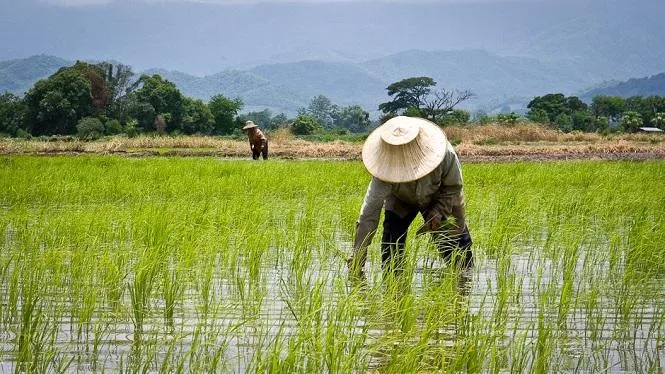
The proportion of water used in agriculture globally is estimated at approximately 70% of freshwater (i.e., water that is not desalinated or reused), indicating the large proportion consumed by developing countries in agriculture when compared to developed countries.

This may be what prompted UNESCO to issue a warning that producing one kilogram of rice requires 3 cubic meters of water, and therefore the organization urged countries facing water crises to avoid growing it and to limit its cultivation to countries that rely on rainwater and floodwaters.
A World Bank study indicates that global warming and the shrinking supply of available water could cost some economies up to 6% of their gross domestic product, due to an inability to provide water for agriculture or industry, or even the need to relocate factories or make changes to infrastructure.
Countries in the Middle East and sub-Saharan Africa are among those most at risk of losing significant portions of their GDP by 2050 if they do not make radical changes in their water use patterns to mitigate the impact of water scarcity on agriculture, industry, and public health.
In sub-Saharan Africa, World Bank estimates indicate that these countries need to invest 3% of their GDP annually to improve irrigation methods, water use, dam construction, and other measures in order to avoid a significant decline in the size of their economies.
Despite this, investment in water and related storage and consumption technologies in sub-Saharan countries does not exceed 0.3% of their GDP, indicating the likelihood that the water scarcity crises they face will escalate, plunging them into a spiral of economic decline and even humanitarian crises.
An Escalating Global Crisis
In contrast, countries that have worked to improve their water use by reducing losses by 25% have seen their GDP improve by 3–4% due to water abundance—as has happened in South Africa, which the FAO cites as an example.
The country adopted a new irrigation system and extensive programs to improve water use in households and industries, resulting in a reduction in water use for irrigation from 80% in the early 2000s to 62% in 2016, without affecting agricultural yields, while public health and industry benefited from the increased water availability.

Estimates from the World Resources Institute indicate that 37% of the world’s countries face "significant stress" on their water resources, while one-third fall into the "acceptable risk" and 30% have abundant water supplies, while 20% of the world’s countries remain at risk of declining "water security" rankings due to population growth.
In fact, two-thirds of the world’s population will be at risk of water scarcity by 2025—ranging from moderate to severe—especially if current rates of population growth and agricultural, industrial, and household consumption remain unchanged.
In countries facing “significant water stress,” the proportion of water used for agriculture rises to 80% in an effort to provide food for their populations, but this leaves only 20% of water resources for industry and domestic use, signaling an escalating crisis in those countries.
Singapore and Optimal Water Use
Singapore is one of the countries most severely affected by water scarcity, as there are no lakes in the city-state, nor are there any rivers that can be relied upon for irrigation or industrial use.
This is likely what has driven the small country to invest heavily in “water technology,” where rainwater harvesting systems contribute 20% of the country’s water needs, 40% is imported from Malaysia, while "graywater" (meaning water reused after purification) accounts for 30%, and seawater desalination accounts for 10%.
Countries with abundant water resources are limited to Europe and Canada, while conditions vary within some countries; In China, for example, there are some regions considered water-abundant, as is the case in the United States; however, certain regions within these two vast countries suffer from water shortages.
For example, China suffered a severe drought in 2006 that destroyed crops valued at more than $300 million, affecting the livelihoods of 95 million Chinese people and prompting the Chinese government at the time to approve a broad compensation program for those affected by the drought.
Attempts to Address the Crisis
The FAO monitors countries" efforts to use water efficiently through a combination of market mechanisms and "welfare state" approaches, raising water prices for heavy users while subsidizing those who use water sparingly.
In this context, the World Bank emphasizes the need to invest in water extraction technology, rainwater harvesting, water reuse, and seawater desalination in light of the continuously rising demand for water and the steady increase in the global population.
In one of its reports on sustainable development, the United Nations highlights the importance of making reclaimed water (graywater) to account for approximately 50–60% of water used in homes and factories, which would allow for significant savings in renewable water resources and improve public health and economic activity.
This water can be used for various purposes, such as cleaning, laundry, and sanitation, thereby freeing up more clean water for drinking, cooking, and agriculture.
The World Bank warns that the continuing impact of water scarcity in many regions will lead to rising food prices, which could ultimately lead to conflicts between countries over scarce resources, making water a crucial factor not only for life, but also for the economy and "world peace."