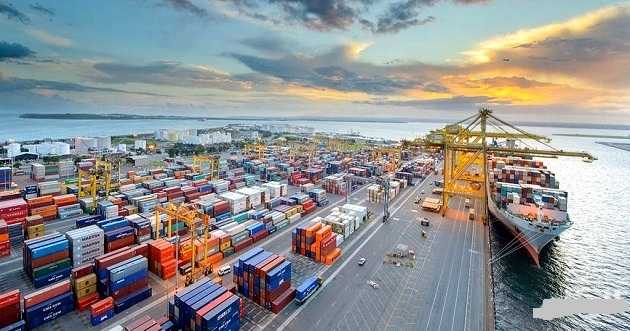

Saudi Arabia’s imports fell by 11.5 percent during the second quarter of this year, while G20 exports totaled approximately $3.1 trillion.
This was revealed in a report issued by the Organization for Economic Cooperation and Development (OECD) .. Seasonally adjusted international merchandise trade within the G20, expressed in U.S. dollars, continued its downward trend in the second quarter of 2019. ..(Imports Report)..
Gradual Rise
According to the report, starting in the second quarter of 2016, G20 exports began a gradual and uninterrupted rise until they peaked (between the fourth quarter of 2011 and the second quarter of 2018), reaching $3.8 trillion. ..(Import Report)..
Exports remained at roughly this level until the fourth quarter of 2018, when the index began to decline, reaching approximately $3.1 trillion in the second quarter of 2019.
Exports declined by 1.9 percent and imports by 0.9 percent. This general trend affected most member countries of the group. ..(Import Report)..
Meanwhile, China’s exports fell by 5.3 percent (now at their lowest level since the fourth quarter of 2017) and those of the United States by 1.1 percent (their lowest level since the first quarter of 2018). Imports increased slightly in both countries (0.6 percent in China and 0.3 percent in the United States), due to the resumption of bilateral trade between the two sides. ..(Import Report)..
Tariff Measures
The Organization for Economic Cooperation and Development (OECD) confirmed that this recovery can be attributed to anticipated stockpiling ahead of the tariff measures imposed by the United States on May 10 and the Chinese retaliatory measures implemented on June 1 (June)... (Import Report)...
The report noted that U.S. exports to China and imports from China rose by 2.7 percent and 0.2 percent, respectively, in the second quarter of 2019 (though they remain well below the peak reached in the third quarter of 2018, which was 17.4 percent for exports and 10.7 percent for imports).
In the European Union (28 countries), exports and imports fell by 1.7 percent and 2.3 percent, respectively. ..(Import Report)..
Meanwhile, France’s exports fell by 0.3 percent and imports by 0.7 percent, while Germany’s exports fell by 3.0 percent and imports by 1.7 percent, and Italy’s imports fell by 0.6 percent (marking the fifth consecutive quarterly decline), although its exports rose modestly by 0.1 percent. ..(Import Report)..
The report states that amid lingering uncertainty surrounding Britain’s exit from the European Union, the UK recorded a significant contraction in exports (down 7.1 percent) and imports (down 12.6 percent).
In Russia, exports fell by 7.4 percent. In South Korea, exports contracted by 1.6 percent, marking the third consecutive quarterly decline; they are now 12.3 percent below their most recent peak in the third quarter of 2018. ..(Import Report)..
Decline in Imports
In Argentina, imports fell by 6.4 percent, which is equivalent to a one-third drop from their recent highs, as the Argentine peso depreciated by 12.5 percent against the U.S. dollar (86.7 percent over the last four quarters). Turkey’s imports also fell by 6.4 percent, as the Turkish lira continued to depreciate by 9.5 percent against the dollar in the second quarter of 2019.Only a few G20 economies saw an increase in their merchandise exports in the second quarter of 2019: Australia (6.3 percent), Canada (6.4 percent), Mexico (2.4 percent), and Japan (0.2 percent).
In terms of dollar value, G20 exports averaged about $3.5 trillion between 2012 and 2014, before beginning a gradual decline starting at the end of 2014, reaching $3.3 trillion at the end of the second quarter of 2015, and continuing to decline until it hit a low of $3 trillion between the end of 2014 and the second half of 2019. ..(Import Report)..