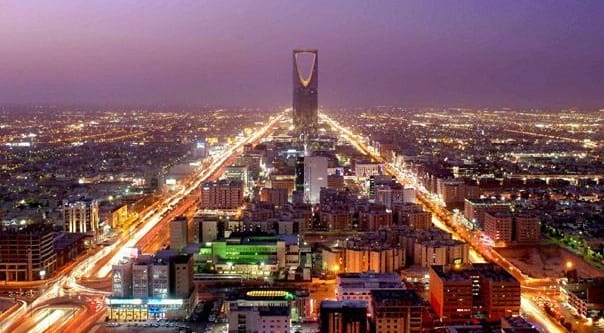
His Royal Highness Prince Mohammed bin Salman bin Abdulaziz Al Saud, Crown Prince, Deputy Prime Minister, and Chairman of the Royal Commission for Riyadh —may God protect him—launched the Riyadh Sustainability Strategy on the sidelines of the Saudi Green Initiative Forum, which began today in the capital city of Riyadh in the presence of a number of global thought leaders and experts in the field of sustainability. In his opening remarks at the forum, His Royal Highness explained that the Riyadh Sustainability Strategy aims to “transform the city of Riyadh into one of the most sustainable cities in the world.”
The Royal Commission for Riyadh announced that the Riyadh Sustainability Strategy, launched today by His Royal Highness the Crown Prince, Deputy Prime Minister, and Chairman of the Board of Directors of the Royal Commission for Riyadh —may God protect him—includes the launch of more than 68 ambitious sustainability initiatives across five sectors: energy and climate change, air quality, water management, waste management, and biodiversity and natural areas. The strategy also aims to reduce carbon emissions in the city by 50%, in addition to injecting 346 billion Saudi riyals (92 billion U.S. dollars) into the city’s sustainability initiatives and projects and stimulating the private sector with investment opportunities.
On this occasion, the CEO of the Royal Commission for Riyadh City, Mr. Fahd bin Abdulmohsen Al-Rashid, who delivered a keynote address at the forum, expressed his sincere thanks and gratitude to His Highness the Chairman of the Commission’s Board of Directors for launching the Riyadh Sustainability Strategy.
He said: “In line with His Highness’s ambitious vision, the strategy aims to make Riyadh one of the most sustainable and competitive cities in the world by 2030.”
He explained: “The Crown Prince’s guidance constantly reminds us that Riyadh’s ambitious economic growth will not come at the expense of the environment and sustainability.”
He emphasized the Authority’s efforts to manage natural resources efficiently, noting that environmental sustainability initiatives have been launched to support the goals of the Saudi Green Initiative, including an investment of 30 billion riyals ($8 billion) to increase the treated water capacity from 11% to 1,00% and to use every drop of water for irrigation and greening the capital, Riyadh, as well as an investment of approximately 56 billion riyals ($15 billion) in waste management projects to recycle waste as raw materials, reuse it, and convert it into energy at a rate of 94%.
In his speech, he explained that the strategy launched by His Royal Highness the Crown Prince to implement environmental sustainability projects will save the city’s economy between 40 and 65 billion riyals ($11 to $17.3 billion) by improving infrastructure efficiency, reducing energy and water consumption, and lowering the health costs associated with improved public health.
Regarding the impact of the Royal Commission for Riyadh City’s projects on the city’s lifestyle, he noted that upon completion of the King Abdulaziz Public Transportation Project in Riyadh, which is the world’s largest integrated public transportation project being developed in a single phase, the Royal Commission aims to increase residents’ use of public transportation in the city from 5% to 20% through investments totaling 112.5 billion riyals (30 billion dollars), and to increase the share of electric vehicles in the city to 30% by 2030.
The King Abdulaziz Public Transportation Project is expected to reduce the number of daily trips by 1 million, resulting in a reduction of greenhouse gas emissions by approximately 1.5 million metric tons annually.
He added that the Authority is investing 30 billion riyals ($8 billion) in projects and initiatives to protect the environment, pointing to the achievements of the Green Riyadh Initiative—one of Riyadh’s four major projects—as a key contributor to the Sustainable Development Goals. The Riyadh Green Initiative and the Riyadh Environmental Sustainability Initiative aim to plant a total of 15 million trees to increase the per capita share of green spaces from 1.7 to 28 square meters within the urban area by 2030, which will result in a reduction in the city’s temperature by 1.5 to 2 degrees Celsius—that is, a reduction in the temperature of the heat reflected from the ground by 8 to 15 degrees in areas of intensive afforestation.
More than 3,300 parks of varying sizes and 43 major parks will also be provided in the city of Riyadh, with the aim of improving the quality of life there. He continued: “The parks will contribute to making the capital more livable, strengthening residents’ connection to their environment, and improving quality of life, while also fostering a sense of belonging to the city and its identity among Riyadh’s residents.”
Commenting on the Authority’s projects aligned with the Kingdom’s sustainability goals, he added: “Efforts will be made to improve air quality by reducing carbon emissions by 50% and investing 30 billion riyals ($8 billion) to increase energy production from renewable sources by 50%.”
He also noted that the Authority’s sustainability projects in Riyadh will create 350,000 jobs and contribute 150 billion riyals to the local economy.
It is worth noting that the Saudi Green Initiative Forum began its proceedings today in the capital, Riyadh, in the presence of a number of ministers, business leaders, pioneers, and academics—both local and international—specializing in the environment and in mitigating and adapting to the effects of climate change.
The forum is discussing the Kingdom’s direction and the roadmap it will follow to implement all measures necessary to achieve its strategic sustainability goals in line with Saudi Vision 2030, The forum will also discuss building an integrated green economy and strategies to expand the Kingdom’s commitments to addressing the challenges of climate change both locally and globally.