

The Shura Council held its seventh regular session of the second year of the eighth session yesterday, chaired by His Excellency the Council President, Sheikh Dr. Abdullah bin Mohammed bin Ibrahim Al Sheikh. During the session, the Council approved, by a majority vote of its members, the draft regulation on real estate registration.
The Council made its decision after reviewing, at the beginning of the session, the views of the Committee on Hajj, Housing, and Services regarding the members“ comments and opinions on the draft Real Estate Registration System, which had been presented in a previous session by the Committee Chair, Dr. Ayman Fadel.
The draft regulation, comprising 40 articles, ensures that real estate is accurately described through its coordinates and characteristics, its legal status, as well as the rights attached to the property and the obligations arising from it, so that they are described and identified specifically rather than by the owner’s status, as is the case with personal registration, which limits disputes related to real estate units and works to significantly ensure the establishment of property rights. Furthermore, the draft regulation has a positive impact on confidence in the Saudi real estate market, thereby encouraging investment and supporting the development goals of the real estate sector.
The Council also approved a number of amendments to the draft Evidence Law, following its discussion of the report by the Committee on Islamic and Judicial Affairs regarding the draft Evidence Law, which was referred back to the Council for review in accordance with Article (17) of its Rules of Procedure, which was read by the Committee Chairman, Dr. Sulaiman Al-Fayfi, in the presence of His Excellency the Minister of State for Shura Council Affairs, Mr. Muhammad bin Faisal Abu Saq.
Subsequently, during the session, the Council discussed a report submitted by the Trade and Investment Committee regarding the Regulation on the Provision of Economic, Financial, and Administrative Consultancy Services, which had been referred back to the Council for review in accordance with Article (17) of its Rules of Procedure. The report was presented by the Committee Chairman, His Excellency Dr. Fahd Al-Takhefi, and the Council upheld its decision regarding the regulations, in the presence of His Excellency the Minister of State for Shura Council Affairs, Mr. Muhammad bin Faisal Abu Saq.
During the session, the Council called on the General Authority of Civil Aviation to find the necessary solutions to address the long distances travelers must cover between arrival and departure at King Abdulaziz Airport
in Jeddah and certain other airports, and to work toward completing stalled airport projects, taking into account the requirements of the Kingdom’s Vision 2030 and the National Aviation Strategy.
The Council made its decision after hearing the views of the Committee on Transportation, Communications, and Information Technology regarding members” comments and opinions on the General Authority of Civil Aviation’s annual report for the fiscal year 1441/1442 AH, which was presented by Committee Chairman Hazza Al-Qahtani.
In the same resolution, the Council called on the General Authority of Civil Aviation to support technological innovation to improve the passenger experience in coordination with relevant authorities, reaffirming the Council’s previous resolution in which it had called on the Authority to address rising domestic ticket prices, calling on the Authority to continue expanding the recruitment of qualified women for suitable positions, to provide a competitive operating environment that is attractive to investors, and to lay the groundwork for privatization.
During the session, the Council proceeded to review the views of the Committee on Islamic and Judicial Affairs regarding members’ comments and opinions on the annual report of the General Authority for the Custody of Minors’ and Similar Cases’ Funds for the fiscal year 1441/1442 AH, which was read by the committee chairman, Dr. Sulaiman Al-Fayfi, after which the Council voted on its resolution regarding the report.
In its resolution, the Council called on the General Authority for the Assets of Minors and Those of Similar Status to coordinate with the Ministry of Justice to expedite the completion of the comprehensive automated linkage between the two entities, so that the Authority can monitor the financial transactions of guardians, custodians, and trustees.
In the same resolution, the Council also called on the Authority to conduct a detailed study of its performance indicators, set annual targets, and track their achievement on a comparative basis in light of its future strategic plan.
The Council then moved on to discuss a report submitted by the Energy and Industry Committee regarding the annual report of the Ministry of Industry and Mineral Resources for the fiscal year 1441/1442 AH, which was presented to the Council by the Committee Chair, Engineer Ali Al-Qarni.
In its recommendations to the Ministry, the committee called for coordination with relevant parties to provide direct support in setting prices for energy and raw materials for manufacturing industries that rely on
domestic outputs of basic and mining industries in a manner that strengthens and enables their viability. The committee also called on the Ministry to encourage the establishment and attraction of industrial engineering companies that contribute to creating synergies among local factories to produce new products.
As part of the recommendations contained in the report, the committee called on the Ministry to encourage the development of supporting industries, such as metal casting and molding and related industries, and to provide appropriate incentives, and to intensify efforts to develop the export sector of national industries and provide additional attractive incentives aimed at efficiently and effectively exporting national products to global markets.
In its report, the committee also called on the Ministry to work with relevant authorities to identify and establish additional customs storage and handling areas for warehousing and re-export within industrial zones and cities, and to coordinate with relevant authorities to connect industrial zones and cities located within the railway network to the network and provide them with rail transportation and freight services.
After the committee’s report and recommendations were presented for discussion, Council member Dr. Saad Al-Omari called on the Ministry of Industry and Mineral Resources to provide financing products for industrial facilities seeking to modernize their technical
and technological infrastructure, with the aim of reducing operating costs and increasing production rates.
Meanwhile, Council member Engineer Nabih Al-Ibrahim noted that there is a problem stemming from the shortage of distinguished local investors and contractors in the mining sector, as the nature of the work involves numerous value chains that require entities with substantial capital. He called for joint ventures with global entities possessing strong financial standing and outstanding technical capabilities.
For his part, Council member Dr. Hani Khashoggi noted that the Kingdom’s mineral wealth faces numerous challenges, calling for solutions to these challenges and for maximizing its share of the gross domestic product.
Council member Dr. Ghazi bin Zakr, in turn, highlighted the importance of bringing new partners—specialists in the humanities and social sciences—into the Kingdom’s industrial dialogue framework to humanize the Kingdom’s industrial plans, thereby strengthening the link between the foundations of its industrial excellence and national identity, and the values that industry aims to foster in citizens and institutions throughout the Kingdom.
At the end of the discussion, the committee chair requested that the committee be granted more time to study the opinions and proposals put forward by the members and to present its views to the Council at a subsequent session.
During today’s session, the Council discussed the annual report of the Social Charity Fund for the fiscal year 1441/1442 AH, which included a report submitted by the Human Resources and Social Development Committee regarding the report, presented by the committee chairman, Abdullah Al-Tawi.
In its report to the Council, the committee called on the Social Charity Fund to develop performance indicators that measure the economic and social impacts of its various projects and to expand its projects and funding channels in coordination with the Social Development Bank and other relevant entities.
In its report to the Fund, the committee urged the Fund to form partnerships with the private sector to contribute to the Fund’s initiatives and the social development of its programs, to reinstate capacity-building programs for beneficiaries through awareness-raising, guidance, and training, as well as resuming suspended projects and programs and shifting the focus toward empowering beneficiaries to work and be productive through “Kafala” programs to maximize the benefits of its initiatives.
After the committee’s report and recommendations were presented for discussion, Council member Dr. Amira Al-Jaafari noted that measuring the social and economic impact of the Fund’s activities is important because it is an effective tool that aids in a deeper understanding of the social and economic value of projects, calling for a study on addressing the debts of Fund beneficiaries who have fallen behind on educational grants and small business financing.
For his part, Board Member Dr. Abdullah Al-Najjar called on the Fund to coordinate with relevant authorities to develop a dynamic national database that provides accurate information on the needy in society, their geographic distribution, their social categories, and the development needs of the areas where they live, andup-to-date.
Meanwhile, Board member His Excellency Engineer Tariq Al-Faris emphasized the importance of having an investment department within the Social Charity Fund’s organizational structure, as well as an internal audit committee reporting to the Board of Directors.
Meanwhile, Board member Dr. Salah Al-Talib called for support for the Social Charity Fund to enable it to expand its operations and address the debts incurred by beneficiaries who have defaulted on payments under the educational grant and new project financing programs.
For his part, Board member His Excellency Dr. Fahad Al-Takhefi called on the Social Charity Fund to coordinate with relevant authorities to prepare a comprehensive study for the development of its programs, ensuring partnership within the social development sector and the integration of the sector’s programs, on the one hand, and transitioning the fund’s beneficiary groups from the Fund’s programs from welfare-based to development-based.
In his remarks, Council member Dr. Muhammad Al-Zouma called on the Social Charity Fund to establish a specialized risk management department tasked with assessing the seriousness of beneficiaries, qualifying them to carry out their work optimally, addressing their weaknesses, and monitoring their performance.
At the end of the discussion, the committee chair requested that the committee be granted more time to study the opinions and proposals put forward by the members and to present its views to the Council at a subsequent session.
Articles

03/09/2021
“Amlak publishes contractor classification system, penalties include revocation of classification or 5-year ban on renewal
Riyadh property

28/08/2021
Amlak survey: Real estate advertising controls end speculation and increase the reliability of the real estate sector
Riyadh property

25/08/2021
Here are the details of the new contractor classification system and cover-up exemption rules (Infographic)
Riyadh property

21/08/2021
With more than two billion riyals ... Itqan Real Estate offers 20 different properties in Riyadh, Western and Eastern
Riyadh property

21/08/2021
“Amlak” monitors reactions to the “Real Estate Market Analysis Regulations” after its official adoption”
Riyadh property

11/08/2021
Cabinet approves a new amendment to the ”Real Estate Contributions Committee's working mechanism”
Riyadh property
19/09/2026
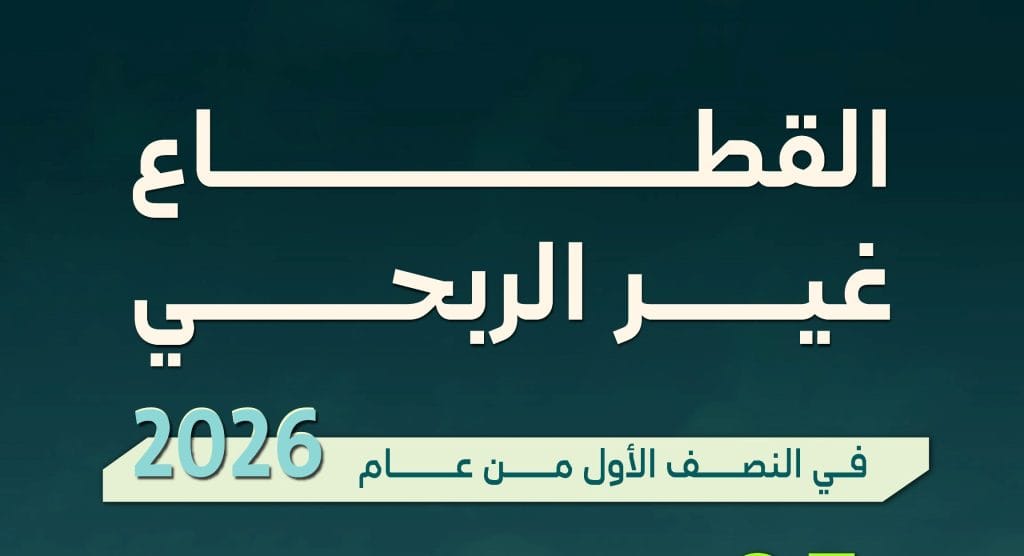
«البلديات والإسكان»: أكثر من 180 برنامجًا تنمويًا بالشراكة مع القطاع غير الربحي خلال النصف الأول 2026
Amlak Real Estate
19/09/2026
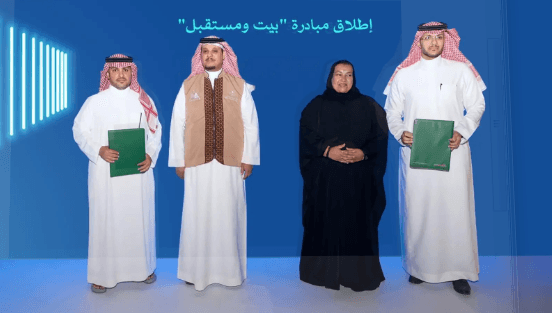
أمانة حائل تطلق مبادرة «بيت ومستقبل» لتمكين التاجر المتنقل وتعزيز الاستقرار الأسري
Amlak Real Estate
19/09/2026
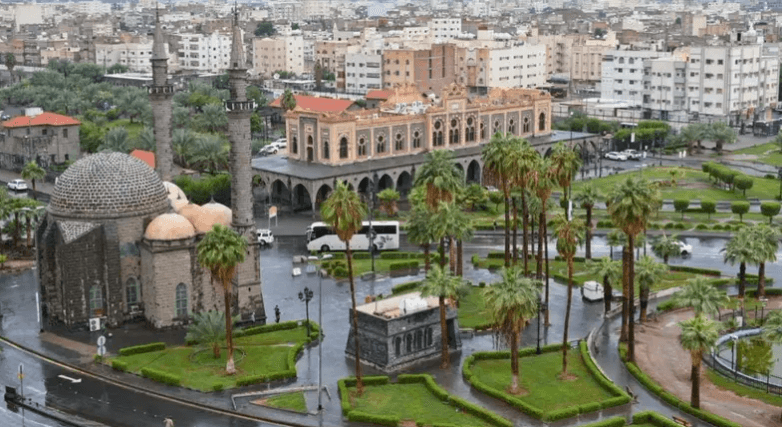
الأحد القادم.. انطلاق أعمال السجل العقاري لـ3 قطع عقارية بمنطقة المدينة المنورة
Amlak Real Estate