
Dr. Abdulrahman Al-Zamil, Chairman of the Board of Directors of the Saudi Chambers of Commerce and Industry, described his recent meeting with the Custodian of the Two Holy Mosques, King Salman bin Abdulaziz —may God preserve him—with the heads of local banks as a qualitative leap for the national economy of the Kingdom of Saudi Arabia and the role played by the private sector, which he described as the state’s main partner in this endeavor. He noted that the meeting focused on two topics he described as extremely important for the sector.
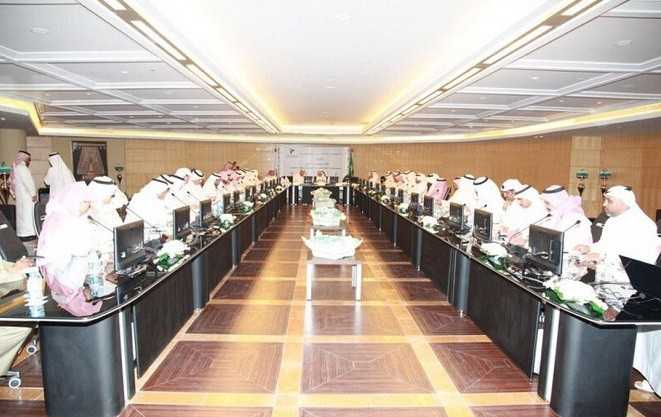
During the regular meeting of the Board of Directors of the Saudi Chambers, held yesterday at the Makkah Chamber of Commerce and Industry, he explained that the two issues relate to the problem of providing job opportunities for promising young talent, noting that the crisis and unemployment are not concentrated in major regions or cities such as the Eastern, Western, and Central regions, but rather occur at a significantly higher rate in promising but remote areas, and supporting local products by requiring project contractors to purchase their supplies from the local market.
Al-Zamil continued: ”We have requested of the Custodian of the Two Holy Mosques—may God preserve him —to open up investment opportunities in those regions, in accordance with the royal decrees that stipulate giving priority in government projects to citizens and to local products, such as local contractors and local consultants. All of this will keep our money within the country,” he added, noting:”It is true that we complain about some sectors, but our job is to develop these sectors, not to shy away from them.”
He added during a press conference held at the Makkah Chamber of Commerce and Industry: ” ”If all these sectors are operational and local products are used in projects, we will have giant manufacturing companies in the Kingdom, because everyone wants to secure the largest share of this market,“ citing the example of a contractor who, if awarded projects, would expand his operations and increase his production in the market.
The Chairman of the Council of Saudi Chambers emphasized that job opportunities come only through Saudization—opportunities that the Custodian of the Two Holy Mosques has prioritized and stressed the importance of making available to citizens.
Al-Zamil added: ”There are jobs in remote areas stemming from maintenance and operation contracts—such as for hospital equipment, roads, and electricity—which account for 1.270 million ”one million two hundred seventy thousand” foreign employees under contracts with government agencies, with a total value estimated in the billions of riyals.”
The Chairman of the Council of Chambers continued: ”Instead of talking about a 5 percent Saudization rate in corporate contracts, we should raise the ceiling to 20 percent Saudization, provided that the contracting government agency specifies the positions required for Saudis—which can be filled by our own workforce—and also sets the required salary in the contract so that the contractor adheres to the correct Saudization rate, The second condition is that the contract must specify the value of health insurance, housing allowance, and transportation allowance in order to attract young Saudi men and women to the private sector, in addition to granting the Saudi employee the right to transfer from one contract to another as he or she deems appropriate.”
Al-Zamil cited three entities that have implemented this ratio: the Royal Commission for Jubail and Yanbu, which applies a 55 percent Saudization rate in maintenance and operations contracts, Aramco at 65 percent, and seaports at 45–50 percent. This indicates that Saudi nationals are ready to work in the private sector, but they must be offered a fair salary.
Al-Zamil added: ”King Salman requested the prepared speech on this matter, and ordered the formation of a team consisting of myself and four ministers who attended the meeting—including the Minister of Finance, the Minister of Labor, the Minister of Commerce and Industry, and the Chairman of the Investment Authority. His Majesty also ordered us to consult on these matters and submit our recommendations to His Majesty.”
Al-Zamil highlighted the importance of maintenance and operation contracts, noting that they have evolved and reached the stage of approval regarding this principle in the revision of government contracts.
Al-Zamil continued during his remarks at the press conference held by the Makkah Chamber of Commerce and Industry: ” ”We had the opportunity to meet with His Highness the Deputy Crown Prince, Prince Mohammed bin Salman, along with business leaders during his recent trip to Russia, and new ideas were put forward. His Highness was enthusiastic and called for significant participation and for the private sector to be considered a partner in decision-making.”
He said: ”We made a few requests to His Highness, and he asked us to submit monthly or bimonthly reports on the performance of the private sector’s relations with various ministries. He also asked us to meet with him monthly, along with private-sector leaders, to discuss matters face-to-face, and His Highness also emphasized the importance of having direct channels of communication with him in his capacity as Chairman of the Economic Council.”
Al-Zamil noted that the Economic Council, established today, is the best decision that has been made, as it brings all ministers together under one umbrella led by Prince Mohammed bin Salman, and discusses all our economic matters. We also asked him not to allow any minister to make a decision on his own that might affect the market and the people; such matters must be discussed in the Economic Council so that all ministers can debate them, and if they agree, the appropriate decision is then made.
Al-Zamil noted that the Economic Council discussed visa matters in the presence of the Minister of Foreign Affairs and that all decisions to be made in this regard are currently being followed up.
Al-Zamil mentioned that among the topics discussed at the Council of Chambers meeting hosted by the Makkah Chamber of Commerce and Industry, was the mechanism followed by the chambers of commerce, whereby each president of a chamber of commerce in the Kingdom submits a monthly report on the most important problems facing his region in relation to any ministry, along with appropriate proposals, emphasizing the existence of the Central Committee within the Economic Council to discuss all matters raised by the chambers of commerce, where important topics are selected and we begin discussing them with all ministers.
Regarding the Council’s agenda, Al-Zamil said: ” We discussed administrative matters, the most important of which pertained to the Council of Chambers of Commerce regulation currently being reviewed by the Ministry of Commerce. The relevant committees reached agreement with the Ministry of Commerce on all provisions except for eight points, which were discussed by the Executive Committee and the Council of Chambers of Commerce, which instructed the committee to continue discussions with the Ministry of Commerce to incorporate the Council of Chambers of Commerce’s opinion into this regulation. It will take a long time before it is presented to the Shura Council and other councils, but we do not want any regulation to be issued without the Chambers having a clear role.”
Regarding a question directed at him about a previous statement he made during his candidacy for the presidency of the Kingdom’s Chambers of Commerce—that the role of the Chambers of Commerce would not be to hold lectures but rather to serve as a lobbying tool—what are the most significant decisions that have resulted from that?
Dr. Al-Zamil replied: “We formed committees to monitor the implementation of the royal decree stipulating that every government project must use local products, and we asked stakeholders to fund these committees because we hired legal advisors. We began monitoring compliance, and within one year, these committees were able to redirect 17 billion riyals worth of purchases from foreign suppliers to local factories—money that would otherwise have been lost.”
Al-Zamil believes that one of the most significant problems facing the Kingdom today is that, for every billion riyals the government spends on its projects, only 300 million riyals remain in the country, while 700 million riyals are lost to capital flight. He added: ” There are several committees monitoring these matters. The ministers” ongoing follow-up—particularly our meeting with the Custodian of the Two Holy Mosques and His Highness Crown Prince Mohammed bin Salman—has yielded positive results.”
Dr. Abdulrahman Al-Zamil added: ”We are not fighting against officials… We want to have a clear role and meaningful participation with government sectors,“ citing the significant role played with the Ministry of Labor in recovering the work permit fees—estimated at 2,400 riyals—that had been imposed on visas. Through our follow-up efforts, we were able to convince the government, and those fees were refunded to contractors with government contracts, as the Custodian of the Two Holy Mosques ordered the refund of those fees, estimated at approximately 11 billion riyals.
When asked about the economic situation in the Kingdom and the wars and regional conflicts the region is witnessing, particularly in Yemen… Dr. Al-Zamil said: “As for the Saudi economy—and I speak here in my capacity as a businessman and one of the Kingdom’s leading investors, drawing on our investment experiences in Vietnam, India, Italy, Egypt, and the United Arab Emirates—I can tell you frankly, we enjoy the most streamlined business practices, and business procedures in the Kingdom of Saudi Arabia are sound. Those who complain about investing in the Kingdom are the ones who have reservations about the Saudization requirements, as the Saudization requirements are clear: anyone who wants to work with me or in my country must understand that priority is given to citizens. If everyone were to comply with this requirement, the complaints would cease. And those who do not want Saudization should go and try investing abroad.
He added: “Our economy is strong, and the private sector is also strong. Today, the Saudi economy is the only one in the Arab world capable of annually exporting non-oil industrial goods worth 240 billion riyals, with daily sales of food and beverages reaching the equivalent of one billion riyals, and domestic products now accounting for more than 60 percent of the Kingdom’s imports.
He continued: “ 30 percent of non-oil exports are attributable to a policy adopted by the Kingdom of Saudi Arabia, following a decision to prioritize all investments within the Kingdom. We have the Industrial, Agricultural, and Housing Funds, and most businesspeople are now young entrepreneurs, Furthermore, our economy differs from that of all other Arab and Gulf countries through the provision of industrial zones, loans, technical services, and the means for projects to succeed.”
Dr. Al-Zamil reassured those interested in the future of investment in Makkah and Madinah, predicting that
will witness a developmental leap, especially after the completion of development projects over the next five years. This will transform the Holy Capital once its capacity to accommodate pilgrims and Umrah performers reaches 20 million pilgrims annually, which will generate substantial financial returns for the service sector—including hotels, catering, transportation, and others—and will subsequently spur the emergence of international companies specializing in hotel services.
Dr. Al-Zamil concluded his press conference at the Makkah Chamber of Commerce by expressing his great satisfaction with the “Thiqah” electronic system, describing it as the best system for organizing the work of chambers of commerce and providing the best services to citizens, as it now enables every Saudi citizen to obtain a commercial registration, chamber of commerce certifications, and other services from the comfort of their own home.