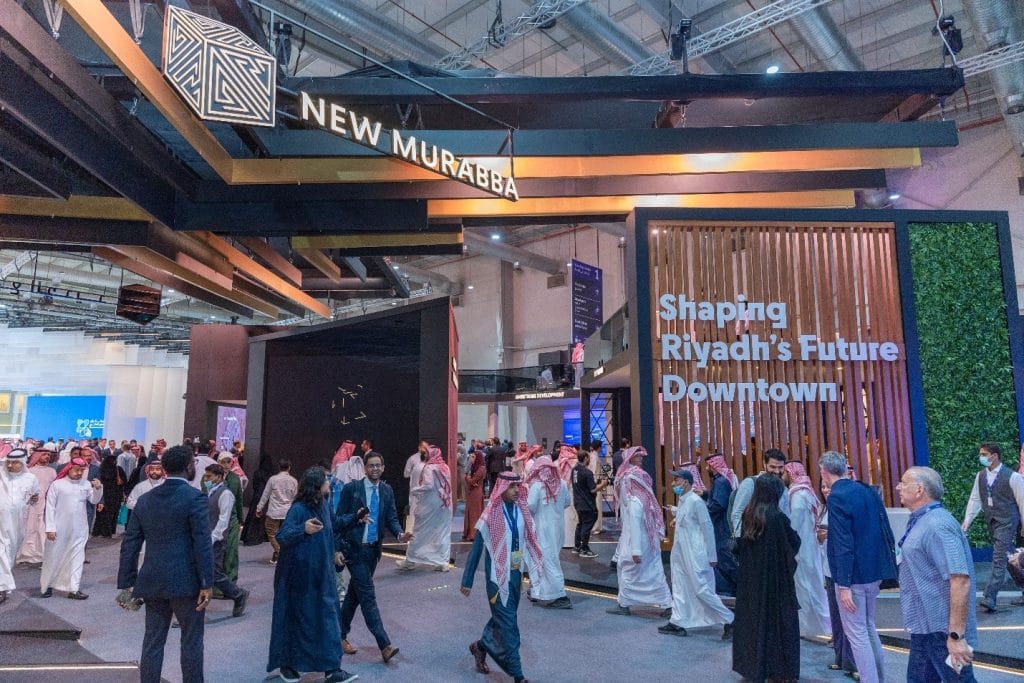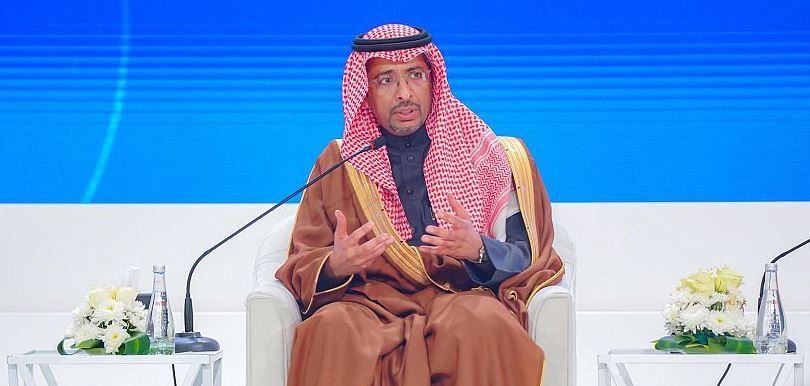

His Excellency the Minister of Industry and Mineral Resources, Mr. Bandar bin Ibrahim Al-Khuraif, Chairman of the Board of Directors of the Saudi Export Development Authority, officially opened the “Made in Saudi Arabia” Exhibition, now in its second edition under the slogan “Saudi Craftsmanship,” in the presence of His Highness Prince Faisal bin Abdulaziz bin Ayyaf, Governor of the Riyadh Region; His Excellency Dr. Majid bin Abdullah Al-Qasabi, Minister of Commerce; His Excellency Engineer Saleh bin Nasser Al-Jasser, Minister of Transport and Logistics; and His Excellency the Minister of Education, Mr. Yusuf bin Abdullah Al-Bunyan. The exhibition runs through October 19 and brings together under one roof the most prominent national industries, services, and innovations to showcase them to visitors in a way that highlights national industries and takes pride in their competitiveness.
The “Made in Saudi Arabia” Exhibition in its current edition, the Republic of Iraq is the guest of honor, with the attendance of His Excellency the Iraqi Minister of Commerce, Mr. Athir Al-Ghurairi, and the participation of 24 Iraqi companies; this is an extension of the strong economic ties between the two brotherly countries, aimed at enhancing trade with Iraq and increasing growth opportunities for national goods and services.
In his opening remarks, His Excellency the Minister of Industry and Mineral Resources welcomed Iraq’s participation as the guest of honor in this edition, emphasizing the importance of strengthening cooperation between the two brotherly countries.
His Excellency stated that the “Made in Saudi Arabia” program is not merely an industrial initiative, but rather a national program encompassing all products and services, for which the government sector, the private sector, and individuals share a collective responsibility, He highlighted that the Kingdom possesses a strong industrial base capable of meeting challenges, which enhances the chances of success for the “Made in Saudi Arabia” program to build on its achievements and forge an identity for our industry that enables it to compete locally and globally.
His Excellency said: “We will continue to achieve further successes, especially following the launch of several strategies, foremost among which are the National Industrial Strategy, the Export Strategy, and the Saudization Strategy—all of which are aligned to achieve our ambitious national goals, including attracting industrial investments estimated at approximately one trillion riyals, most of which are export-oriented to fulfill one of the objectives of Saudi Vision 2030, which aims to make the Kingdom of Saudi Arabia a leading industrial nation and a global logistics hub.”
His Excellency added that the “Made in Saudi Arabia” exhibition serves as a celebration of our successes and our sense of belonging to our homeland, as well as the participation of Saudi products in global competition and their entry into many promising markets around the world.
For his part, His Excellency Iraqi Minister of Commerce Athir Al-Ghurairi, during his opening remarks, thanked the Kingdom, led by the Custodian of the Two Holy Mosques, King Salman bin Abdulaziz Al Saud,and His Royal Highness Prince Mohammed bin Salman bin Abdulaziz, Crown Prince and Prime Minister—may God protect them both—for their keen interest in strengthening economic and trade relations between the two countries.
His Excellency highlighted the significant role of the Saudi-Iraqi Coordination Council in strengthening bilateral relations, the results of which have been tangibly evident on the ground through the meetings of its main committees, as well as the agreements reached that have laid the groundwork for sustainable joint action and the implementation of projects that will contribute significantly to long-term efforts, in line with the strategic vision of the leadership of both countries.
It is worth noting that the “Made in Saudi Arabia,” now in its second edition, features more than 100 Saudi companies showcasing Saudi products and will witness the signing of more than 40 agreements—ranging from export agreements to industrial localization agreements—worth over one billion riyals.