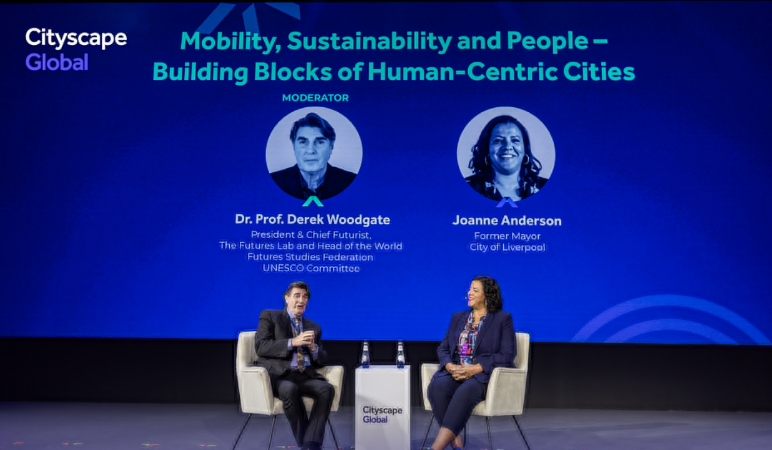

With the rapid shifts towards Smart Cities, a question arises about the concept of “intelligence” in these cities: Is it limited to technology, or does it also include the human and social dimension? This question was raised by the presenter during a panel discussion on the third day of Cityscape Global 2024, featuring Drake Woodgate, a specialist in the development of future cities, and Joanne Anderson, former mayor of Liverpool. The discussion revolved around the human aspects of urban planning, with voices calling for cities that are responsive to the needs of their residents, not just technologically advanced.
Details of the Smart Cities session at Cityscape
Human or technological?
<Drake Woodgate, a contributor to the development of cities such as Austin, Texas and Abu Dhabi, comments that the role of technology in smart cities should not eliminate the human dimension, but should be part of an overall strategy that serves the population. He adds that while smart cities grow with top-down planning, cities need human and social components as well as technology.Liverpool's experience as a smart city:
<Joanne Anderson spoke about Liverpool's experience, noting that it is a city with a global brand in hospitality and tourism, but with economic disparities. During her tenure, she adopted a framework to ensure inclusivity in the decision-making process called the “triple lock”, where the social, environmental and economic impact of any decision is assessed, ensuring real benefits for local communities.Joanne Anderson spoke about the experience of Liverpool, noting that it is a world-class city for hospitality and tourism, but suffers from economic disparities.
Social Impact Measurement Criteria:
<Through the Triple Lock framework, Anderson seeks to foster a sense of belonging and minimize racism, especially at events that bring communities together. For example, she noted the positive impact of Mohamed Salah's presence at Liverpool, where the club's fans sing a song in support of Muslims, which has contributed to fewer incidents of racism in the city.
Challenges to developing smart cities:
<Drake Woodgate concluded the discussion by noting the importance of benchmarking cities, not only in economic terms such as GDP, but also in terms of social and environmental impact. He emphasized the importance of legislation and policies that take into account the social dimension as well as technological development in urban planning, to ensure that smart cities are smart cities in a holistic sense.
Former Liverpool Mayor Joan Anderson:
Former Liverpool Mayor Joan Anderson:
"The whole city is involved in growing, sustaining and connecting the community to evolve."
تابع الفيديو للمزيد 🎬#سيتي_سكيب_العالمي 2024#مستقبل_الحياة
🗓️|November 11-14
Riyadh Exhibition and Convention Center, Malham
Register now:... pic.twitter.com/Kboco9meq4
- Cityscape Global (@CSGlobalKSA) November 13, 2024