
Saudi Arabia continues to make significant strides in the business and hospitality sectors, driven by the ambitious Vision 2030, which is reshaping the national economy and strengthening the country’s position as a global investment destination. From the rising demand for commercial office space in Riyadh to the outstanding performance of the hospitality market in Mecca, reports highlight the dynamism of the Saudi market and its future projects, which promise major transformations.
Regional headquarters are driving demand for office space in Riyadh
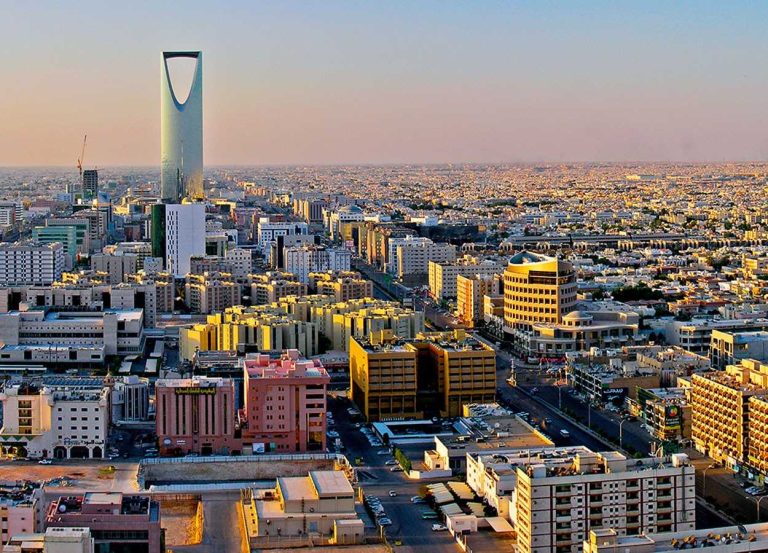
The global real estate consulting firm “Knight Frank” that the program to attract regional headquarters has become a key driver of increased demand for office space in the capital, Riyadh, contributing to an unprecedented rise in rental rates.
According to Knight Frank’s Fall 2024 report, the number of companies that have committed to establishing their regional headquarters in the Kingdom reached 517, surpassing the 2030 target of 480 companies. This momentum is expected to add one million square meters to the total office space in Riyadh, bringing the total to 6.3 million square meters by the end of 2026.
Record-High Rental Rates
Over the past 12 months, Riyadh has seen the highest increase in rental rates for Class A offices nationwide, rising by 31% to reach 2,604 Saudi riyals per square meter. Jeddah ranked second with an increase of 2.9%, followed by the Dammam metropolitan area with 2.2%.
In Jeddah, rents for Class 1 offices rose by 2.9% to 1,235 Saudi riyals per square meter, while Class 2 rents grew more rapidly by 3.8% to 810 Saudi riyals per square meter. As for occupancy rates, there was a slight variation, with Class 1 occupancy falling to 94%, while Class 2 occupancy rose to 90%.
Hospitality Sector: Notable Successes in Mecca and Riyadh
The hospitality market in Makkah had an exceptional year in 2024, benefiting from the "Road to Makkah" initiative, which streamlined procedures for pilgrims in their home countries before their arrival in the Kingdom. Mecca welcomed more than 1.83 million pilgrims during the Hajj season, 1.6 million of whom were from outside the Kingdom.
However, Knight Frank noted that rising hotel room rates and limited supply impacted overall performance, though it predicted a gradual improvement with major projects such as “Jabal Omar,” which will add approximately 7,700 new hotel rooms by 2030.
In Riyadh, business travel and events such as the Riyadh Season supported strong growth in the hospitality market. Average daily rates rose by 19% to 847 Saudi riyals, with occupancy rates stabilizing at 59.8%. This projected growth may help ease pressure on average rates in the future.
Data Center Infrastructure: A Strong Foundation for Digital Growth
The Kingdom has made significant progress in developing its data center infrastructure, with the total capacity of these centers in Riyadh reaching 263.61 megawatts, and 121.48 megawatts in Jeddah, while Dammam led the way with a total capacity of 392.38 megawatts. These projects are part of the Vision 2030 initiatives to diversify the economy and develop digital infrastructure.
These indicators show that the Saudi economy is moving steadily toward achieving its ambitious goals, whether through boosting demand for commercial office space or developing the hospitality sector and digital infrastructure. As major projects and economic transformations continue, the Kingdom is expected to become one of the world’s leading investment and business destinations.