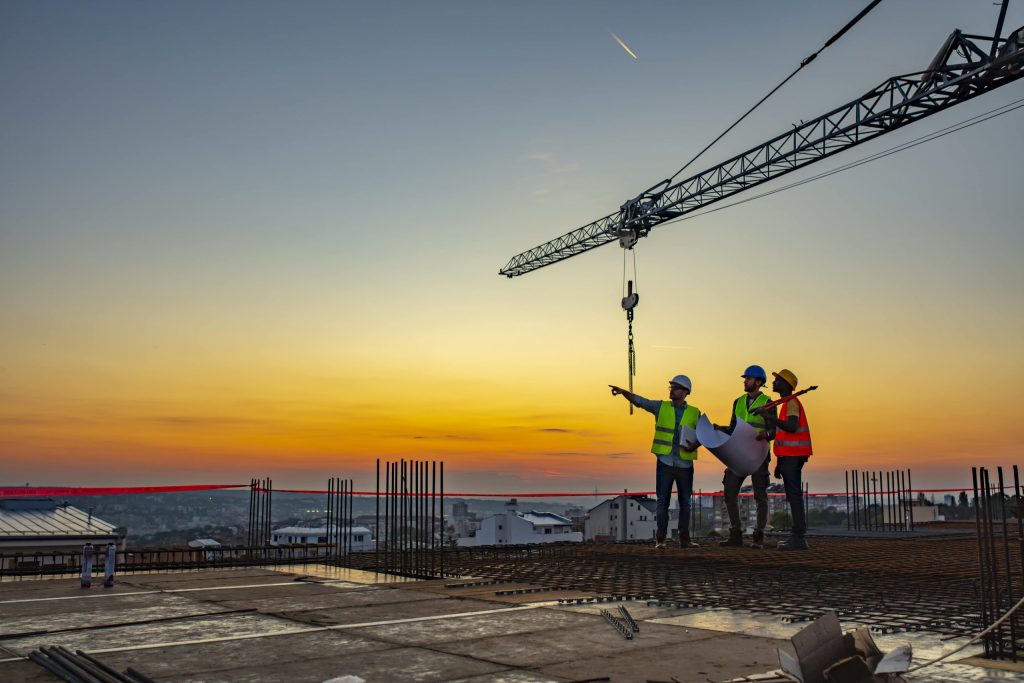

In recent years, global and regional factors have affected the construction sector, such as the rising prices of raw materials such as cement and steel.
In recent years, global and regional factors have affected the construction sector, such as rising prices of raw materials such as cement and steel, supply chain disruptions, and increasing labor costs. These challenges have not only tested the resilience of the real estate sector, but also motivated stakeholders to provide radical solutions that promote the sustainability of the real estate market.
Overcoming Challenges with Strategic Plans
<In the face of these challenges, the Kingdom adopted a package of strategic measures aimed at addressing rising costs without affecting the pace of project delivery. Supporting local industries was one of the main pillars of this strategy, as the government worked to boost local production of basic materials such as steel, which reduced dependence on imports and contributed to stabilizing prices.Alongside this, the government played a key role in stabilizing prices. <In addition, advanced construction techniques have played a pivotal role in reducing costs. Technologies such as modular construction and 3D printing have become a major option for residential projects, helping to speed up construction processes and reduce waste, saving time and costs for real estate developers.
Also, advanced construction technologies have played a pivotal role in reducing costs.
Government support and enabling initiatives
Efforts did not stop there, but extended to providing financial and tax facilities for real estate developers. Government initiatives, such as allocating land at competitive prices and providing customs exemptions, have helped developers overcome the financial challenges caused by rising costs.
Government initiatives such as the allocation of land at competitive prices and the provision of customs exemptions have helped developers overcome the financial challenges caused by rising costs. <The recent period has also seen an intensification of public-private partnerships (PPPs). These partnerships have created a more flexible financing environment and ensured that real estate projects continue without disruption, while maintaining construction quality and delivery schedules.
H4>
Despite difficult circumstances, the Kingdom has succeeded in maintaining an advanced pace of implementation and delivery of housing projects. The "Sakani" program, for example, has played a major role in realizing the dreams of many Saudi families to own their own homes. This success has not only been limited to the housing side, but has also boosted investor confidence in the Saudi real estate market, which has become a role model in responding to challenges.
The Kingdom's ability to overcome rising construction and real estate development costs reflects its ambitious vision and commitment to sustainable development. Thanks to wise policies and thoughtful measures, the real estate sector has succeeded in overcoming challenges, reinforcing its role as a key pillar to support the national economy and achieve the goals of Vision 2030. This pioneering experience is a testament to the sustainability of the real estate sector.
With this pioneering experience, Saudi Arabia confirms that it is able not only to face challenges, but also to transform them into opportunities to enhance the sustainability of the real estate sector and develop it in the interests of citizens and the economy alike.
Rising cost of construction and real estate development affected the speed of implementation of residential projects# Real Estate Stock Exchange | # News pic.twitter.com/q0kdbt9XnpSuccesses despite challenges
Sustainability of the real estate sector
Ekhbariya - Economy (@alekhbariyaECO) December 24, 2024