
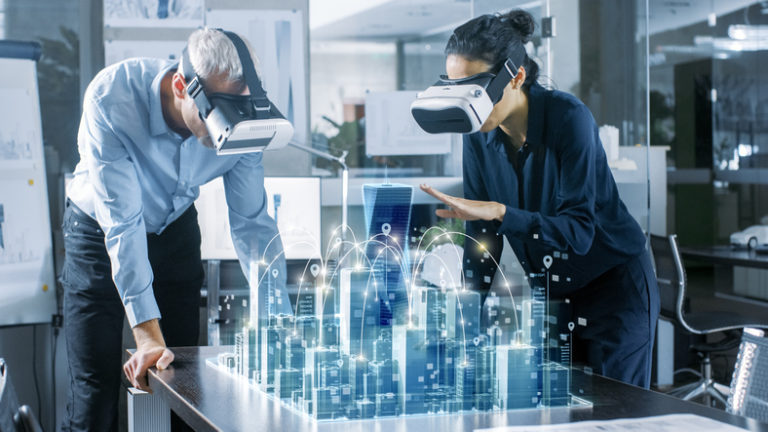

Amid rapid technological advancements, the construction and real estate industry has become one of the sectors most eager to embrace innovation in order to improve efficiency and reduce costs. With the emergence of modern technologies such as virtual reality (VR) and augmented reality (AR), companies can now strike a better balance between quality, time, and cost, while enhancing the experience for both customers and engineers.
Virtual Reality and Augmented Reality have become essential tools for improving design, planning, and execution processes, as they provide an interactive experience that brings projects closer to reality before actual implementation begins. So what are the key uses of these technologies? And how can they contribute to the development of the construction and real estate sectors?
Virtual Reality (VR): Designing and Experiencing Projects Before Implementation
Virtual Reality (VR) is a technology that simulates three-dimensional environments, allowing users to interact with architectural and design elements with extreme realism. This technology gives engineers, designers, and real estate developers the ability to “visit” projects before they are built, allowing them to see fine details, from interior design to the effects of light and shadow.
Key Applications of Virtual Reality in the Construction Sector
Virtual tours of projects: Allows engineers and investors to explore 3D designs from all angles, with the ability to instantly adjust materials or colors.
Improved communication and reduced errors: Helps clarify the project vision for all stakeholders, reducing misunderstandings and avoiding costly mistakes.
Safety training: Hazardous environments can be simulated to train workers on how to handle them without exposing them to any actual risks.
The result? Better design decisions, reduced costs, and increased chances of project success from the start.
Augmented Reality (AR): Merging the Virtual and Real Worlds
Augmented Reality (AR) differs from virtual reality in that it blends the real world with digital elements, allowing users to see virtual models superimposed on the actual construction environment. It can be used via smartphones or specialized glasses, providing detailed and accurate information in real time.
Augmented Reality Applications in Construction and Building
Project Design and Planning: Displaying 3D models on actual construction sites, facilitating design decisions.
Inspection and Review: Inspectors can use augmented reality to verify implementation stages and ensure they match the plans.
Enhancing the Customer Experience: Presenting projects interactively to potential clients, helping them visualize the final result more clearly.
Training and Maintenance: Providing visual guidance for maintenance and repairs, facilitating accurate and efficient execution.
Benefits of Applying Virtual and Augmented Reality Technologies in Construction and Real Estate
1. Improved Design and Planning
These technologies allow engineers and designers to preview 3D designs and make adjustments before work begins, reducing the costs of subsequent changes and saving time and effort.
2. Innovative Real Estate Marketing
Thanks to virtual and augmented reality technologies, potential clients can now virtually tour properties without needing to be physically present, which facilitates the sales process and shortens the time needed to make a decision.
3. Employee Training and Performance Improvement
Virtual reality simulations provide a safe environment for training workers on various work methods and equipment handling, enhancing their skills and reducing workplace risks.
4. Supporting Investment Decisions
Data derived from virtual reality technologies enables investors to analyze real estate demand and make more accurate decisions regarding the locations of new projects.
5. Achieving Sustainability Goals
These technologies help design more energy-efficient projects and reduce waste, contributing to sustainability goals and lowering the carbon footprint of buildings.
Challenges of Using Virtual Reality in the Real Estate Market
Despite its many advantages, the use of virtual reality in the real estate market faces some challenges, such as:
High initial cost: Equipping properties with virtual reality technology requires significant investment.
The need to train specialists: Real estate professionals need training to use this technology effectively.
Technical infrastructure: This technology requires a strong internet connection and advanced devices to ensure a seamless experience.
The Future of Virtual Reality in the Real Estate Market
The use of virtual reality technologies in the real estate sector is expected to increase in the coming years, as virtual tours will become an essential part of the sales and marketing process. With the continuous advancement of technology, this experience will become more realistic and interactive, enhancing the efficiency of the real estate market and providing customers with an unprecedented buying experience.
The integration of virtual reality technologies into the real estate market represents a quantum leap toward the future, transforming the traditional way in which sales and purchases are conducted. As interest in this technology grows, virtual reality is sure to become an integral part of the customer’s real estate journey, offering a unique and convenient experience that enables better investment decisions.


