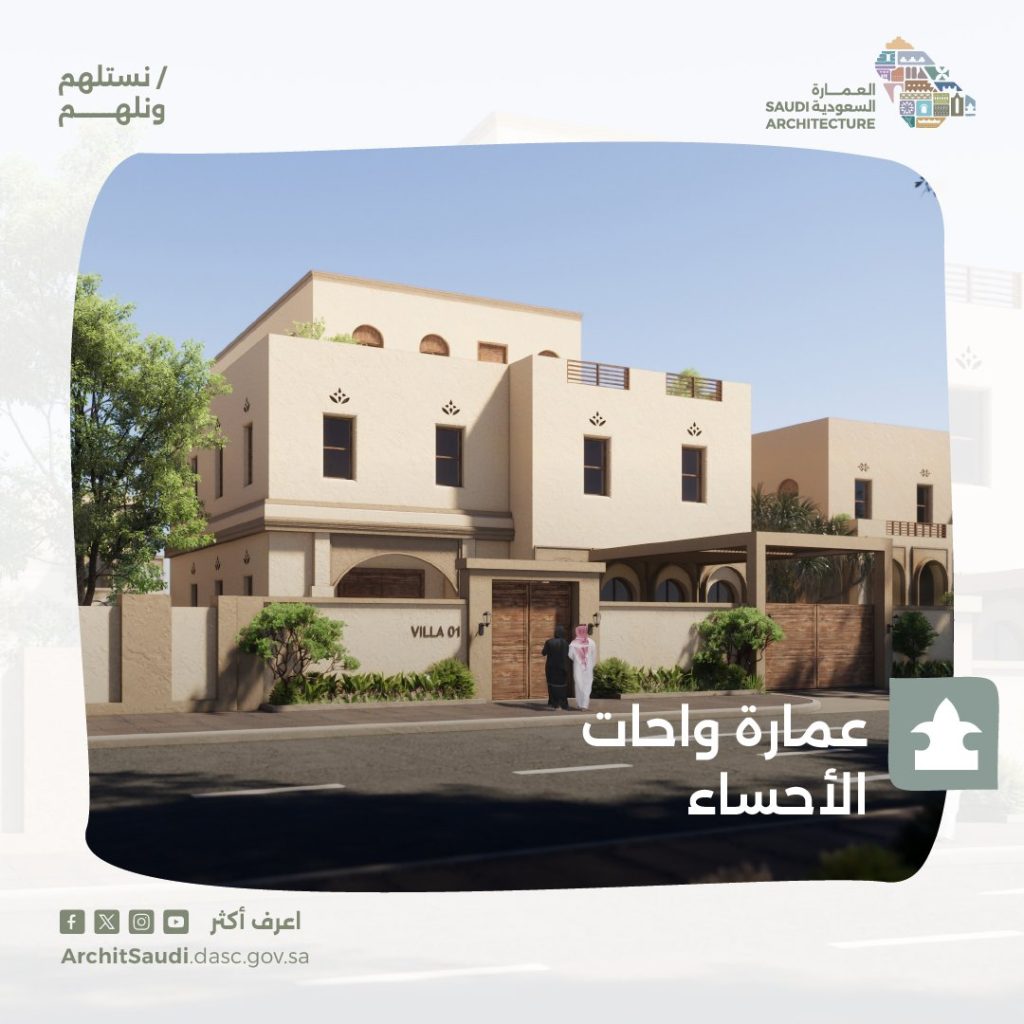
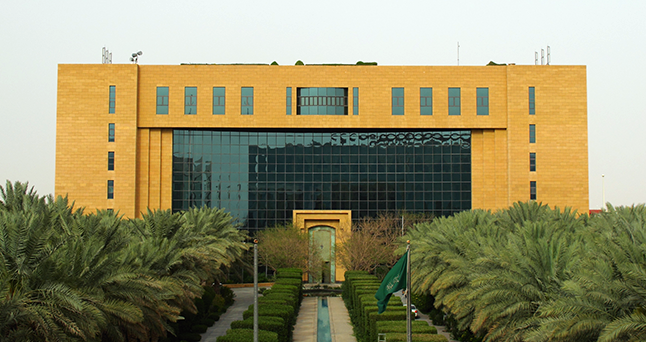
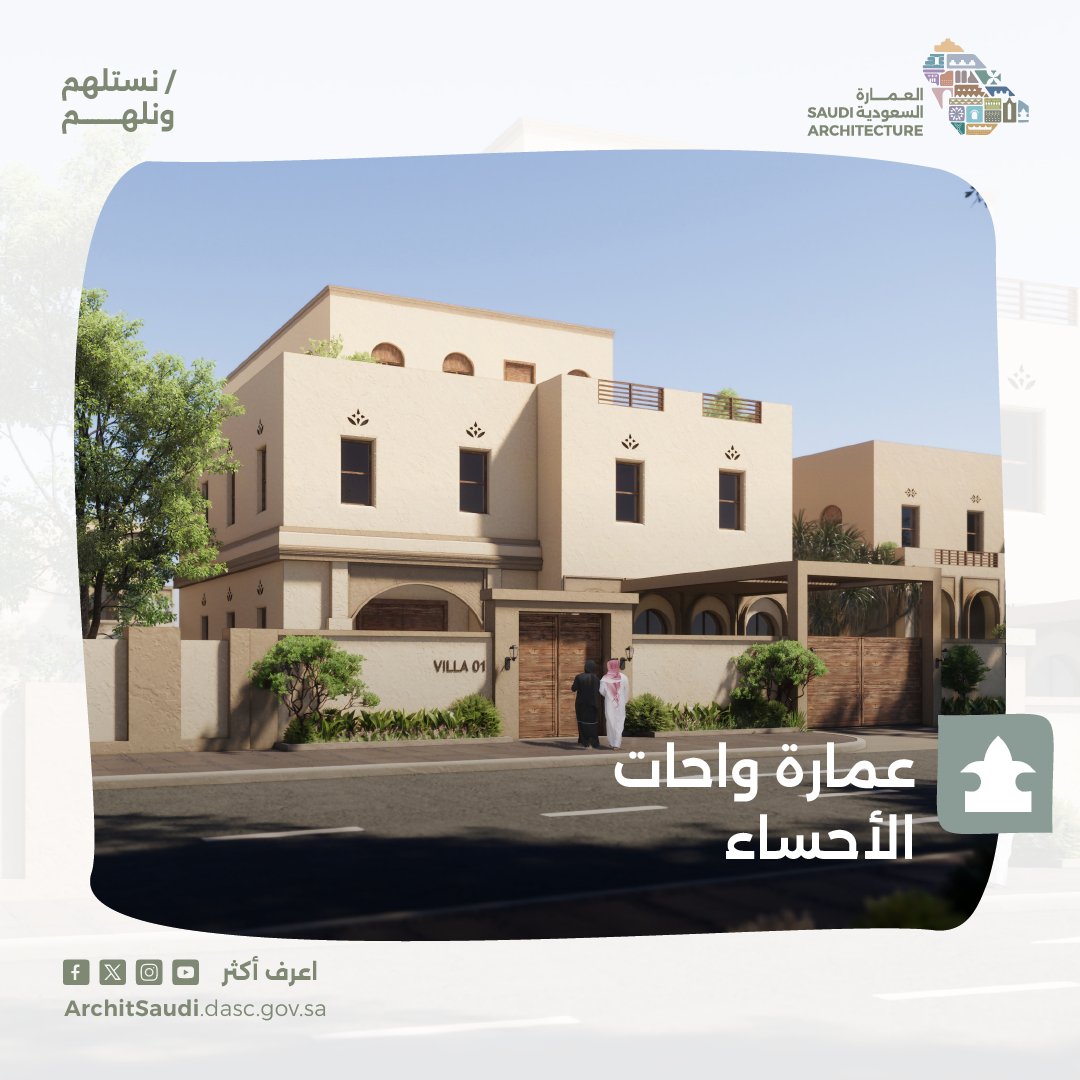
The cities of Al-Ahsa, Taif and Abha have started applying the concepts of “
Saudi Architecture” on the facades of residential villas, as part of the first phase of the urban landscape development project in the Kingdom, a step that comes in line with the vision of HRH Crown Prince Mohammed bin Salman to preserve the architectural heritage and enhance the quality of life within the objectives of Saudi Vision 2030.
In this regard, the official “Saudi Architecture” account announced the start of the implementation of the Saudi Architectural Identity on the facades of residential villas, as part of the first phase of the urban landscape development project in the Kingdom.
<In this regard, the official Saudi Architecture account on the X platform announced the start of the implementation of the application of the Saudi architectural identity on the design facades of residential villas in the cities of Al-Ahsa, Taif and Abha, as part of the first phase of the development of the urban landscape in the Kingdom. This comes in accordance with the geographical and cultural characteristics that characterize each region, emphasizing the importance of local identity in architectural designs. 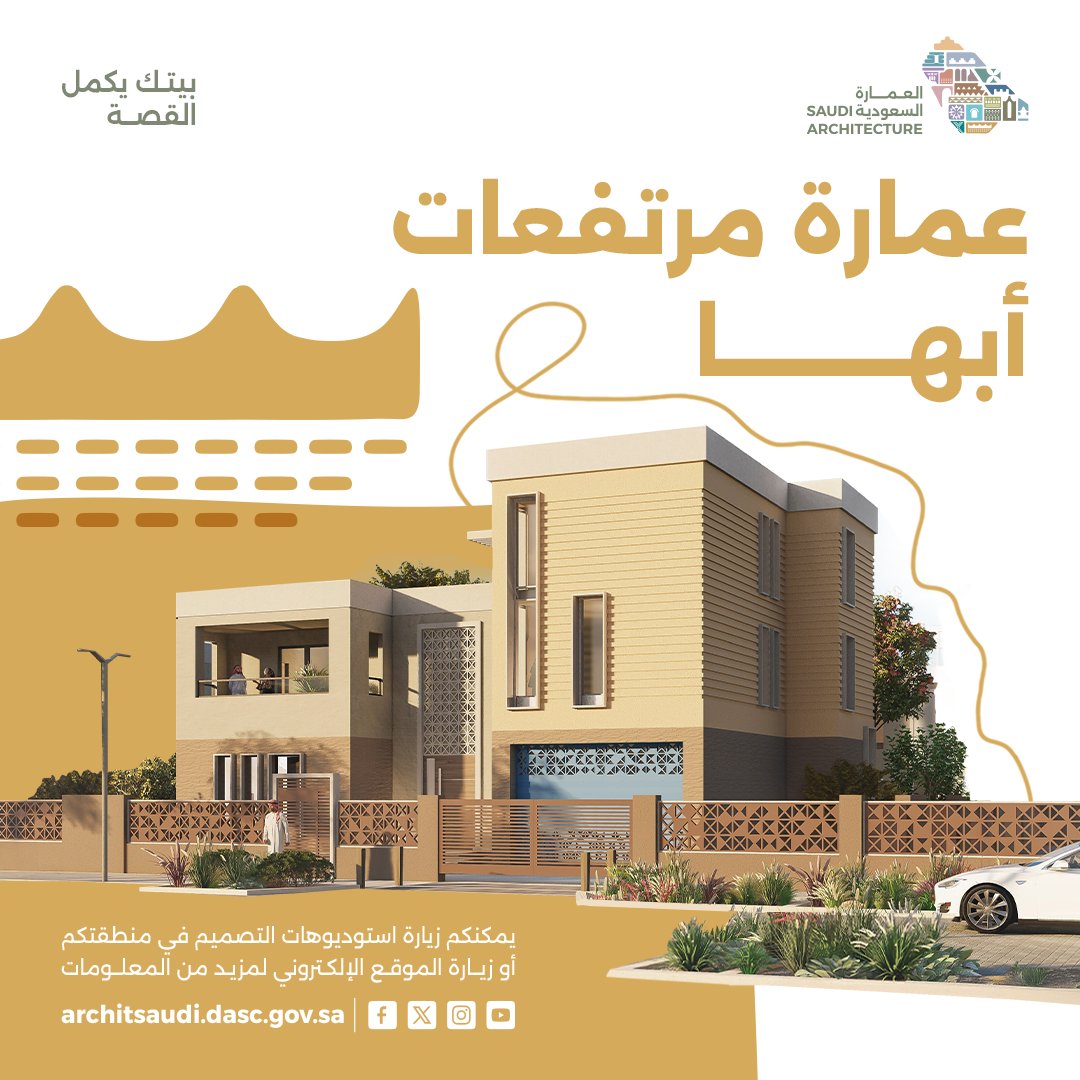
<This practical application is one of the fruits of the “
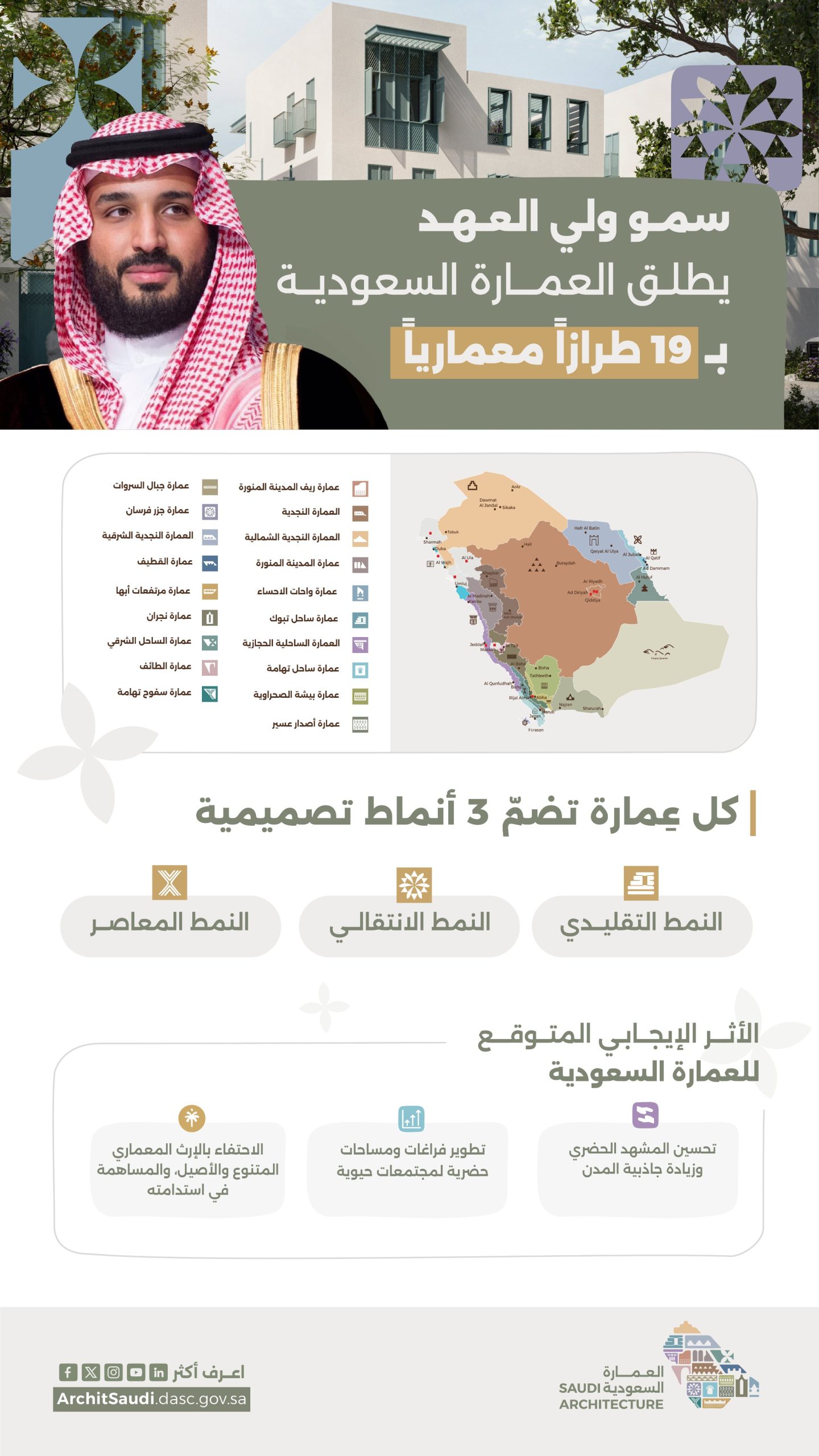
Saudi Architecture“ map, launched by His Highness Crown Prince and Prime Minister Mohammed bin Salman bin Abdulaziz, which includes 19 architectural styles inspired by the Kingdom's diverse geographical and cultural environments. The initiative aims to celebrate urban heritage, improve the quality of life, and develop the visual and urban environment in Saudi cities, in line with Vision 2030.
The initiative aims to celebrate urban heritage, improve the quality of life, and develop the visual and urban environment in Saudi cities, in line with Vision 2030.
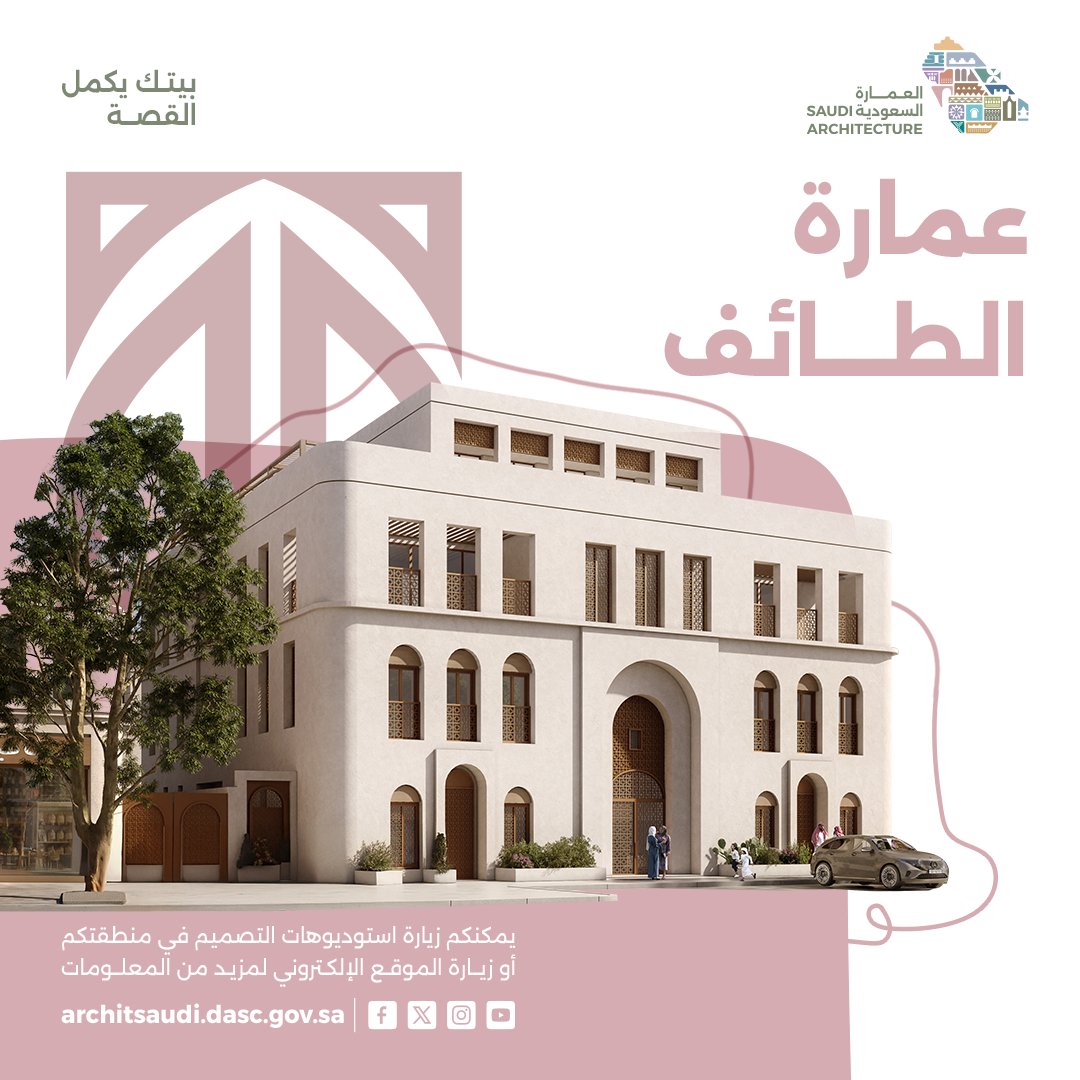
<According to
Saudi Architecture, this approach supports local architectural diversity and empowers Saudi talent in the construction and engineering sectors. The initiative is expected to contribute more than 8 billion riyals to cumulative GDP, in addition to creating more than 34,000 direct and indirect job opportunities in multiple fields such as urban development, engineering and construction by 2030.
<“
Saudi Architecture is based on flexible design guidelines that allow the use of local materials in construction without imposing additional financial burdens on owners or real estate developers. It is based on three main architectural styles: Traditional Style, Transitional Style, and Contemporary Style, allowing freedom of creative design while preserving the identity of each area.
These design guidelines will be applied gradually, starting with major projects, government buildings, and commercial establishments, to ensure that the visual identity is integrated with the surrounding environment.
These design guidelines will be applied gradually, starting with major projects, government buildings, and commercial establishments.
It is noteworthy that the application of "Saudi Architecture“ is carried out in an active partnership between government agencies, engineering offices and real estate developers, where engineering studios are equipped to provide technical and design support to designers and architects, in addition to organizing training workshops that provide guidelines and technical standards to ensure the quality of implementation and sustainability of new architectural models.
This initiative is not just a design project, but an integrated vision to revive the Saudi urban spirit, improve public taste, and enhance the attractiveness of cities as urban centers that reflect the Kingdom's history and cultural diversity.
What is Saudi architecture?
Saudi architecture is based on flexible design guidelines that allow the use of local building materials without imposing additional financial burdens on owners or developers, as it is based on three main styles: Traditional, Transitional, and Contemporary, allowing for creative design while preserving the authentic architectural style of each city and geographical area. The design guidelines will be applied, starting with major projects, government and commercial buildings, with the first phase in Al Ahsa, Taif, Makkah, and Abha.
The Saudi Architecture Map is based on flexible design guidelines that allow the use of local building materials without placing additional financial burdens on owners and developers.
<The Saudi Architecture Map includes 19 architectural styles, each of which reflects the geographical, natural and cultural characteristics of the region from which it was inspired, without being linked to the administrative division of the Kingdom, as each style was identified based on urban and historical studies that reflect the building patterns inherited through generations, namely: Najdi architecture, Northern Najdi architecture, Tabuk Coast architecture, Medina architecture, Medina architecture, Medina countryside architecture, Hejazi coastal architecture, Taif architecture, Sarawat Mountains architecture, Asrar Asir architecture. Tihama Foothills, Tihama Coast, Abha Highlands, Farsan Islands, Bisha Desert, Najran Desert, Al-Ahsa Oasis, Al-Qatif, East Coast, and Eastern Najdiya.
The implementation of Saudi Architecture is complemented by a partnership between government agencies, engineering offices, and real estate developers, where engineering design studios will provide the necessary support to engineers and designers to ensure the highest standards of quality and sustainability, while providing engineering guidelines and training workshops to qualify local talent.