
As countries around the world race to launch Smart Cities projects, the debate over their feasibility is escalating: Is it an inevitable civilizational leap to face the challenges of the present and create a more sustainable future, or an urban luxury that drains resources and serves a limited segment of society? Between supporters who see it as a strategic necessity and opponents who consider it an excessive expenditure on technology, the answer depends on a comprehensive view of global experiences, opportunities and challenges.
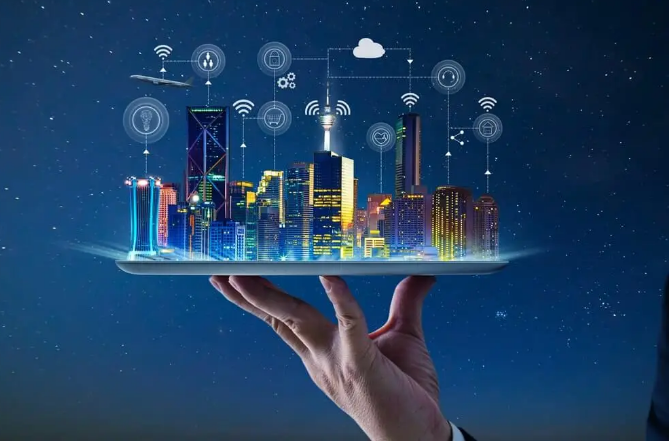
Smart Cities are not just neighborhoods connected to high-speed Internet networks or buildings equipped with the latest cameras, but integrated systems that rely on artificial intelligence, the Internet of Things and big data analysis to efficiently manage resources, improve quality of life, reduce energy and water waste, and enhance security and services. In these cities, traffic management is automated, government services are fully digitized, infrastructure is monitored in real time, and even green spaces are designed based on accurate climate data.
In these cities, traffic management is automated, government services are fully digitized, infrastructure is monitored in real time, and even green spaces are designed based on accurate climate data.
Necessity, not choice
But as glamorous as this image is, public opinion is divided globally. Proponents contend that rapid urbanization and worsening water, food and climate security challenges make smart cities a necessity rather than an option. They can reduce carbon emissions, solve traffic crises, and rationalize energy consumption, positively impacting the environment and the economy. On the other hand, opponents warn that these projects are expensive and may be directed to serve a limited population, while some countries need to prioritize health, education, and basic infrastructure before investing in cutting-edge technologies.
Some countries need to prioritize health, education, and basic infrastructure before investing in cutting-edge technologies.
Neom Project
<From Saudi Arabia's NEOM project, which seeks to create a fully smart city that relies on renewable energy and integrates innovation into every detail of life, to Songdo in South Korea, which was born from scratch as an eco-friendly model, but faced a challenge in attracting residents, to Masdar City in Abu Dhabi, which started out as a platform for green living in Abu Dhabi, which began as a platform for sustainable living, but has struggled with cost and expansion.Improving quality of life
<Economically and socially, smart cities hold great promise, creating new jobs in the technology, engineering, and data management sectors, attracting foreign investment, increasing the efficiency of government services through digital transformation, and improving citizens“ quality of life with smart transportation and energy systems. However, these promises are met with serious challenges, most notably the high cost of building smart infrastructure, the risk of privacy violations in light of the heavy reliance on data, the risk of a widening digital divide between those who can access smart services and those who cannot, as well as the need to design these cities to ensure their resilience to rapid technological changes.Realizing the promise of smart cities.
Achieving sustainable development
<”Smart cities are not a luxury, but a strategic tool to achieve sustainable development, but their success depends on gradual planning that balances technology with the needs of society,“ said Dr. Laila Mansour, a researcher in the field of urban planning. Dr. Laila Mansour, a researcher in urban economics, emphasizes that ”investment in smart cities must coincide with structural reforms in education, health and the economy, so that these cities do not turn into islands isolated from the reality of society."As the global trend towards this urban model grows, it seems that the cities of the future will become the dominant pattern in the coming decades. But their success will not be measured by the number of smart towers or sensors on their streets, but by their ability to balance innovation and social justice, making life more sustainable and prosperous for all residents.