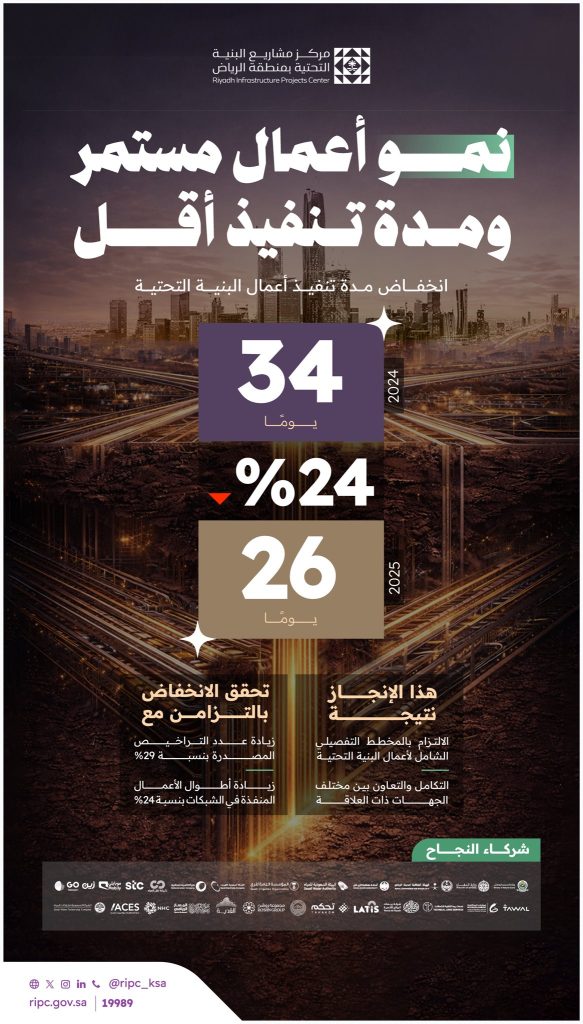
سجّل مركز مشاريع البنية التحتية بمنطقة الرياض انخفاضًا بنسبة 24% في مدة تنفيذ أعمال مشاريع البنية التحتية خلال عام (2025) مقارنة بعام (2024)، حيث انخفض متوسط مدة التنفيذ من (34) يومًا إلى (26) يومًا في 2025، في مؤشر يعكس التعاون بين مختلف الشركاء والجهات ذات العلاقة، وذلك بالتوازي مع نمو مستمر في حجم الأعمال.
وجاء هذا الانخفاض رغم ارتفاع إجمالي عدد التراخيص من أكثر من (150) ألف ترخيص في 2024 إلى أكثر من (195) ألف ترخيص في 2025، بنسبة نمو بلغت (29%) لمشاريع الطاقة والمياه والاتصالات والطرق بالمنطقة.
وأوضح المركز أن هذا التحسن يرتبط بشكل مباشر بتطبيق المخطط الشامل لأعمال البنية التحتية، وتعزيز التخطيط المسبق، ضمن توجهه الإستراتيجي نحو تنظيم الأعمال عبر سلسلة قيمة متكاملة تغطي مراحل التخطيط والتنسيق والتمكين، وتستند إلى تحديثات تنظيمية ومعيارية مستمرة ترفع كفاءة الإجراءات، وتحد من التعارضات الزمانية والمكانية، وتقلل تكرار الأعمال.
وبيّن أن هذا النهج يُترجم دور المركز التنظيمي في توحيد الرؤية التشغيلية، وتحسين تنسيق أصحاب المصلحة، وتفعيل الأدوات التي ترفع جودة التنفيذ، وتضمن مواءمته مع مستهدفات جودة الحياة وحماية الأصول.
وبيّن المركز أن المؤشرات التشغيلية سجّلت نموًا أيضًا في أطوال الأعمال المنفذة من (9.490) كيلومترًا إلى (11.784) كيلومترًا، بنسبة نمو بلغت 24%، إلى جانب ارتفاع إجمالي عدد البلاغات المعالجة من (101.102) إلى (233.101)، بنسبة نمو 131%، بما يعكس اتساع نطاق المتابعة وتحسّن كفاءة التعامل مع البلاغات المرتبطة بأعمال البنية التحتية.
كما ارتفع عدد الزيارات الرقابية من (84.316) زيارة في 2024 إلى (292.794) زيارة في 2025، بنسبة نمو (247%)، بالتوازي مع تحسّن معدل الالتزام بمدة الترخيص من (91%) إلى (92%)، وهو ما يدعم مستهدفات المركز في تعزيز الامتثال لمعايير السلامة والجودة عبر الرقابة الفاعلة والإرشادات الموحدة للامتثال.
وأشار المركز إلى أن هذه النتائج مجتمعة تُجسد توجهه الإستراتيجي في خفض المعوقات الناتجة عن أعمال مشاريع البنية التحتية، وتقليل أثرها الحضري أثناء التنفيذ، بما يسهم في تحسين المشهد الحضري، والحد من الإغلاقات والتداخلات، ورفع جودة التجربة اليومية لسكان مدينة الرياض.
وأكد استمراره في تطوير آليات التخطيط والتنسيق والرقمنة وإدارة البيانات، وتحديث الإطار التنظيمي والمعياري، ضمن خارطة طريق إستراتيجية ممتدة، بما يواكب توسّع الأعمال، ويعزز كفاءة التنظيم والاستدامة، ويخدم بناء مستقبل حضري أكثر انسجامًا للمدينة وسكانها.