The success of a project is no longer measured by numbers alone, in today's real estate world. <Global data indicates that the health and wellness real estate market exceeded $584 billion in 2024 and is expected to exceed $1.1 trillion by 2029, with an annual growth rate of 20%. According to the Global Wellness Institute, global experiences have proven that buildings designed with health and well-being standards in mind: such as WELL and Fitwel certifications, attract long-term tenants and investors, minimize operational risk and preserve market value over the long term. If we focus on the Saudi real estate market, its broad title is “Rapid Growth and Impactful Changes.”
Saudi Arabia is undergoing major transformations. The Kingdom is witnessing major shifts in the real estate market, with clear economic impacts as the volume of real estate transactions reaches SAR 1.2 trillion (≈$324 billion) between July 2023 and July 2025, an increase of 17% in one year, according to realassetinsight.com
<The total market value exceeded 2.5 trillion riyals (≈666 billion dollars) in 2024, while residential sales in major cities such as Riyadh, Jeddah, and the Eastern Province exceeded 118 billion riyals (≈32 billion dollars) in 2024, up 50% from the previous year. According to deloitte.com, about 69% of the residential units sold were in the middle segment between SR250,000 and SR1,000,000, reflecting a shift in demand towards quality-of-life housing. Forecasts indicate a CAGR of 7-8% until 2031, as major cities expand and demand for integrated housing increases. According to mordorintelligence.com, the projected population in Riyadh alone may exceed 17 million by 2030, increasing the need to develop projects that take into account human well-being. <“Humanized real estate” is an investment opportunity for several reasons, including that it is a stable and long-term demand, and projects that put people at the center of their design attract buyers and tenants looking for a balanced living environment, ensuring high occupancy rates and investment stability. There is no doubt that humanizing real estate is in line with Saudi Vision 2030 as it seeks to raise the homeownership rate to 70%, promote sustainable communities, and build infrastructure that respects family well-being. Humanized projects not only serve the population, but also support strategic development goals. And generate sustainable financial returns. <Incorporating human factors into building design reduces operational risk, improves resident satisfaction, and increases the long-term value of the property, making it a profitable and sustainable investment. Humanistic design is not just about aesthetics, it's about:
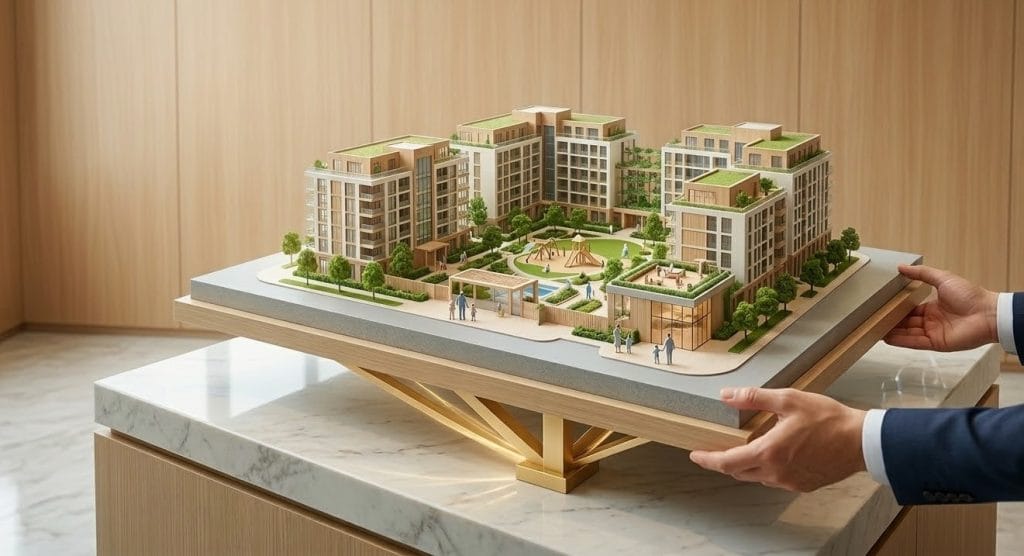
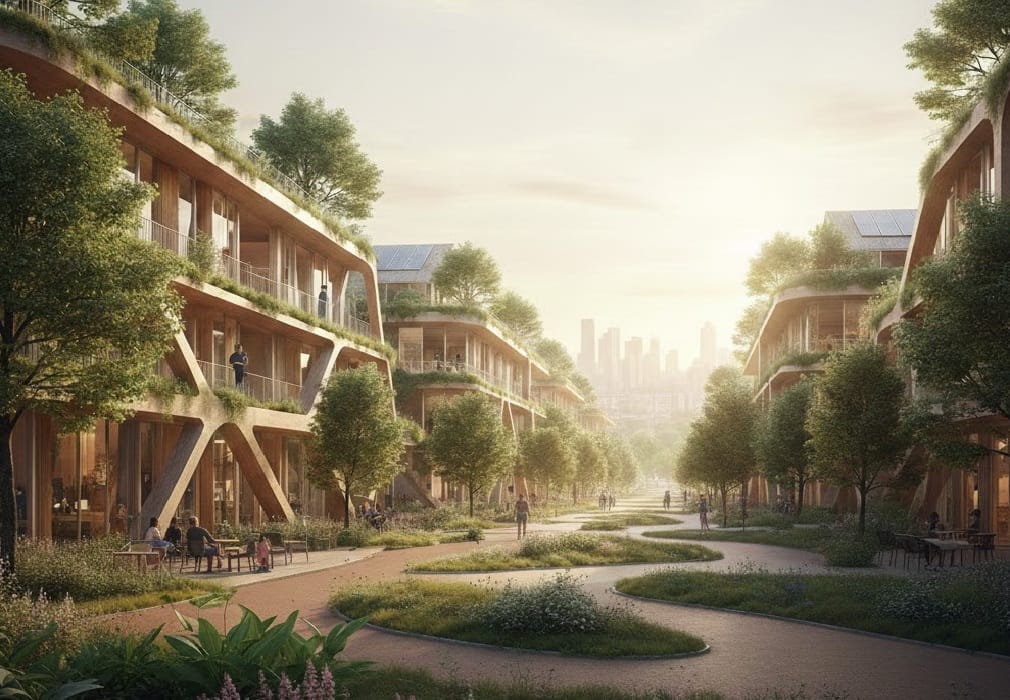
Humanistic design is not just about aesthetics. <Natural lighting and good ventilation. <Green spaces and a healthy environment. <Ease of movement for adults and seniors. <Integrated communities that include community, educational, and health services. These factors transform real estate from a rigid financial product to an integrated living environment that makes residents part of the success of the investment, and human beings become an element of protection for the return on investment.
These factors transform real estate from a rigid financial product to an integrated living environment. <Based on all of the above, we can affirm that human real estate is not an aesthetic or recreational choice, but a strategic economic and investment decision. In Saudi Arabia, where population growth is rapid and Vision 2030 focuses on quality of life and social empowerment, integrating humans at the heart of the real estate process represents a unique opportunity to maximize returns, minimize risks, and build sustainable communities, because when real estate is built for humans, it is built for both sustainability and profitability.