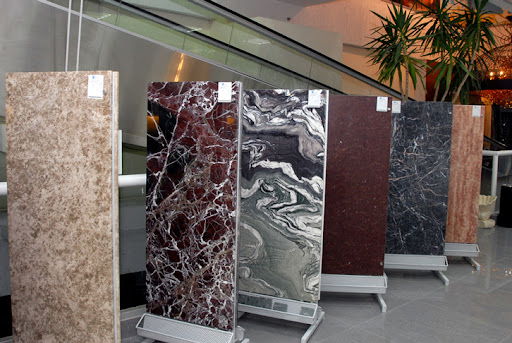

Marble is one of the most recognizable and luxurious natural materials in the world of building finishes.
Uses of Marble
<Marble has many uses within buildings, with indoor and outdoor flooring being its most prominent area, giving salons, hallways and the main entrance of the building an elegant look and natural coolness that keeps feet comfortable.<It is also used in wall coverings, especially in lobbies and luxury hotels, to create a high-level artistic touch. It is also important in kitchens and bathrooms, where its resistance to moisture and heat allows it to be used as kitchen countertops or bathroom sinks, while maintaining a glossy look and long-lasting durability. Not only that, the use of marble extends to stairs and columns, as well as tables, benches and interiors, enhancing the architectural structure and adding luxury to public and private spaces.
Marble is also important in kitchens and bathrooms.
Types of Marble
There are a range of popular types of marble, each differing in color, pattern, and technical characteristics. Italian Carrara marble, with its white color and fine gray veins, is ideal for interior floors and walls and reflects light to make spaces feel more spacious. Spanish and Turkish Emperador marble, on the other hand, adds a warm and luxurious touch with its brown color and golden or white veins, and is particularly suitable for kitchens and bathrooms.
With its brown color and golden or white veins, Carrara marble is ideal for indoor floors and walls and reflects light to make spaces feel more spacious. <Rosa Burgundy marble, with its pink color and light white veins, creates a romantic and tranquil atmosphere, often used in high-end bedrooms and salons. For a modern atmosphere, black marble or basalt marble gives a feeling of strength and luxury, and is used in kitchen countertops and tables. Jordan White Marble is characterized by its pure surface and simple veins, making it suitable for floors, walls and exterior facades, giving the place a brightness and renewed elegance.
White Jordan Marble is also suitable for floors, walls and exterior facades.
Benefits of Marble
<All types of marble are durable, able to withstand heavy use and scratches, and easy to clean and maintain, making it a long-lasting investment. In addition, the use of marble enhances the value of the property and gives it a luxurious feel that is highly appreciated by residents and visitors alike. With so much variety, choosing the perfect marble depends on several factors, most notably the purpose of use, consistency with interior design colors, durability for kitchens and bathrooms, as well as the balance between luxury and cost, as some types can fit into small spaces, while others add incomparable elegance to large spaces.
In the end, marble remains an exceptional material that combines art, nature and practical durability, and is an ideal choice for anyone looking to give their interior and exterior spaces a touch of lasting luxury, combining originality and modernity at the same time.
Marble is an ideal choice for anyone looking to give their interior and exterior spaces a touch of lasting luxury, combining originality and modernity at the same time.
Tips for choosing the perfect marble for homes and offices
Choosing the right marble for indoor and outdoor spaces requires consideration of several factors to ensure lasting beauty and practical luxury. Here are our top tips:
Determine the purpose of use:
Before buying marble, it is essential to determine where it will be used. In homes, the choice varies between floors, walls, kitchens, or bathrooms. In administrative offices, marble is preferred for floors, walls, lobbies, and entrances, as it reflects elegance and sophistication and makes a strong first impression on visitors.
Before purchasing marble, it is important to determine where it will be used.
Durability and moisture resistance:
<It is advisable to choose marble types that are strong and resistant to scratches and shocks in high-traffic areas such as corridors or open offices, while aesthetic appeal can be emphasized in less-used areas. In kitchens and bathrooms, choose marble that is resistant to moisture and heat.
Choosing the right color and pattern:
Color greatly affects the sense of space and atmosphere. Light colors such as white or cream marble give a feeling of spaciousness and purity, while darker colors such as black or brown give a sense of luxury and professionalism, making them more suitable for offices and businesses.
Darker colors such as black or brown give a sense of luxury and professionalism, making them more suitable for offices and businesses.
Matching marble to interior design:
Marble should harmonize with wall colors, furniture, and other decorations. In homes, marble with pronounced veins can be chosen to add an artistic touch, while in administrative offices, marble with a simple and refined pattern is often preferred to reflect professionalism.
Marble with a simple and refined pattern is often preferred to reflect professionalism.
Check the quality and thickness:
<High-quality marble is more resistant to cracks and scratches, while the thickness of the tiles affects durability and longevity. The ideal thickness for floors is usually between 2-3 centimeters, while for walls 1-2 centimeters is enough.
Budget and Cost:
It is important to set a clear budget before choosing marble, as some luxury types such as Italian Carrara or Emperador marble can be expensive, while local or lesser-known types offer a good combination of beauty and durability at a lower cost.
Local or lesser-known types offer a good combination of beauty and durability at a lower cost.
Benefit from models and samples:
Before implementation, it is advisable to view the marble samples in the natural lighting of the space, as light can change the color and vein pattern and ensure that it matches the desired space.
Marble samples can be viewed in the natural light of the space.