
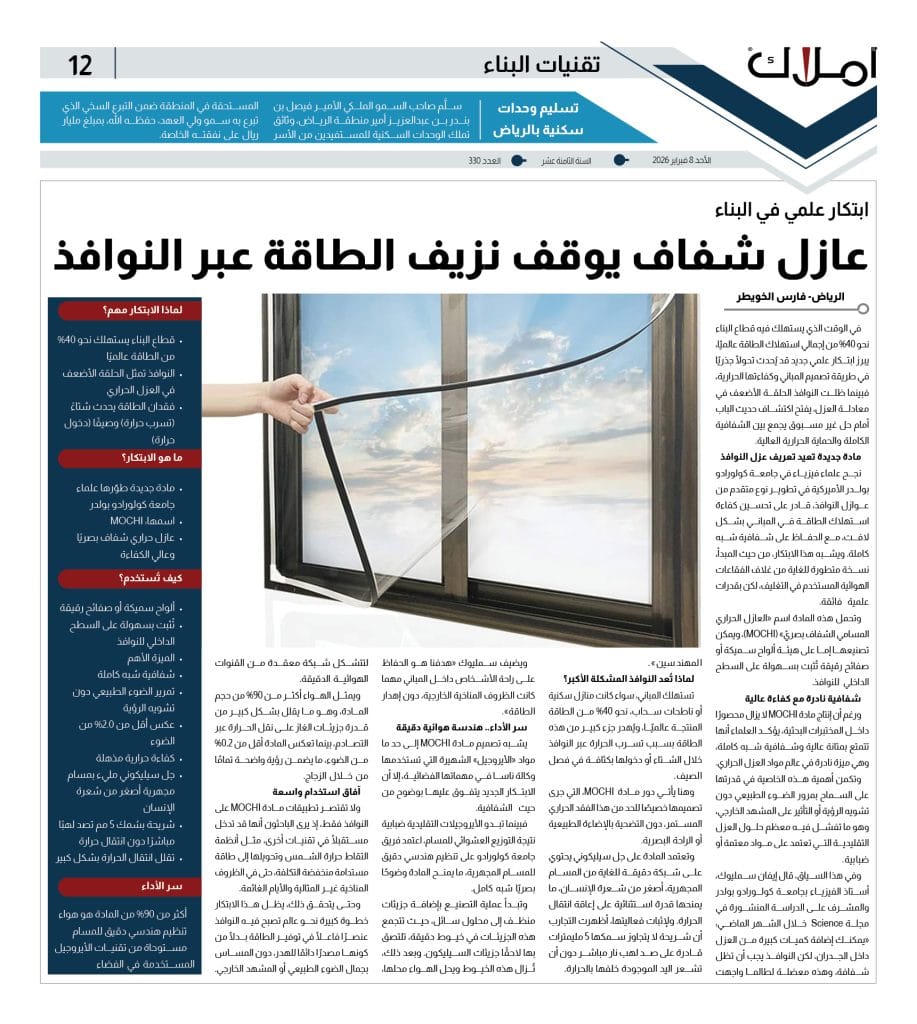
في الوقت الذي يستهلك فيه قطاع البناء نحو 40% من إجمالي استهلاك الطاقة عالميًا، يبرز ابتكار علمي جديد قد يُحدث تحولًا جذريًا في طريقة تصميم المباني وكفاءتها الحرارية، فبينما ظلت النوافذ الحلقة الأضعف في معادلة العزل، يفتح اكتشاف حديث الباب أمام حل غير مسبوق يجمع بين الشفافية الكاملة والحماية الحرارية العالية.
مادة جديدة تعيد تعريف عزل النوافذ
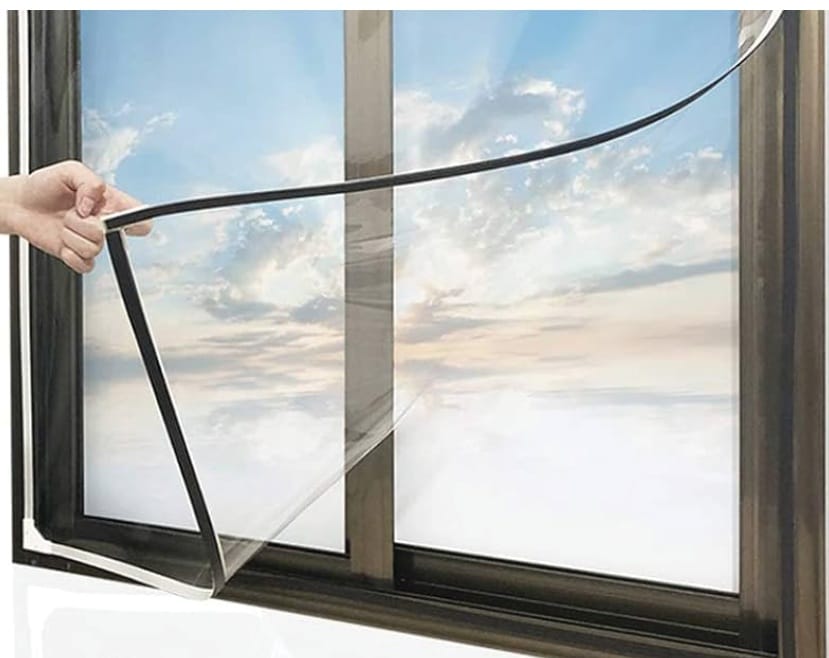
نجح علماء فيزياء في جامعة كولورادو بولدر الأميركية في تطوير نوع متقدم من عوازل النوافذ، قادر على تحسين كفاءة استهلاك الطاقة في المباني بشكل لافت، مع الحفاظ على شفافية شبه كاملة. ويشبه هذا الابتكار، من حيث المبدأ، نسخة متطورة للغاية من غلاف الفقاعات الهوائية المستخدم في التغليف، لكن بقدرات علمية فائقة. وتحمل هذه المادة اسم «العازل الحراري المسامي الشفاف بصريً» (MOCHI)، ويمكن تصنيعها إما على هيئة ألواح سميكة أو صفائح رقيقة تُثبت بسهولة على السطح الداخلي للنوافذ.
شفافية نادرة مع كفاءة عالية
ورغم أن إنتاج مادة MOCHI لا يزال محصورًا داخل المختبرات البحثية، يؤكد العلماء أنها تتمتع بمتانة عالية وشفافية شبه كاملة، وهي ميزة نادرة في عالم مواد العزل الحراري. وتكمن أهمية هذه الخاصية في قدرتها على السماح بمرور الضوء الطبيعي دون تشويه الرؤية أو التأثير على المشهد الخارجي، وهو ما تفشل فيه معظم حلول العزل التقليدية التي تعتمد على مواد معتمة أو ضبابية.
وفي هذا السياق، قال إيفان سمليوك، أستاذ الفيزياء بجامعة كولورادو بولدر والمشرف على الدراسة المنشورة في مجلة Science خلال الشهر الماضي: «يمكنك إضافة كميات كبيرة من العزل داخل الجدران، لكن النوافذ يجب أن تظل شفافة، وهذه معضلة لطالما واجهت المهندسين».
لماذا تُعد النوافذ المشكلة الأكبر؟
تستهلك المباني، سواء كانت منازل سكنية أو ناطحات سحاب، نحو 40% من الطاقة المنتجة عالميًا، ويُهدر جزء كبير من هذه الطاقة بسبب تسرب الحرارة عبر النوافذ خلال الشتاء أو دخولها بكثافة في فصل الصيف. وهنا يأتي دور مادة MOCHI، التي جرى تصميمها خصيصًا للحد من هذا الفقد الحراري المستمر، دون التضحية بالإضاءة الطبيعية أو الراحة البصرية.
وتعتمد المادة على جل سيليكوني يحتوي على شبكة دقيقة للغاية من المسام المجهرية، أصغر من شعرة الإنسان، ما يمنحها قدرة استثنائية على إعاقة انتقال الحرارة. ولإثبات فعاليتها، أظهرت التجارب أن شريحة لا يتجاوز سمكها 5 مليمترات قادرة على صد لهب نار مباشر دون أن تشعر اليد الموجودة خلفها بالحرارة. ويضيف سمليوك «هدفنا هو الحفاظ على راحة الأشخاص داخل المباني مهما كانت الظروف المناخية الخارجية، دون إهدار الطاقة».
سر الأداء.. هندسة هوائية دقيقة
يشبه تصميم مادة MOCHI إلى حد ما مواد «الأيروجيل» الشهيرة التي تستخدمها وكالة ناسا في مهماتها الفضائية، إلا أن الابتكار الجديد يتفوق عليها بوضوح من حيث الشفافية.
فبينما تبدو الأيروجيلات التقليدية ضبابية نتيجة التوزيع العشوائي للمسام، اعتمد فريق جامعة كولورادو على تنظيم هندسي دقيق للمسام المجهرية، ما يمنح المادة وضوحًا بصريًا شبه كامل. وتبدأ عملية التصنيع بإضافة جزيئات منظف إلى محلول سائل، حيث تتجمع هذه الجزيئات في خيوط دقيقة، تلتصق بها لاحقًا جزيئات السيليكون. وبعد ذلك، تُزال هذه الخيوط ويحل الهواء محلها، لتتشكل شبكة معقدة من القنوات الهوائية الدقيقة. ويمثل الهواء أكثر من 90% من حجم المادة، وهو ما يقلل بشكل كبير من قدرة جزيئات الغاز على نقل الحرارة عبر التصادم، بينما تعكس المادة أقل من 0.2% من الضوء، ما يضمن رؤية واضحة تمامًا من خلال الزجاج.
آفاق استخدام واسعة
ولا تقتصر تطبيقات مادة MOCHI على النوافذ فقط، إذ يرى الباحثون أنها قد تدخل مستقبلًا في تقنيات أخرى، مثل أنظمة التقاط حرارة الشمس وتحويلها إلى طاقة مستدامة منخفضة التكلفة، حتى في الظروف المناخية غير المثالية والأيام الغائمة.
وحتى يتحقق ذلك، يظل هذا الابتكار خطوة كبيرة نحو عالم تصبح فيه النوافذ عنصرًا فاعلًا في توفير الطاقة بدلًا من كونها مصدرًا دائمًا للهدر، دون المساس بجمال الضوء الطبيعي أو المشهد الخارجي.
الخلاصة
لماذا الابتكار مهم؟
قطاع البناء يستهلك نحو 40% من الطاقة عالميًا
النوافذ تمثل الحلقة الأضعف في العزل الحراري
فقدان الطاقة يحدث شتاءً (تسرب حرارة) وصيفًا (دخول حرارة)
ما هو الابتكار؟
مادة جديدة طوّرها علماء جامعة كولورادو بولدر اسمها: MOCHI وهي عازل حراري شفاف بصريًا وعالي الكفاءة
كيف تُستخدم؟
ألواح سميكة أو صفائح رقيقة
تُثبت بسهولة على السطح الداخلي للنوافذ
الميزة الأهم
شفافية شبه كاملة
تمرير الضوء الطبيعي دون تشويه الرؤية
عكس أقل من 0.2% من الضوء
كفاءة حرارية مذهلة
جل سيليكوني مليء بمسام مجهرية أصغر من شعرة الإنسان
شريحة بسُمك 5 مم تصد لهبًا مباشرًا دون انتقال حرارة
تقلل انتقال الحرارة بشكل كبير
سر الأداء
أكثر من 90% من المادة هو هواء
تنظيم هندسي دقيق للمسام
مستوحاة من تقنيات الأيروجيل المستخدمة في الفضاء
استخدامات مستقبلية
نوافذ موفرة للطاقة
أنظمة التقاط حرارة الشمس
دعم الطاقة المستدامة حتى في الطقس الغائم