
Many people may believe that building finishes, whether residential or commercial, are subject to the same standards as long as they aim to achieve aesthetic appeal and practical functionality; however, engineering and economic realities reveal fundamental differences between the two types. Commercial buildings are designed according to a completely different operational philosophy, prioritizing operational sustainability, the ability to withstand heavy use, and strict adherence to standards—factors that directly influence the quality, cost, and implementation methods of the finishes used.
The Nature of Use Dictates Different Finishes
The choice of finishes is directly linked to the nature of the building’s use and the expected number of daily users. In residential buildings, usage is relatively limited and is often restricted to family members, allowing for the use of materials that prioritize visual comfort and aesthetics without requiring extremely high levels of durability.
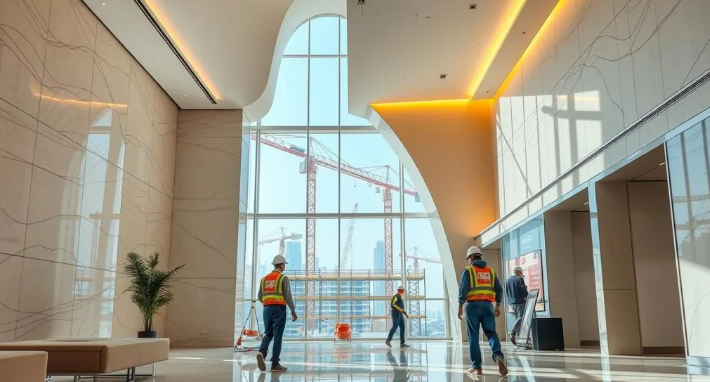
In commercial buildings, such as offices, shopping centers, and service facilities, heavy daily traffic places significant strain on floors, walls, and various facilities. This intensive use prompts developers to choose materials capable of withstanding wear and tear, impacts, and constant traffic, ensuring that the building continues to operate efficiently without the need for frequent maintenance that could disrupt business operations.
Durability as an Economic Factor Before It Is an Engineering Choice
Durability in commercial buildings is not merely an added feature, but a fundamental element in investment calculations. Any maintenance or replacement of finishes may mean a partial shutdown of operations and direct financial losses; therefore, materials with a long service life are relied upon, even if their initial cost is higher.
These trends include the use of heavy-duty flooring, industrial paints that can withstand continuous cleaning, moisture-resistant roofing systems, as well as glass facades and lighting systems designed to operate for long hours. In contrast, residential buildings allow greater flexibility in selecting materials that prioritize comfort and a warm aesthetic over their ability to withstand operational stress.
Stricter Standards Govern Commercial Buildings
Commercial buildings are subject to a more complex system of standards and regulatory requirements compared to residential buildings, particularly with regard to public safety and crowd management. These requirements include strict standards for fire safety and evacuation systems, accessibility for people with disabilities, ventilation quality, and sound insulation, in addition to energy efficiency.
These regulations directly influence finishing decisions, as the materials used must be certified and comply with technical specifications—such as the use of non-combustible materials in public corridors or slip-resistant flooring in high-traffic areas. In contrast, residential buildings enjoy greater flexibility in design and material choices as long as they meet minimum building requirements.
Cost: A Short-Term vs. Long-Term Perspective
The biggest difference between commercial and residential finishes becomes apparent when analyzing the concept of cost. In residential projects, the owner often focuses on reducing the initial construction cost, especially in single-family units or medium-sized projects.
In commercial buildings, however, costs are evaluated from a long-term perspective known as life-cycle cost, where maintenance, operating, and replacement expenses are calculated over the building’s operational lifespan. Therefore, higher-priced materials may be chosen initially because they reduce future expenses and ensure the building’s stable operational performance.
Finishes as Part of Brand Identity
The role of finishes in commercial buildings is not limited to practical function; it extends to becoming part of the project’s visual identity. The interior design and materials used help shape the user experience and reinforce the brand’s or organization’s image.
For this reason, modern commercial projects rely on finishes that reflect a corporate and professional character, through well-thought-out lighting, open spaces, and contemporary materials that give the space a modern feel that attracts customers and visitors, while residential finishes focus on creating a comfortable environment that enhances a sense of privacy and stability.
Sustainability and Operational Efficiency: A Growing Trend
With the evolution of modern construction concepts, sustainability has become a key element in commercial building finishes, as companies seek to reduce energy consumption and lower long-term operating costs. Consequently, there is a growing reliance on eco-friendly materials, energy-efficient lighting systems, and thermal insulation solutions that help improve a building’s efficiency.
Although these concepts are gradually making their way into the residential sector, their application remains more comprehensive and mandatory in commercial projects due to their direct link to operating costs and return on investment. Ultimately, the difference between commercial and residential building finishes stems not only from the variety of materials but also from a completely different philosophy of design and operation. Residential buildings are constructed to meet daily comfort needs, while commercial buildings are designed to achieve efficiency, sustainability, and economic returns.
Consequently, durability, standards, and cost become the defining factors that shape the nature of commercial finishes, clearly explaining why this type of project cannot be approached using the same standards as residential finishes—even if they appear similar in terms of exterior appearance.