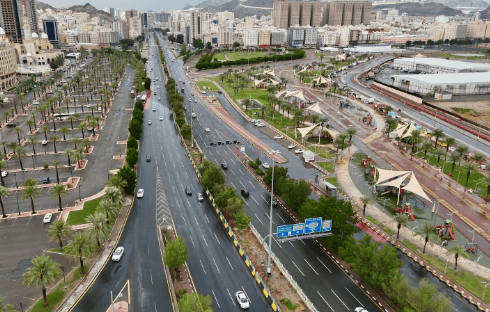
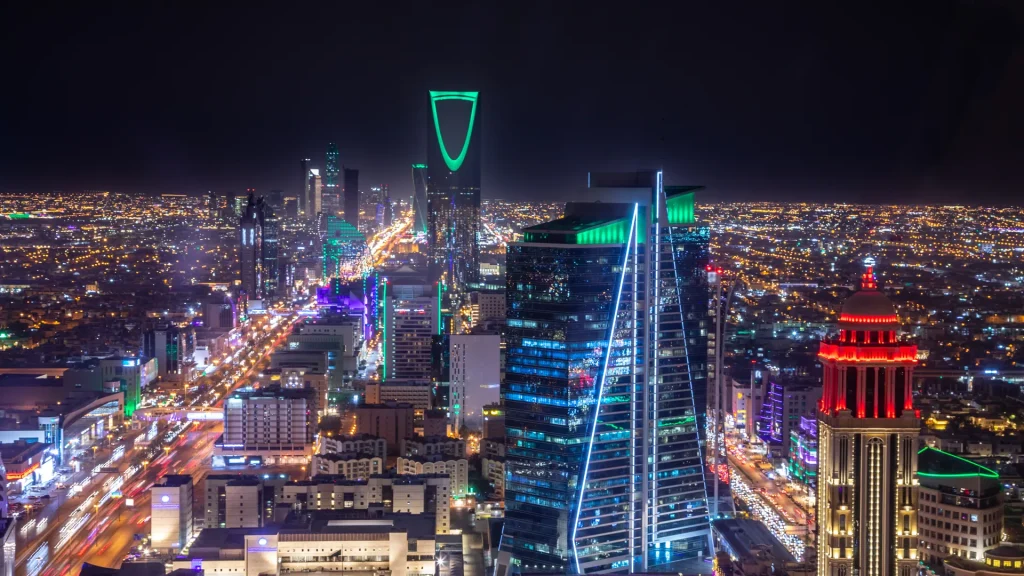
The first Urban Planning Forum organized by the Ministry of Municipal and Rural Affairs under the slogan «Modern Trends in Urban Planning» at King Faisal Conference Hall in Riyadh, revealed the rapid pace at which the Kingdom is moving towards urbanization, where it is the most developed country in this regard, as the level increased by approximately 33% between 1970 and 2010, as the number of cities jumped from (58) cities in 1970 to (285) cities in 2015, the largest of which is Riyadh with more than 6 million people.
Growth and pressure on infrastructure
The Formulation and Development of Urban Planning
The Minister said in his speech that the Ministry has embarked on formulating programs that develop and modernize urban planning at all levels, raise the level of quality and efficiency of municipal facilities, improve the quality of municipal services, and achieve effective land management and conservation to achieve the goal of urban development, which is to achieve development and prosperity for our cities and the well-being of their residents, Al-Sheikh stressed the need to improve the performance of institutions and agencies concerned with the management of city affairs in their planning methods, the structure of their agencies, the efficiency of their cadres and their work programs, noting that the Ministry will work to control and regulate urban development, achieve effective institutional performance, promote community participation and optimal independence of municipal resources, and build and strengthen sustainable partnerships with the private sector to achieve the elements of this plan on the ground.
<p class="p1(The Future of Saudi Cities) in cooperation with the United Nations
Al Al-Sheikh called for reformulating the duties of the agencies concerned with managing cities, defining their scope and areas, and redefining the services needed by city residents, in light of the great cultural transformation and comprehensive technical development, to achieve a qualitative leap in urban planning concepts and strategies to be more comprehensive in their objectives, more close and specific to the conditions of the cities for which they are developed, more practical in the transition between reality and the goals set, and more amenable to community participation and economic integration.
Al Al-Sheikh
Al al-Sheikh revealed multiple programs to review city planning, including the Future of Saudi Cities programs in cooperation with the United Nations Human Settlements Program (UN-Habitat) to make a qualitative shift in the planning of the Kingdom's cities and make them more attractive to live, work and settle.
Al al-Sheikh revealed multiple programs to review the planning of cities, including the Future of Saudi Cities program.
_ _ _ _ _ _ _ _ _
Urban planning towards a sustainable future. Sharing and international experiences boost the growth of the Cities Prosperity and Development Index
The First Urban Planning Forum addressed a number of issues related to urban transformation, the Cities Prosperity, Development and Prosperity Index, and the link between the sustainable development of cities and the concept of "quality of life" as the most important factor in the index.
The First Urban Planning Forum addressed in its themes a number of issues related to urban transformation and the Cities Prosperity, Development and Prosperity Index.
Dr. Adel bin Shaheen Al-Dosari, Dean of the College of Environmental Design, King Fahd University of Petroleum and Minerals, addressed «Principles in Urban Transformation» and presented Dr.space»> Dr. Tariq Al-Sheikh, Habitat Program Manager, United Nations in Saudi Arabia, presented a paper titled "The Future of Saudi Cities Program Towards a New Urban Agenda", and Dr. Bertrand Renaud, Senior Urban Development Advisor, World Bank (US), discussed "Quality of Life as a key indicator of prosperity and well-being of cities". Dr. Angelo Michko Hama, Director of International Relations at the Alpine Institute for Resilience and City Readiness (Austria), addressed the integration of resilient and responsive city indicators into city planning.
Dr. Angelo Michko Hama.
On the foreign participation side, the Korean experience with smart cities and European city planning were reviewed under "Experiences in Urban Transformation and Management", while Tuan Kee Au, Director of the Center for Attractive Cities to Live and Work, Ministry of National Development, Singapore, presented a paper entitled: «Planning Urban Transformation towards a Sustainable Future» and a paper entitled: «The Added Value of Development in Sustainable Smart Cities» by Dr. Philippe Maurice Bouvier, urban development expert in France, and Dr. Piotr Lorenz, Vice President of the International Society of City and Regional Planners in Poland, presented "Building Partnerships in Urban Renewal".
<p class="p2_ _ _ _ _ _ _ _ _ _
Oil Crisis Begins Saudi Economy's Shift to Alternative Investments
A foreign specialist and expert has developed a roadmap for building and planning cities and tourist destinations based on the "bottom-up" planning theory; starting from the house that accommodates six people, then there are so-called residential units that include 16 residential units, then these units form what is known as clusters, which include several units of buildings with multiple uses, including hotels, which pass through them He added that these gatherings form what is known as the "neighborhood level" and consists of 6 communities or communities with a population of 6,000 people and includes schools, hospitals, commercial centers and wide walking areas, followed by a larger level that includes 25,000 people and includes larger and higher facilities until we reach the "district level" and includes 6 neighboring communities with a population of more than 60,000 people.
<p class="p1John Hill Repperson, an expert in the field of planning, in a workshop entitled "Planning for cities and tourist destinations", called for a return to the past to the Saudi identity, culture and ancient heritage and be the basis and fulcrum in the establishment of new communities even if they have tourist and commercial uses.
Riperson referred to the traditional design of old heritage cities, explaining that it is possible to deal with them, develop them and develop them, especially since they have designs that resist dust, wind and storms, and can be attached commercial centers, facilities and services, and prepare roads for goods to reach them, as it is a comprehensive development.