
A building is designed for a specific use and a specific number of people, but then a tenant comes along and turns it into a crowded office complex that exceeds its capacity, causing parking spaces to become overcrowded and streets to become gridlocked.This scene is no longer an exception in major cities, but has become one of the main causes of traffic congestion, according to Minister of Municipal and Housing Affairs Majed Al-Hogail.
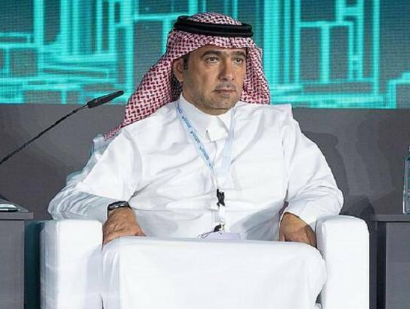
Speaking on the Socrates podcast, Al-Hogail explained that the traffic crisis is no longer linked solely to the road network but has become the result of the interplay of several regulatory, engineering, and usage factors, noting that addressing it requires integrated solutions rather than a single measure. He emphasized that some cities, such as Jeddah, face clear challenges in urban expansion, particularly in areas like Abhur, which suffer from limited access points, explaining that work is underway to develop new corridors and roads and connect them to the city’s network through vital bridge and road projects for which actual budgets have been allocated.
Al-Hogail noted that engineering solutions represent one of the main approaches to addressing bottlenecks, through the redesign of “bottleneck” locations, constructing temporary or permanent bridges, and improving traffic flow instead of abrupt transitions from highways to roundabouts or bottlenecks that cause vehicle congestion.
The importance of public transportation
He added that public transportation has become an essential component of the solution, noting that it has begun to be implemented in a number of cities, foremost among them Riyadh, as a strategic option to relieve pressure on roads and reduce overall reliance on private vehicles. The Minister of Municipalities and Housing emphasized the importance of unifying the authority overseeing traffic management, explaining that the multiplicity of operating entities weakens the efficiency of smart solutions, even with the use of smart traffic lights and sensors, which only yield results within a unified operating system.
Identifying the Root of the Problem
Al-Hogail clearly pointed out that the most significant root of the problem lies in the uses of buildings, where the nature of use is changed without regard for capacity or the number of approved parking spaces, leading to residential neighborhoods and surrounding roads with burdens they were not designed to bear. He explained that parking regulations are a key part of the solution, noting that the lack of regulation in this area even hinders the success of public transportation, and pointing out that global practices rely on regulating building uses and linking them to the number of parking spaces and actual operational capacity.
Al-Hogail concluded his remarks by emphasizing that addressing congestion involves three parallel tracks: developing the road network, activating public transportation, and regulating building uses. He stressed that the new regulations will prevent the recurrence of situations where offices designed for ten people are converted into spaces where thirty employees work and thirty cars are parked without parking spaces, at the expense of neighborhoods and quality of life.