
If we look at the Saudi real estate market today from a holistic perspective, we will find that it is no longer the homogeneous market it was previously assumed to be. The traditional view that reduces the market to a “general upward or downward trend” is no longer sufficient to understand what is happening. The reality is more complex: there are local markets within a single market, each with its own dynamics.
Recent data clearly points to this divergence; while the residential sector experienced a relative decline in prices across the Kingdom during 2026, demand in some major cities remained strong and even recorded growth in specific sectors such as turnkey units or integrated projects. This means that the overall decline should not be interpreted as widespread weakness, but rather as a redistribution of demand.
Major Cities Dominate Real Estate Activity
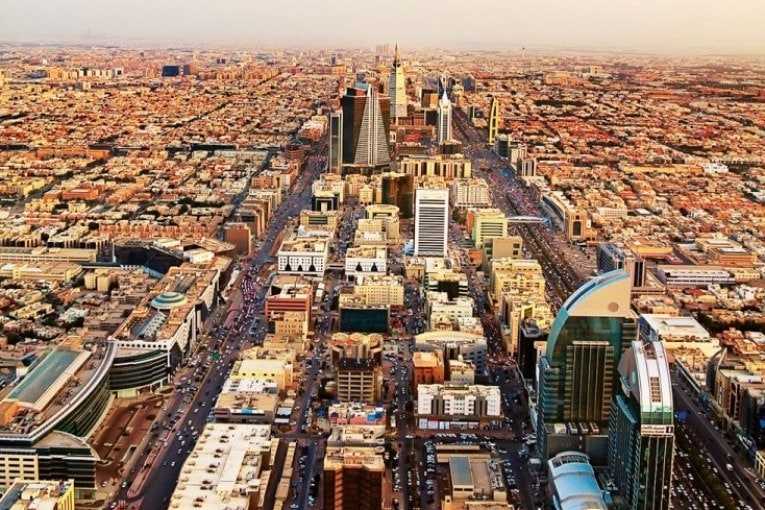
Major cities, such as Riyadh and Jeddah, continue to account for the largest share of real estate activity, not only because of their population density but also as a result of job concentration, the diversity of the local economy, and continued government spending on major projects in these cities. Demand is not only quantitative but also qualitative, as it is shifting toward integrated residential communities and projects that offer added value beyond the mere “residential unit.”
In contrast, some other cities are experiencing a relative slowdown, which can be explained economically by several factors. First is limited population growth compared to major cities; second is an oversupply in previous periods without corresponding growth in actual demand; and third is a lack of economic diversification, which reduces their ability to attract investment or new residents.
However, this slowdown does not mean stagnation; rather, it is often a correction phase. In the real estate economy, rapid growth cannot continue without being followed by a rebalancing that readjusts prices and narrows the gap between supply and demand.
Infrastructure Investments
Another equally important factor is infrastructure. Investments in transportation and roads and urban projects have begun to redraw the map of attractiveness within cities themselves, not just between one city and another. Areas that were previously classified as outlying districts are now within the scope of interest due to improved connectivity and ease of access, which is creating “new centers of demand” within the same city.
Buyer behavior has also changed; moving to a major city is no longer the only option, especially as the quality of life in some secondary areas has improved and more flexible work models have emerged. This shift, though gradual, is contributing to a geographical redistribution of demand.
From an investment perspective, these shifts require a more nuanced approach; it is no longer sufficient to view the market as a whole, but rather it has become necessary to analyze each city—and sometimes even each neighborhood—as an independent indicator, as return on investment, occupancy rates, and price trends now vary significantly from one location to another.
Ultimately, what we are witnessing is not so much a decline or an upturn as it is a reshaping of the Kingdom’s real estate landscape. Some cities are strengthening their position as hubs of attraction, while others are redefining their role within the economic system. Amid these shifts, a precise understanding of local differences has become the decisive factor in interpreting the market and making decisions.
@ArchHesham