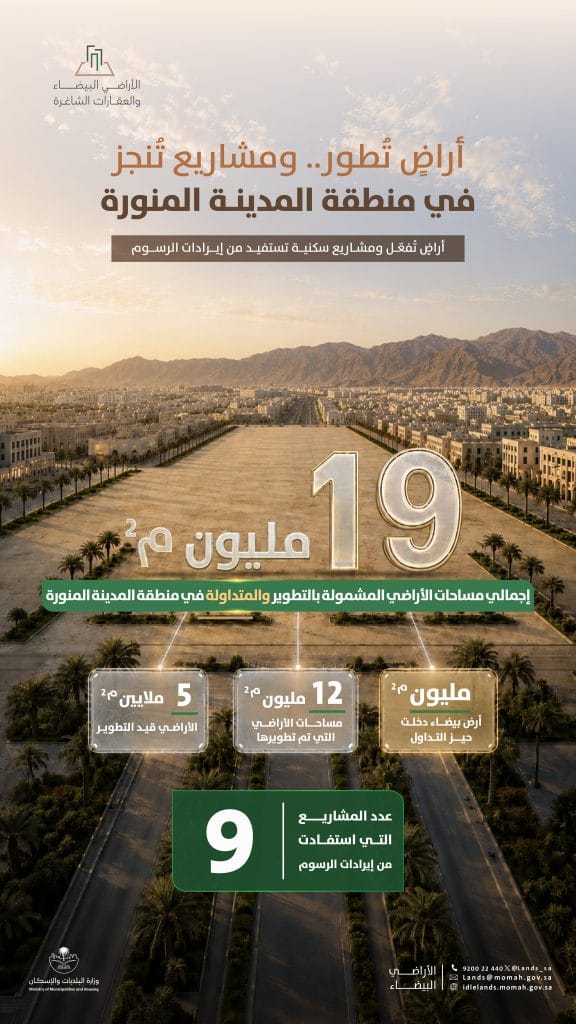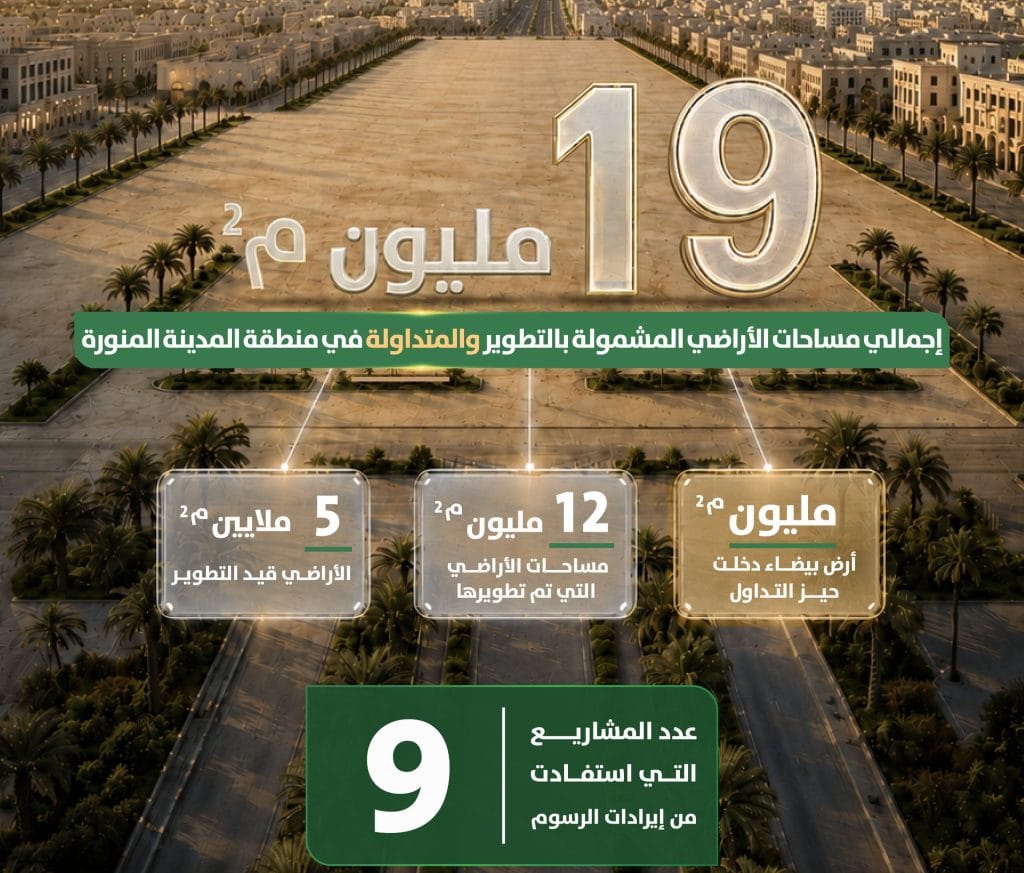
كشفت وزارة البلديات والإسكان أن إجمالي مساحات الأراضي البيضاء المشمولة بالتطوير والمتداولة في منطقة المدينة المنورة بلغ نحو 19 مليون متر مربع، في مؤشر يعكس الأثر المتنامي لتطبيق نظام رسوم الأراضي البيضاء والعقارات الشاغرة في تحفيز التنمية العمرانية، ورفع كفاءة استخدام الأراضي داخل النطاقات الحضرية، بما يواكب النمو العمراني الذي تشهده المنطقة.
وأوضحت الوزارة أن المساحات المسجلة شملت 12 مليون متر مربع من الأراضي التي تم الانتهاء من تطويرها، ومليوني متر مربع من الأراضي البيضاء التي دخلت حيز التداول، إضافة إلى 5 ملايين متر مربع من الأراضي التي لا تزال قيد التطوير، بما يعزز الاستفادة من الأراضي غير المستغلة، ويدعم زيادة المعروض العمراني والسكني في منطقة المدينة المنورة.
إيرادات رسوم الأراضي البيضاء
وبيّنت أن إيرادات رسوم الأراضي البيضاء أسهمت في دعم 9 مشاريع تنموية وسكنية في منطقة المدينة المنورة، بما يعزز كفاءة البنية التحتية والخدمات البلدية، ويدعم تنفيذ مشاريع نوعية تسهم في تحسين جودة الحياة، وتلبية احتياجات النمو السكاني والعمراني في المنطقة.
وأكدت الوزارة أن هذه النتائج تأتي امتدادًا للجهود المستمرة الرامية إلى تحقيق مستهدفات تنظيم السوق العقاري وتحفيز التطوير داخل المدن، بما يسهم في تعزيز التوازن بين العرض والطلب، ورفع كفاءة استثمار الأراضي، وزيادة المعروض من المنتجات العمرانية والسكنية.
وأشارت إلى أن برنامج رسوم الأراضي البيضاء والعقارات الشاغرة يواصل دوره في تحفيز التطوير من خلال تطبيق الرسوم على الأراضي الواقعة ضمن النطاقات الجغرافية المحددة نظامًا، إلى جانب إتاحة المهل النظامية للمكلفين الجادين في تطوير أراضيهم وفق ضوابط فنية محددة، بما يسهم في تسريع وتيرة التطوير، وتحويل الأراضي البيضاء إلى مشاريع ومنتجات عمرانية فاعلة تدعم النمو الاقتصادي والعمراني.
تقديم الدعم للملاك
وأضافت أن مركز خدمات المطورين العقاريين “إتمام” يواصل تقديم الدعم لملاك الأراضي البيضاء من خلال منظومة رقمية متكاملة تضم أكثر من 35 خدمة تغطي مختلف مراحل التطوير، وتوفر مسارات واضحة وميسرة لإنجاز التراخيص والموافقات والتنسيق مع الجهات ذات العلاقة، بما يسهم في تسريع تنفيذ المشاريع، ورفع كفاءة تطوير الأراضي داخل النطاقات العمرانية.
وتأتي نتائج منطقة المدينة المنورة امتدادًا لما حققه البرنامج في عدد من مناطق المملكة، حيث سبق أن أعلنت الوزارة عن دخول نحو 71 مليون متر مربع من الأراضي البيضاء في منطقة الرياض إلى التطوير أو التداول، شملت 29 مليون متر مربع تم تطويرها، و20 مليون متر مربع دخلت حيز التداول، و21 مليون متر مربع قيد التطوير، إلى جانب دعم 27 مشروعًا من إيرادات الرسوم.
كما بلغ الإجمالي في المنطقة الشرقية نحو 146 مليون متر مربع، شملت 49 مليون متر مربع تم تطويرها، و61 مليون متر مربع دخلت حيز التداول، و36 مليون متر مربع قيد التطوير، مع دعم 16 مشروعًا تنمويًا وعمرانيًا.
وبلغ الإجمالي في منطقة مكة المكرمة نحو 28 مليون متر مربع، شملت 13 مليون متر مربع تم تطويرها، و9 ملايين متر مربع دخلت حيز التداول، و5 ملايين متر مربع قيد التطوير، إلى جانب دعم 14 مشروعًا تنمويًا وسكنيًا، وذلك في إطار الجهود الرامية إلى رفع كفاءة استخدام الأراضي، وتحفيز التنمية العمرانية، وزيادة المعروض العقاري والسكني في مختلف المناطق.
وأكدت الوزارة أن التكامل بين تطبيق الرسوم وتمكين الملاك من الاستفادة من الخدمات التطويرية يسهم في تعزيز التنمية الحضرية المستدامة، ورفع كفاءة استثمار الأراضي، وتحقيق مستهدفات رؤية السعودية 2030 الرامية إلى بناء مدن أكثر تنظيمًا واستدامة.