
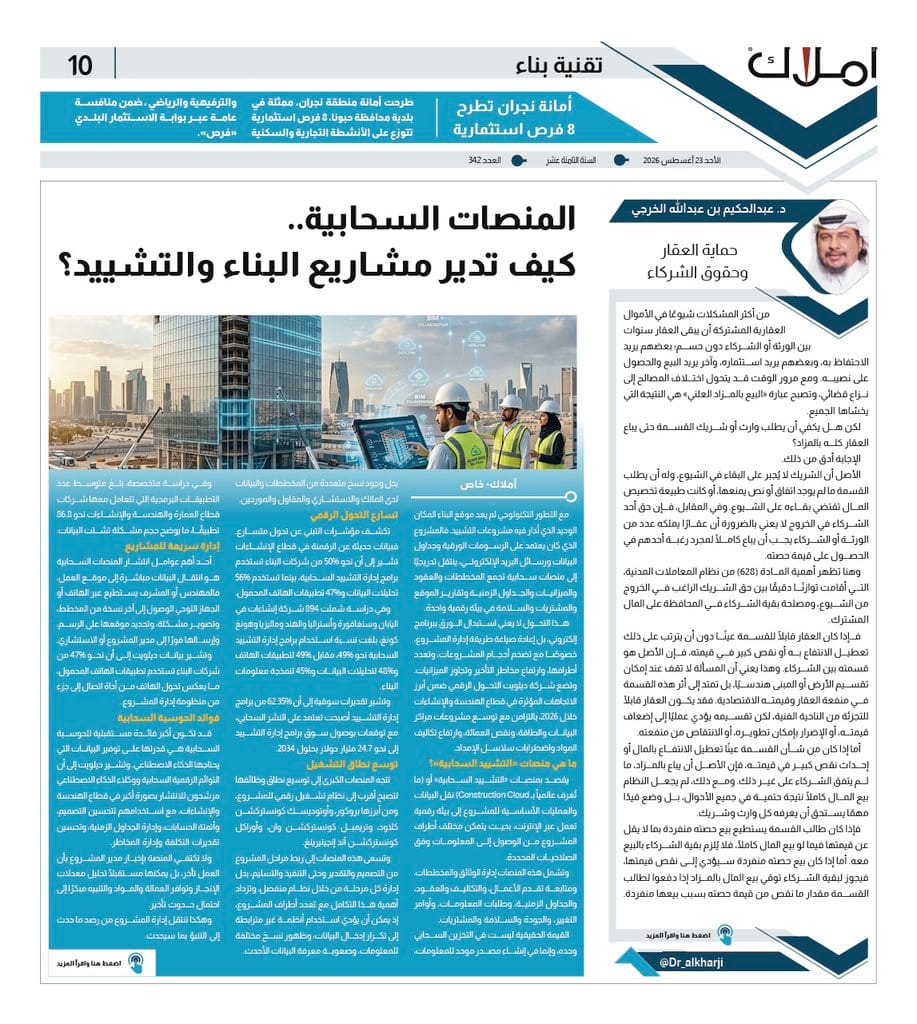
مع التطور التكنولوجي لم يعد موقع البناء المكان الوحيد الذي تُدار فيه مشروعات التشييد. فالمشروع الذي كان يعتمد على الرسومات الورقية وجداول البيانات ورسائل البريد الإلكتروني، ينتقل تدريجيًا إلى منصات سحابية تجمع المخططات والعقود والميزانيات والجداول الزمنية وتقارير الموقع والمشتريات والسلامة في بيئة رقمية واحدة.
هذا التحول لا يعني استبدال الورق ببرنامج إلكتروني، بل إعادة صياغة طريقة إدارة المشروع، خصوصًا مع تضخم أحجام المشروعات، وتعدد أطرافها، وارتفاع مخاطر التأخير وتجاوز الميزانيات. وتضع شركة ديلويت التحول الرقمي ضمن أبرز الاتجاهات المؤثرة في قطاع الهندسة والإنشاءات خلال 2026، بالتزامن مع توسع مشروعات مراكز البيانات والطاقة، ونقص العمالة، وارتفاع تكاليف المواد واضطرابات سلاسل الإمداد.
ما هي منصات «التشييد السحابية»؟
يقصد بمنصات «التشييد السحابية» أو (ما تُعرف عالمياً بـ Construction Cloud) نقل البيانات والعمليات الأساسية للمشروع إلى بيئة رقمية تعمل عبر الإنترنت، بحيث يتمكن مختلف أطراف المشروع من الوصول إلى المعلومات وفق الصلاحيات المحددة.
وتشمل هذه المنصات إدارة الوثائق والمخططات، ومتابعة تقدم الأعمال، والتكاليف والعقود، والجداول الزمنية، وطلبات المعلومات، وأوامر التغيير، والجودة والسلامة والمشتريات.
القيمة الحقيقية ليست في التخزين السحابي وحده، وإنما في إنشاء مصدر موحد للمعلومات، بدل وجود نسخ متعددة من المخططات والبيانات لدى المالك والاستشاري والمقاول والموردين.
تسارع التحول الرقمي
تكشف مؤشرات التبني عن تحول متسارع. فبيانات حديثة عن الرقمنة في قطاع الإنشاءات تشير إلى أن نحو 50% من شركات البناء تستخدم برامج إدارة التشييد السحابية، بينما تستخدم 56% تحليلات البيانات و47% تطبيقات الهاتف المحمول.
وفي دراسة شملت 894 شركة إنشاءات في اليابان وسنغافورة وأستراليا والهند وماليزيا وهونغ كونغ، بلغت نسبة استخدام برامج إدارة التشييد السحابية نحو 49%، مقابل 49% لتطبيقات الهاتف و48% لتحليلات البيانات و45% لنمذجة معلومات البناء.
وتشير تقديرات سوقية إلى أن 62.35% من برامج إدارة التشييد أصبحت تعتمد على النشر السحابي، مع توقعات بوصول سوق برامج إدارة التشييد إلى نحو 24.7 مليار دولار بحلول 2034.
توسع نطاق التشغيل
تتجه المنصات الكبرى إلى توسيع نطاق وظائفها لتصبح أقرب إلى نظام تشغيل رقمي للمشروع، ومن أبرزها بروكور، وأوتوديسك كونستركشن كلاود، وتريمبل كونستركشن وان، وأوراكل كونستركشن آند إنجينيرينغ.
وتسعى هذه المنصات إلى ربط مراحل المشروع من التصميم والتقدير وحتى التنفيذ والتسليم، بدل إدارة كل مرحلة من خلال نظام منفصل. وتزداد أهمية هذا التكامل مع تعدد أطراف المشروع، إذ يمكن أن يؤدي استخدام أنظمة غير مترابطة إلى تكرار إدخال البيانات، وظهور نسخ مختلفة للمعلومات، وصعوبة معرفة البيانات الأحدث.
وفي دراسة متخصصة، بلغ متوسط عدد التطبيقات البرمجية التي تتعامل معها شركات قطاع العمارة والهندسة والإنشاءات نحو 86.8 تطبيقًا، ما يوضح حجم مشكلة تشتت البيانات.
إدارة سريعة للمشاريع
أحد أهم عوامل انتشار المنصات السحابية هو انتقال البيانات مباشرة إلى موقع العمل. فالمهندس أو المشرف يستطيع عبر الهاتف أو الجهاز اللوحي الوصول إلى آخر نسخة من المخطط، وتصوير مشكلة، وتحديد موقعها على الرسم، وإرسالها فورًا إلى مدير المشروع أو الاستشاري.
وتشير بيانات ديلويت إلى أن نحو 47% من شركات البناء تستخدم تطبيقات الهاتف المحمول، ما يعكس تحول الهاتف من أداة اتصال إلى جزء من منظومة إدارة المشروع.
وتزداد أهمية ذلك في المشروعات العملاقة التي يعمل فيها آلاف الأشخاص عبر مواقع متعددة، إذ يصبح الوصول إلى المعلومة الصحيحة في الوقت المناسب عاملًا مباشرًا في تقليل الأخطاء والتأخير.
فوائد الحوسبة السحابية
قد تكون أكبر فائدة مستقبلية للحوسبة السحابية هي قدرتها على توفير البيانات التي يحتاجها الذكاء الاصطناعي. وتشير ديلويت إلى أن التوائم الرقمية السحابية ووكلاء الذكاء الاصطناعي مرشحون للانتشار بصورة أكبر في قطاع الهندسة والإنشاءات، مع استخدامهم لتحسين التصميم، وأتمتة الحسابات، وإدارة الجداول الزمنية، وتحسين تقديرات التكلفة وإدارة المخاطر.
ولا تكتفي المنصة بإخبار مدير المشروع بأن العمل تأخر، بل يمكنها مستقبلًا تحليل معدلات الإنجاز وتوافر العمالة والمواد والتنبيه مبكرًا إلى احتمال حدوث تأخير.
وهكذا تنتقل إدارة المشروع من رصد ما حدث إلى التنبؤ بما سيحدث.
استخدام المنصات الرقمية
تأتي أهمية السحابة أيضًا في ظل اضطرابات سلاسل الإمداد وارتفاع تكاليف المواد. وتشير ديلويت إلى توجه شركات الإنشاءات إلى استخدام منصات رقمية تدمج بيانات الشحن والمواد والتكاليف والتعريفات الجمركية بهدف تحسين قرارات الشراء والتنبؤ بالمخاطر. وبحسب ديلويت، يرى نحو نصف المديرين التنفيذيين في شركات الهندسة والإنشاءات أن سلاسل إمداد شركاتهم هشة بسبب التوترات الجيوسياسية.
ويمكن للمنصات السحابية ربط حالة المواد بالجدول الزمني للمشروع وإظهار تأثير تأخر مورد معين على الأعمال اللاحقة، بما يساعد الإدارة على اتخاذ إجراءات مبكرة بدل انتظار ظهور المشكلة في موقع البناء.
هل وصلت صناعة البناء إلى «السحابة الكاملة»؟
رغم سرعة التحول، لا تزال الصناعة بعيدة عن الاعتماد الكامل على التكنولوجيا. وتشير بيانات حديثة إلى أن نحو 16% فقط من شركات البناء وصلت إلى مستوى متقدم من النضج الرقمي، بينما تقع الأغلبية في مستويات متوسطة أو نامية.
كما أن نحو ربع الشركات لا تزال تعتمد بصورة أساسية على الأنظمة الورقية. لذلك، فإن شراء منصة سحابية لا يكفي؛ فالنجاح يتطلب تغيير العمليات، وتوحيد البيانات، وتدريب الموظفين، وربط الأنظمة المختلفة.
المشكلة إذن ليست في غياب التكنولوجيا فقط، وإنما في قدرة الشركات على إعادة تنظيم طريقة العمل حولها.
تحديات الأمن السيبراني
مع تركيز بيانات المشروع في منصات رقمية، تصبح حماية المعلومات أكثر أهمية. فالمشروع يحتوي على عقود وبيانات مالية ومخططات هندسية ومعلومات عن الموردين، وأي اختراق قد تكون له آثار تشغيلية ومالية. وفي مسح لشركة ويبفلي شمل 308 من القيادات التنفيذية في قطاع الإنشاءات، قالت 80% من الشركات إنها تعرضت لاختراق بيانات خلال الاثني عشر شهرًا السابقة، بينما تخطط 73% للاستثمار في الأمن السيبراني.
وبالتالي، يجب أن يسير التحول السحابي بالتوازي مع تشديد إجراءات الحماية وإدارة الصلاحيات والنسخ الاحتياطي والتشفير وتدريب العاملين.