
The industrial sector in the Kingdom is witnessing a major development, as it is no longer limited to increasing the number of factories or expanding production lines, but has become part of a broader economic transformation aimed at building a more diversified production base, raising local content, localizing advanced industries, and enhancing the presence of Saudi products in global markets. In recent years, the industry has moved from the stage of expanding facilities to the stage of deepening value chains, and linking production with technology, innovation, and export.
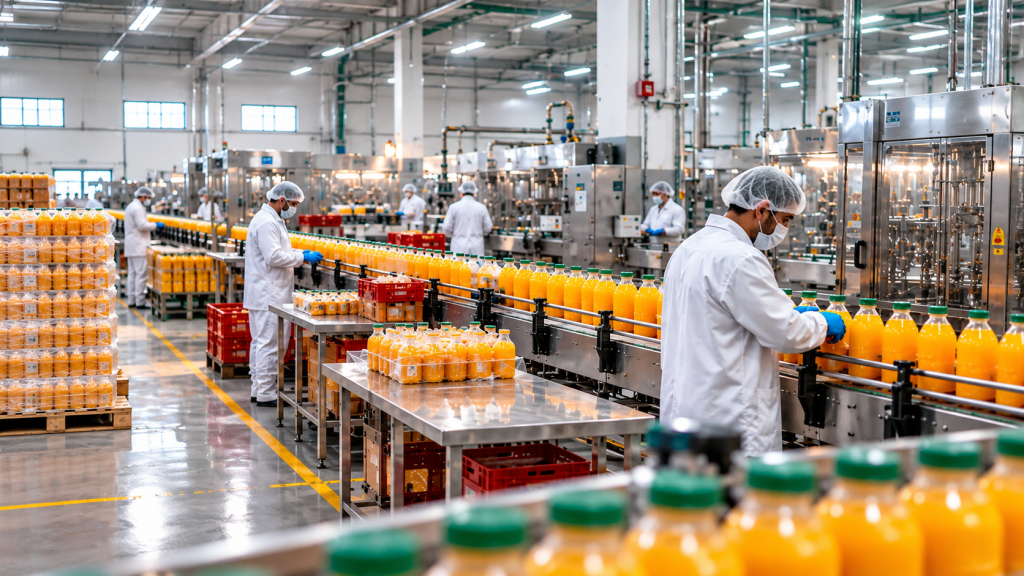
Official indicators reveal a broadening industrial base, with the number of existing industrial facilities in the Kingdom reaching 12,946 by the end of 2025. During the same year, the Ministry of Industry and Mineral Resources issued 1,660 new industrial licenses, representing investments exceeding 76 billion riyals and expected to create approximately 34,800 jobs. Meanwhile, 1,201 industrial facilities commenced actual production during the year, with investments exceeding 31 billion riyals, generating around 45,500 jobs.
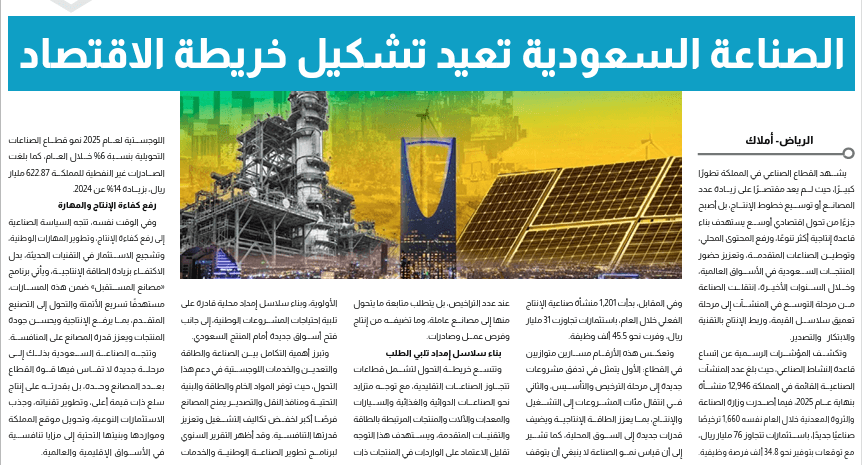
These figures reflect two parallel paths in the sector: the first is the influx of new projects into the licensing and establishment phase, and the second is the transition of hundreds of projects to operation and production, which enhances production capacity and adds new capabilities to the local market. They also indicate that measuring the growth of the industry should not stop at the number of licenses, but requires monitoring what is transformed into operating factories, and what production, job opportunities, and exports they add.
Building supply chains that meet demand
The transformation map is expanding to include sectors beyond traditional industries, with an increasing focus on pharmaceutical, food, automotive, equipment, machinery, energy-related products, and advanced technologies. This trend aims to reduce reliance on imports for priority products, build local supply chains capable of meeting the needs of national projects, and open new markets for Saudi products.
The integration of industry, energy, mining, and logistics is crucial in supporting this transformation. The availability of raw materials, energy, infrastructure, and transportation and export outlets provides factories with greater opportunities to reduce operating costs and enhance their competitiveness. The 2025 annual report of the National Industrial Development and Logistics Program showed that the manufacturing sector grew by 61 TP3T during the year, and the Kingdom's non-oil exports reached SAR 622.87 billion, an increase of 141 TP3T compared to 2024.
Improving production efficiency and skills
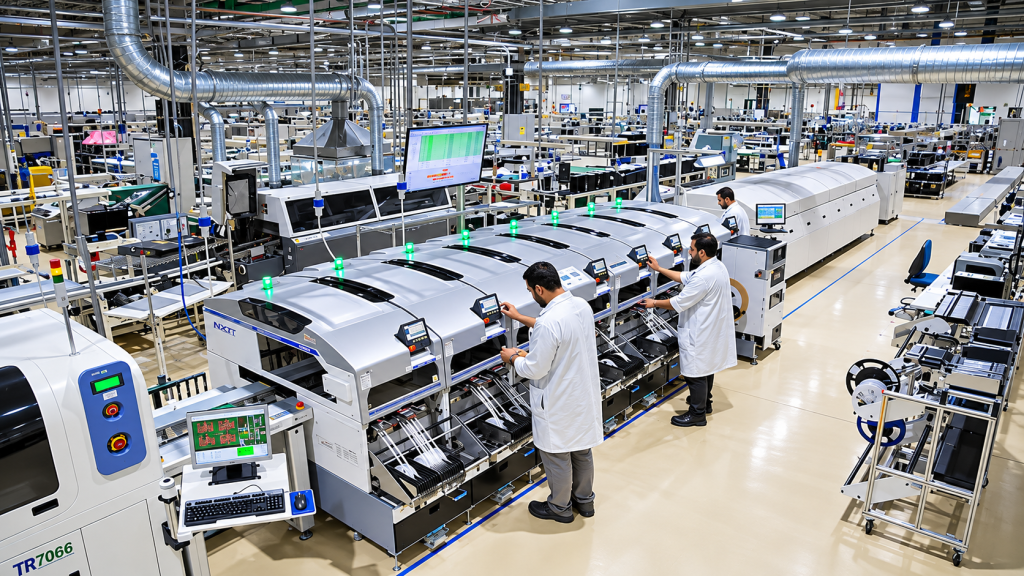
At the same time, industrial policy is moving towards raising production efficiency, developing national skills, and encouraging investment in modern technologies, instead of being satisfied with increasing production capacity. The “Future Factories” program comes within these paths, aiming to accelerate automation and the transition to advanced manufacturing, which raises productivity, improves product quality, and enhances the ability of factories to compete.
Saudi industry is thus moving into a new phase in which the strength of the sector is not measured by the number of factories alone, but by its ability to produce higher-value goods, develop its technologies, attract quality investments, and transform the Kingdom’s location, resources, and infrastructure into competitive advantages in regional and global markets.
Read also: