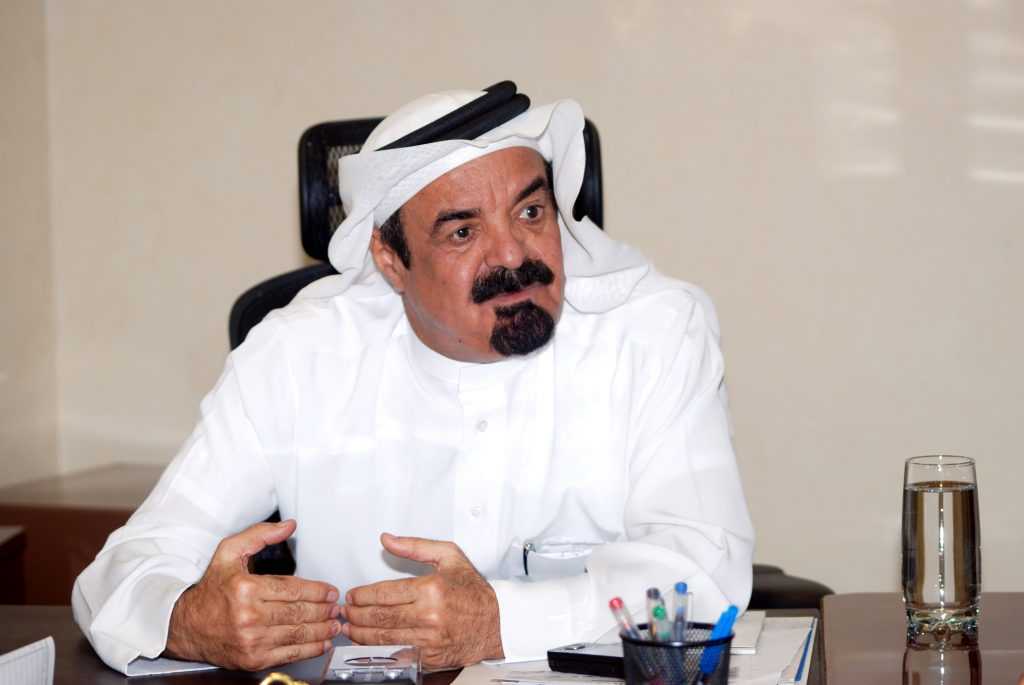

The Amlak Real Estate newspaper is republishing its interview with Mr. Ayed bin Abdulrahman Al-Ayed, may God have mercy on him, General Manager of Al-Ayd Industrial Group, which it conducted with him seven years ago. The interview was characterized by its fluidity and boldness, as the man is confident in the substance of his answers and recounts stories of his achievements with a charming smile that underscores his character and tenacity in realizing his ambitions.
Al-Ayd, may God have mercy on him, emphasized that the challenges, a spirit of determination, and a keen understanding of the market have made his company a major player in the construction and urban development industry, where the number of crushers has jumped from one to ten machines, in addition to its leadership in the machinery industry with the latest global industrial technologies.
First, tell us about how you got started in the market?
The company began with great ambition and confidence in 1395 AH with a single crusher, then we expanded in the market with ten crushers that contributed to urban development in various regions of the Kingdom by meeting 621% of market demand, and we have a transport fleet that has helped us lead the field.
How did you achieve this success, and what is the secret to your market acceptance?
Praise be to God for the success granted by our Lord, the Almighty. We follow a strict approach of fulfilling all our financial obligations, paying off all our debts promptly, and we never resort to bank loans. We are fully committed to our profession, because the key to success in this field is that commitment, which provides the motivation to achieve goals and grow.
How did you enter the machinery manufacturing industry?
We expanded our investments by entering the hose industry. We started with five types and now produce 162 varieties covering all industrial and service applications in the fields of petroleum, water, fire, and air, using the best global technologies. We were able to compete with European imports, meet market demand, and even stop importing from China. We now compete with established exporters even in terms of quality, because we started where the Germans left off. We brought production lines from Germany to ensure the quality of our production, until we reached the highest level of quality as attested by consumers. We began exporting to the very European countries from which we used to import, and they now rely on our products.
You have extensive experience in contractor financing. What are the most notable projects you have financed?
Praise be to God, our relationship with contractors is excellent. We have financed many strategic projects such as King Saud University, Imam Muhammad bin Saud University, the Diplomatic Quarter, and most of the massive bridges built on the ring road. This is because we have maintained excellent standards and financed these projects with construction materials such as gravel, sand, and crushed stone.
In terms of supply and demand, we observe a large number of properties of all types listed for sale, especially in northern Riyadh. What is your view on this balance? Is there an imbalance?
We see a high supply and a significant rush for real estate, which exposes it to inflation relative to demand—meaning that supply exceeds demand yet still fails to meet their needs. For example, the markets in Riyadh became crowded, but this has impacted their success, as supply has become repetitive, to the point where the situation has now reached a state of oversupply.
Do you expect demand for administrative offices to rise to match the supply after the completion of the massive King Abdullah Financial District project?
No, I imagine there will be attractive offers due to the abundance of supply, and there will be vacant offices. and I recall that Al-Olaya went through a similar phase; back in 1404 and 1406 AH, the rent was 30,000 riyals, and it dropped to 20,000, to the point where you could see windows indicating abandoned offices with no one inside. So I expect supply to exceed demand.
What is your current outlook for the residential sector?
From a strategic perspective, we find that young people are the primary target group because they all need homes in the future, especially since nowadays young people move out of their parents" homes after marriage, and I expect the demand for residential real estate to continue for a period of up to five years, and I expect that after five years, supply will increase, as the majority will be building and selling, especially since Riyadh is expandable and not like some cities with limited expansion potential, in addition to the fact that the population is large and aspirations are also high.
Regarding prefabricated homes, what solutions address the issue of construction speed?
As for prefabricated villas, their cost is lower than that of traditional reinforced concrete construction, but their quality is lower; they do not meet the preferences of Saudi citizens, and so far they have not succeeded in Saudi Arabia.
Don’t you think that construction quality has declined compared to the past, such that a building constructed 25 years ago is in better condition than one built 10 years ago?
The reason is, on the one hand, a lack of diligence in laying the foundations and the lower quality of some raw materials compared to the past, and on the other hand, regarding soil quality, people are now building in valleys and on loose soil, which causes buildings to collapse; whereas if construction is done on solid, stable ground, it extends the building’s lifespan.
To what do you attribute the occasional rise in construction material prices, and what is your role in that?
We have no control over price fluctuations. As manufacturers and financiers, we are governed by external circumstances and base our pricing on production costs, with raw materials being a key factor. along with transportation and our professional commitment to quality. All these factors influence prices, which fluctuate up and down, and frankly, price increases are not something we desire.
How do you view current prices and the future of construction materials?
I expect steel prices to decline, as there is now foreign competition and the market is no longer limited to domestic factories. Cement prices are heading in the same direction, especially given the unstable export policy.
What is the reason for the occasional rise in construction costs?
It’s simply manipulation by traders, and there needs to be oversight, because these prices are completely unjustified.
Which materials have become more expensive for you, and what is their impact on the consumer?
Equipment prices have doubled, plus we now have to pay government fees, labor costs have risen, and raw material prices have gone up. sometimes rising by 22% for us, but reaching the consumer with a 60% increase, making them the ultimate victim.
What are the negative effects of moving crushing operations outside cities?
There are many negative aspects, the most significant of which is the increase in production costs, as the price of soil has risen to 100%, because the distance and transportation entail additional expenses.
Do you expect the real estate and construction market to experience a contraction?
On the contrary, the Saudi real estate market is in continuous expansion, and there is a recurring desire to increase the built-up area from time to time, as the Kingdom’s geographical nature facilitates horizontal expansion. Additionally, the ongoing need for residential units. All these factors contribute to the real estate market’s prosperity, and consequently, demand for construction materials will grow alongside it. The reality is that real estate may falter but never dies.
There are accusations that housing for factory workers is causing Saudi families to migrate from certain neighborhoods. What is your comment on that?
That is true, there is a problem in providing housing for workers of some companies in suitable locations, which has forced some families to leave their homes, because those neighborhoods have become filled with expatriates and workers, which has inconvenienced the original residents, and even the homes that are vacated are rented by these companies as housing and offices for them, which displace Saudi families, forcing them to move from these areas.
Worker housing is an urgent necessity, especially since we are an industrial country that relies on migrant workers in most industrial facilities, so worker housing must be reconsidered, and solutions found for it, with specific specifications and standards. Many investors are waiting for this, but there is no system in place to address this problem.
Words from Al-Ayd
We produce 21,000 cubic meters (equivalent to approximately 32,000 tons) of sand and gravel.
We have stopped importing, and we are now competing with established exporters and have begun exporting to the very European countries from which we used to import.
We have implemented the Saudization quota, but we are finding it difficult to select qualified Saudi nationals.
We have financed strategic projects such as King Saud University, Imam Muhammad bin Saud University, the Diplomatic Quarter, and most of the major bridges built on the ring road.
We are seeing a high supply and a significant surge in real estate, which exposes it to inflation relative to demand—meaning that supply exceeds demand, yet it still fails to meet their needs.
The reason for the poor construction quality is a lack of diligence in laying the foundations and the lower quality of some raw materials compared to the past.
The increase in construction material prices is merely manipulation by merchants, as there is no oversight or accountability, because these high prices have no basis..
The consumer is the real victim of rising raw material prices and manufacturing costs.