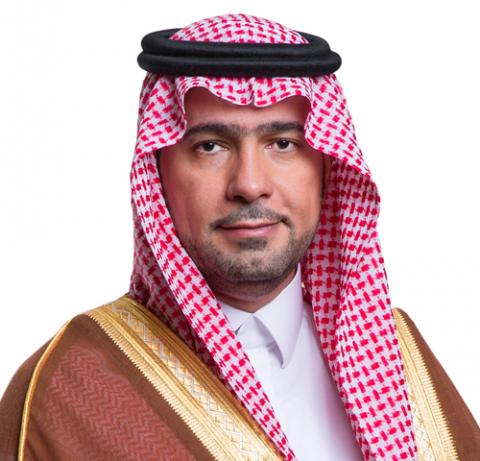
Undersecretary of the Ministry of Finance for Revenue Tariq Al-Shahib revealed that the upcoming 2018 budget is distinguished from other previous budgets in that it was prepared according to a new mechanism, and that this mechanism achieves the effective and required contribution to improve the efficiency of government spending for government entities, combining bottom-up preparation (the requirements of the beneficiary entity) with top-down preparation methodology (based on the requirements of growth, economic development and sustainability of public finances).
He said in a press statement that the changes achieved by this mechanism contribute to improving the quality, accuracy and transparency of financial accounts, while developing and implementing a general financial framework in the medium term to improve risk management and determine the policies to be implemented in the medium term through measurable objectives, as well as paving the way for the introduction of a unified treasury account to better manage cash resources and move from cash basis accounting to accrual accounting, noting that the Ministry of Finance held successive workshops for all government agencies during the current year to introduce the new budget preparation mechanism.
He pointed out that the Ministry of Finance held successive workshops for all government agencies during the current year to introduce the new mechanism for preparing the budget. He added that the state budget recorded very positive results in terms of revenues in 2017, due to the rise in oil prices and the continued implementation of economic reforms aimed at increasing non-oil revenues, as non-oil revenues exceeded the expected total, due to the diligent efforts of the Kingdom's government to introduce new initiatives that generate non-oil revenues.
Sheikh Al-Shahib said that the state budget recorded very positive results in terms of revenues for the year 2017. Al-Shuhayeb said that oil revenues recorded a significant increase compared to the previous year, and these revenues will be discussed in detail on the day of the budget announcement, tomorrow, Tuesday, adding that the announcement will include, for the first time, a forecast of the economy's performance in the medium term “five years.”
Al-Shuhayeb added that the budget announcement will include, for the first time, a forecast of the economy's performance in the medium term. He added that this measure is in line with the Kingdom's objectives of providing a clear framework for budget performance and future projections, and provides a clear path leading to achieving fiscal balance in 2023. It also helps the planning process of the Kingdom's government, allowing it to manage economic growth more effectively, a step that represents further evidence of the Kingdom's commitment to enhance transparency and financial disclosure in line with the objectives of Vision 2030.
He added that this measure is in line with the Kingdom's objectives.
The forecasts that will be announced in the 2018 budget are based on a thorough and comprehensive analysis. It takes into account the information, developments, and internal and external economic data available when preparing the budget. <Al-Shaheeb said: The strategy of the Kingdom's government to diversify sources of income relied on improving the performance of non-oil economic activity, through economic reforms in accordance with the fiscal balance program by applying some initiatives to develop non-oil revenues, in addition to adopting a public debt management program, where the government aims to develop revenues structurally and continuously as a major source of financing public expenditures and reducing the budget deficit, and in this regard, the Kingdom has implemented a number of new measures to achieve this goal and reduce dependence on oil revenues, including these measures: The implementation of the first phase of the energy price correction, the amendment of a number of fees, including fees on visas and traffic violations in 2016, the application of selective tax on some goods, the application of financial compensation for expatriates, which will contribute to the localization of jobs by closing the cost gap between expatriates and Saudis, in addition to the value added tax that will start to be applied in early 2018 in light of the unified agreement between the GCC countries, and stimulus packages to support the private sector, which is one of the pillars of the economy and a key factor in its activity.
These measures include.