
Eyes are turning to 2026 as a potential turning point for the real estate finance market in Saudi Arabia, with expectations growing for a gradual resurgence of activity supported by an anticipated drop in interest rates and an expanding housing supply. After a year marked by a slowdown due to high cost of borrowing and regulatory measures to reset the market, it is estimated that the sector may regain momentum as financing conditions improve and housing subsidy programs grow.
Jadwa Investment expects mortgage demand to see a gradual recovery in 2026, driven by lower interest rates and increased housing options, after new residential mortgage financing recorded a significant decline in 2025. Data from the Saudi Central Bank (SAMA) showed that total new mortgage loans amounted to about 80.2 billion riyals in 2025, compared to 92.2 billion riyals in 2024, a decrease of 12% equivalent to about 12 billion riyals, after a year that had recorded a strong growth of 16%.
Data from the Central Bank of Saudi Arabia (SAMA) showed that new mortgage loans amounted to about 80.2 billion riyals in 2025, compared to 92.2 billion riyals in 2024, a decrease of 12% equivalent to about 12 billion riyals.
High interest rates behind the 2025 slowdown
Jadwa attributed the decline to the continued high interest rate environment, which has prompted many households to postpone home buying and borrowing decisions to wait for the cost of financing to fall.New regulatory policies aimed at balancing the real estate market also contributed to the sector entering a temporary adjustment phase, as these measures aim to improve housing affordability and encourage the development of unused land, which was reflected in the pace of real estate activity in recent months.
The SAMA data also showed the stabilization of bank financing provided to real estate development companies, after a strong growth wave witnessed by the sector during 2023 and the first quarter of 2024.
The data also showed the stabilization of bank financing provided to real estate development companies, after a strong wave of growth witnessed by the sector during 2023 and the first quarter of 2024.
Housing supply supports the upcoming recovery
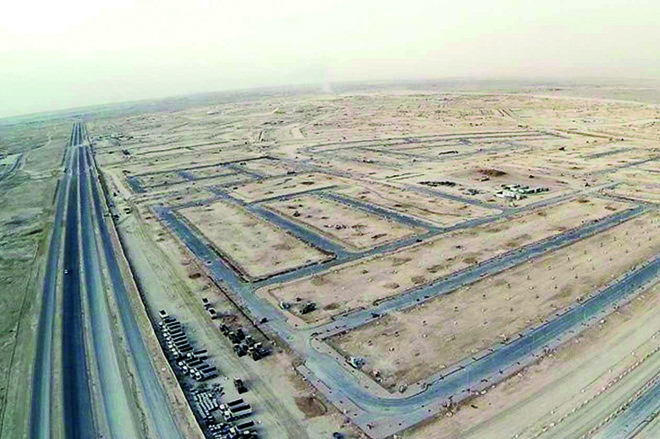
The Ministry of Municipalities and Housing estimates that about 100 million square meters of development-ready land is available in Riyadh, enough space to create up to 300,000 housing units over the next three years, enhancing the chances of price stability and increasing ownership options.<The Sakani program is also expected to support the recovery, with plans to expand support to 100,000 families, in addition to providing about 80,000 housing units and land developed in partnership with the private sector. In the same context, the National Housing Company is working to develop about 300,000 new housing units in various regions of the Kingdom during the coming period, after previously delivering a similar number in 16 cities.
National Housing Company is working to develop about 300,000 new housing units in various regions of the Kingdom during the coming period.
Liquidity and Banking Sector Developments
In the financial sector, the overall money supply grew by 8.4% in 2025 compared to 8.8% in 2024, supported by higher time and savings deposits, which represent 36% of total liquidity, growing by 23.In contrast, the growth of demand deposits - which make up 47% of the money supply - slowed from an average of 7% in the first half of the year to just 1.3% in the second half.
Demand deposit growth slowed from an average of 7% in the first half of the year to just 1.3% in the second half.
Bank liquidity also saw a relative tightening as credit continued to grow at a faster pace than deposits, with total bank liabilities rising by 11.1% during 2025, while credit to the private sector grew by 10.4% against deposit growth of 8.7%.
This led to the loan-to-deposit ratio rising to 113% by year-end, with increased reliance on external funding sources to meet domestic demand for credit.
Deposit growth slowed from an average of 7% to just 1.3% in the second half of the year.
Rate cuts are the deciding factor
The US Federal Reserve kept interest rates unchanged in January, which was followed by the Saudi Central Bank, but expectations point to the possibility of two rate cuts in 2026, despite continued uncertainty over the path of global inflation.
Lower interest rates are likely to reduce the attractiveness of savings deposits against increased demand for credit, especially residential financing, boosting the chances of a recovery in the mortgage market.
The US Federal Reserve kept interest rates unchanged in January, which was followed by the Central Bank of Saudi Arabia.
Jadwa's report suggests that the combination of low cost of funding, the impact of new real estate legislation and the continued strength of the local economy could be a springboard for a strong return to activity in the real estate finance sector next year, after a temporary slowdown in 2025. Jadwa's report.