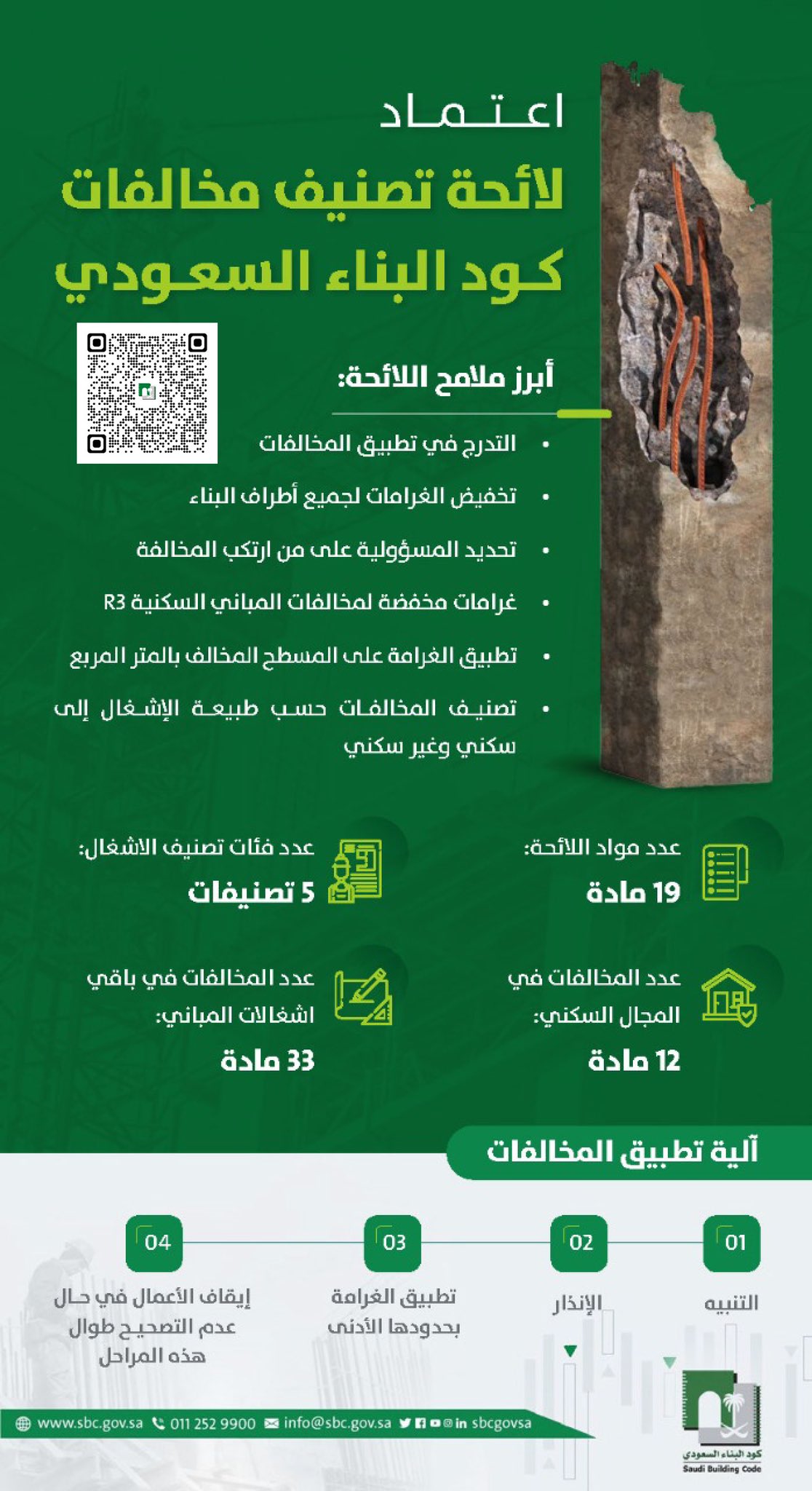
قرر د. ماجد بن عبدالله القصبي وزير التجارة رئيس مجلس إدارة الهيئة السعودية للمواصفات والمقاييس والجودة وبما له من صلاحيات اعتماد تعديل لائحة تصنيف مخالفات كود البناء السعودي والعمل بها من تاريخ نشرها في الجريدة الرسمية.
المادة الأولى:
يرجع في تعريف مفردات ومصطلحات هذه اللائحة إلى التعريفات الواردة في اللائحة التنفيذية لنظام تطبيق كود البناء السعودي.
المادة الثانية:
يعتبر الإخلال بأي من متطلبات الكود أو نظامه أو لوائحه مخالفة تستوجب الإزالة أو التصحيح وتعرض مرتكبها للعقوبة بما تقرره لجنة النظر عند تحقق مقتضاها النظامي، ولا يعد إيقاع العقوبة بديلاً عن الإزالة أو التصحيح.
المادة الثالثة:
يتم ضبط المخالفات وتوثيقها من قبل مختصين مؤهلين في الكود تصدر بتسميتهم قرارات من جهاتهم الرسمية، وتعد محاضر الضبط وثيقة معتبرة في إثبات المخالفات وإيقاع العقوبات.
المادة الرابعة:
عند اكتشاف مخالفة أثناء عملية التفتيش أو الإشراف ولم يبادر المخالف في حينه بتداركها، أو تم تلقي بلاغ عنها فيتم إشعار مسؤول الضبط للوقوف عليها. ويعفى المكتب المشرف من مخالفة التنفيذ إذا أصدر تقريرا بالمخالفة وتم تسليمه للمقاول أو رفعه على منصة بلدي ولم يلتزم المقاول بالتنفيذ.
المادة الخامسة:
تتم عملية الضبط وفق نموذج موحد تعده الجهة المختصة بالوزارة، ويشتمل على الآتي:
أ- تاريخ الضبط ويومه وساعته.
ب- اسم مالك المبنى.
ج- رقم الترخيص ونوعه.
د- تصنيف المبنى ونوعه ومكانه.
ه- نوع المخالفة ووصفها وموقعها من المبنى.
و- مرجع المخالفة في الكود ورقمها.
ز- درجة خطورة المخالفة والضرر الناتج عنها.
ح- تقدير مدة تصحيح المخالفة أو إزالتها.
ط- اسم المخالف وإفادته وتوقيعه، والإشارة إلى امتناعه حال ذلك.
ي- توثيق المخالفات بالصور أو إرفاقها إن أمكن.
ك- اسم وتوقيع مسؤول الضبط.
ل- أي معلومات أخرى ترى الجهة المختصة بالوزارة إضافتها.
المادة السادسة:
على من تسند إليه مهمة ضبط مخالفات الكود تحري الدقة واستشعار المسؤولية وإنجاز عمله دون تأخير وتسليم محاضر الضبط لمرجعه في نفس اليوم أو اليوم الذي يليه لقيدها ومراجعتها واعتمادها، وله في سبيل ذلك دخول المباني والمنشآت والاطلاع على المستندات والوثائق والمخططات.
المادة السابعة:
1) عند ضبط مخالفة غير خطرة تقوم الجهة ذات العلاقة:
أ- إشعار المخالف بها بطرق الإبلاغ المتبعة نظاماً، وتطلب منه إزالتها أو تصحيحها بما يتفق مع الكود خلال مدة أقصاها (30 يوماً) لبدء تصحيح الأعمال المخالفة أو إزالتها، وفي حال التصحيح أو الإزالة يقوم المخالف بإشعار الجهة ذات العلاقة بذلك.
ب- وفي حال عدم التصحيح يتم إنذار المخالف، وتطلب منه إزالتها أو تصحيحها بما يتفق مع الكود خلال مدة أقصاها (90 يوماً) لإنهاء أعمال التصحيح أو الإزالة، وفي حال التصحيح أو الإزالة يقوم المخالف بإشعار الجهة ذات العلاقة بذلك.
ج- في حال عدم التصحيح بعد المدة المشار إليها بالفقرة (ب) يتم إحالة المخالفة إلى لجنة النظر في مخالفات كود البناء السعودي لإيقاع العقوبة المنصوص عليها في جدول المخالفات وفق التدرج التالي:
1- تطبيق الحد الأدنى للغرامة المالية وإزالة أو تصحيح المخالفة، بما يتفق مع الكود خلال مدة أقصاها (90 يوماً) لإنهاء أعمال التصحيح أو الإزالة، وفي حال التصحيح أو الإزالة يقوم المخالف بإشعار الجهة ذات العلاقة بذلك.
2- وفي حال عدم التصحيح أو الإزالة بعد المدة المشار إليها بالفقرة (ج-1) يطبق الحد الأقصى للغرامة المالية وإزالة أو تصحيح المخالفة، بما يتفق مع الكود خلال مدة أقصاها (90 يوماً) لإنهاء أعمال التصحيح أو الإزالة، وفي حال التصحيح أو الإزالة يقوم المخالف بإشعار الجهة ذات العلاقة بذلك.
3- وفي حال عدم التصحيح أو الإزالة بعد المدة المشار إليها بالفقرة (ج-2) يتم إيقاف كل الأعمال لحين معالجة المخالفة أو إزالتها.
المادة الثامنة:
عند ضبط مخالفة خطرة تقوم الجهة ذات العلاقة بالتالي:
1) إشعار المخالف بها بطرق الإبلاغ المتبعة نظاماً، وطلب إزالتها أو تصحيحها فوراً بما يتفق مع الكود.
2) إيقاف البناء أو الجزء أو القسم الذي يشكل خطورة أو منع الإشغال أو التشغيل أو إخلاء المبنى حتى يزيل المخالف المخالفة أو يصححها.
3) إحالة المخالفة إلى لجنة النظر في المخالفات خلال مدة خمسة أيام عمل من تاريخ ضبطها.
المادة التاسعة:
إذا لم يبادر المخالف بإزالة المخالفة الخطرة أو خلال المهلة المحددة للمخالفات الأخرى وكانت المخالفة تعيق أو تعطل بصورة مباشرة الانتفاع من الطرق أو الخدمات العامة أو تشكل خطورة على السلامة أو الصحة العامة أو البيئة أو تشوه المظهر العام للمدينة فللجهاز البلدي بعد التنسيق مع الجهات المختصة إزالتها على نفقة المخالف.
المادة العاشرة:
إذا تم اكتشاف مخالفة خطرة ولم يستدل على المخالف ولا عنوانه فيعد مسؤول الضبط محضراً عن المخالفة، ويتم التحري والمتابعة الدقيقة للبحث عن المخالف. فإذا تعذر الوصول إليه يقوم الجهاز البلدي بعد التنسيق مع الجهات المختصة بإخلاء المبنى أو منع الإشغال أو إزالة المخالفة إن دعت الحاجة. وعند معرفة المخالف يحمل نفقات الإزالة بالإضافة إلى العقوبة المترتبة عليها.
المادة الحادية عشرة:
مع عدم الإخلال بأي عقوبة أشد ينص عليها نظام آخر، تقوم لجنة النظر بإيقاع العقوبات المناسبة لكل مخالفة وفق المادة الثانية عشرة من النظام، وتراعي في ذلك الأسس التالية:
1) درجة خطورة المخالفة وأثرها في الإضرار بالأرواح أو الأموال أو بالصحة أو بالنظام العام.
2) مساحة البناء وحجمه ونوعه وكلفة إنشائه وأهمية موقعه ومساحة المخالفة المنفذة.
3) تناسب العقوبة مع المخالفة.
4) الظروف المخففة والمشددة المصاحبة لارتكاب المخالفة.
5) مبادرة المخالف بإزالة المخالفة أو تصحيحها.
6) تكرار المخالفة أو تعددها.
7) اقتران المخالفة بمحاولة عرقلة عملية الضبط أو التفتيش أو عدم التعاون مع المسؤولين.
8) تعمد ارتكاب المخالفة.
المادة الثانية عشرة:
تطبق لجنة النظر العقوبات الواردة في جدول رقم (1) لمخالفات تطبيق كود البناء في المجال السكني لفئة التصنيف (R3) (الفلة المنفصلة أو الفلتين المتلاصقتين من طرف أو طرفين بما لا يزيد ارتفاع المبنى على ثلاث طوابق)، والجدول رقم (2) لمخالفات باقي إشغالات المباني حسب كود البناء السعودي.
المادة الثالثة عشرة:
إذا كان في إزالة المخالفة ضرر على سلامة المبنى فيتم تصحيحها بما يحقق السلامة وفق الحلول الهندسية الممكنة، على أن يتم إحضار تقرير من مكتب هندسي معتمد ومؤهل من الوزارة يثبت سلامة المبنى وعدم إمكانية الإزالة.
المادة الرابعة عشرة:
يتم تحصيل الغرامات وفقاً للإجراءات المتبعة في تحصيل الأموال العامة.
المادة الخامسة عشرة:
تعتبر قرارات لجنة النظر نافذة بصدورها، ويبلغ المخالف بها بطرق الإبلاغ المتبعة نظاماً.
المادة السادسة عشرة:
يجوز التظلم من قرارات لجان النظر أمام المحاكم الإدارية بديوان المظالم خلال ستين يوماً من تاريخ العلم بها.
المادة السابعة عشرة:
حال إيقاع أي عقوبة على المكاتب الاستشارية أو الهندسية أو الفنية أو المقاولين بسبب مخالفة الكود، يقوم الجهاز البلدي بإشعار الجهات المرجعية لهم بالمخالفات والعقوبات المقررة عليهم.
المادة الثامنة عشرة:
تحل هذه اللائحة محل لائحة تصنيف مخالفات كود البناء السعودي الصادرة بموجب القرار الوزاري رقم (1214ق/ أع/ 39) وتاريخ 14/ 10/ 1439هـ.
المادة التاسعة عشرة:
يعمل بهذه اللائحة اعتباراً من تاريخ نشرها في الجريدة الرسمية.
لائحة تصنيف مخالفات كود البناء السعودي