

Transparent concrete is a building material with light transmission properties, due to the optical-optical elements embedded within it, usually optical fibers.
Through them, light passes through the concrete block from one end to the other, and this process produces a specific light on the surface.
About the new Htrans concrete, José Albiol, professor at the School of Construction Engineering of the Polytechnica de Valencia University, says that the new concrete can be used to print any design imaginable: “We can 3D print any imagined design and incorporate it into the facade creation process.”
“With Htrans, we can create structures that incorporate distinctive images in many different forms, such as a company logo, a reproduction of a work of art, a person's face or a city image, and we can also include illuminated devices, to illuminate the structure.”
“With Htrans, we can create structures that incorporate distinctive images in many different forms, such as a company logo, a reproduction of a work of art, a person's face or an image of a particular city.
High efficiency and low cost
According to the researchers, this concrete is produced at a much lower cost than traditional transparent concrete, as transparent concrete is not new, but it is handmade, which directly affects its high final cost.
Htrans also includes reinforcing elements with different thicknesses, ensuring the strength of the concrete parts; the 3D printed parts with the design provide an internal substructure, ensuring the structural rigidity of the concrete in general, thus this configuration and the materials used ensure the optimization of the 3D appearance of the final product.
In addition, HETRANS can integrate permanent or intermittent lighting in any area, using batteries that are charged by an external power source, as well as wireless chargers.
Multiple uses
The new concrete type is an innovative solution, unique in the world, as it is easy to transport and install, and has great potential for construction and furniture making, and even in the field of advertising, and can also be used in design elements such as: Lamps or decorative elements, as well as kitchen, countertops, exterior and interior floors, etc.
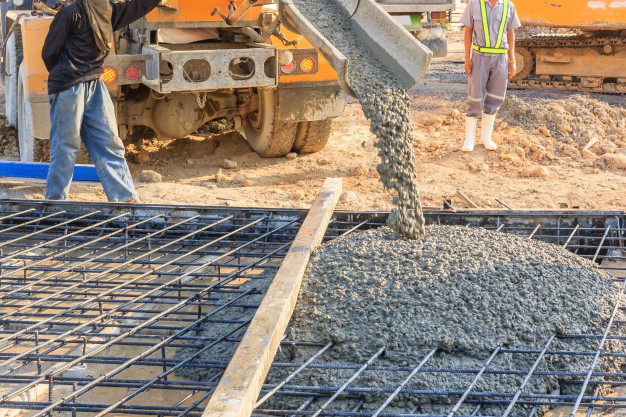
The researchers emphasize that the production process is very simple, as the 3D printed pieces are embedded with the designs inside the molds, then the concrete is poured and once placed inside, both sides are polished and the final product, including the image and design, is formed, all in record time, at a cost 80 percent lower than its traditional counterpart.
Researchers emphasize that the production process is very simple, as the 3D printed pieces are included with the designs inside the molds.