
The Council of Ministers, in its session chaired by the Custodian of the Two Holy Mosques, King Salman bin Abdulaziz —may God protect and preserve him—today, the 8th of Jumada al-Awwal 1443 AH, corresponding to December 12, 2021 AD, the General State Budget for the fiscal year 1443–1444 AH (2022 CE), with total expenditures of 955 billion riyals, total revenues of approximately 1,045 billion riyals, and a surplus of approximately 90 billion riyals.
Strong Support for the Health and Private Sectors
On this occasion, His Excellency the Minister of Finance, Mr. Mohammed bin Abdullah Al-Jadaan, extended his thanks and congratulations to the Custodian of the Two Holy Mosques, King Salman bin Abdulaziz, and His Royal Highness Prince Mohammed bin Salman bin Abdulaziz, Crown Prince, Deputy Prime Minister, and Minister of Defense—may God protect them both—on the occasion of the approval of the state budget, noting that the realistic and responsible policies and measures taken by the government in dealing with the COVID-19 pandemic (COVID-19) have mitigated the humanitarian, financial, and economic repercussions by providing strong support to the health and private sectors while maintaining medium- and long-term financial sustainability, He explained that these policies have had a positive impact on the gradual recovery of the domestic economy, which has seen accelerated growth in a number of economic activities.
He noted that the budget underscores the Government of the Custodian of the Two Holy Mosques" commitment to moving forward with promoting economic growth in the post-pandemic phase, and to channel financial resources toward spending on health, education, and the development of basic services, in addition to continuing social support and subsidies. He explained that the budget represents a continuation of the reform process aimed at improving public financial management, along with the government’s commitment to maintaining previously announced spending ceilings, thereby ensuring medium-term fiscal sustainability and a strong fiscal position that enables the state to address any unforeseen changes and absorb unexpected economic shocks.
Support for Development Funds and the Public Investment Fund
Al-Jadaan noted that the 2022 budget estimates indicate that total revenues will reach 1,045 billion riyals, an increase of 12.4% compared to the projected figure for 2021, while total expenditures are estimated at approximately 955 billion riyals, with a surplus of approximately 90 billion riyals (equivalent to 2.5% of GDP) expected. He noted that these surpluses will be directed toward strengthening government reserves, support development funds and the Public Investment Fund, and consider the possibility of accelerating the implementation of certain strategic programs and projects with economic and social dimensions, or repaying a portion of the public debt depending on market conditions.
Reduction of public debt to approximately 25.9 %
With regard to public debt, His Excellency explained that its indicators are expected to improve in 2022, falling to approximately 25.9 % of GDP, compared to 29.2% in 2021, as a result of projected budget surpluses and GDP growth, provided that borrowing is used to repay maturing debt or to capitalize on favorable market opportunities to bolster reserves or finance capital projects whose completion can be accelerated through annual issuances, noting that the debt-to-GDP ratio is expected to remain at appropriate levels in 2024, reaching 25.4%, and that the government is working to develop a risk management framework aimed at tracking and monitoring key developments in the domestic and global economies to identify the resulting risks, and subsequently assess their implications.
He explained that in 2022 and over the medium term, the government seeks to support the continued recovery of economic activity, while maintaining the initiatives launched in recent years and remaining committed to achieving the goals of the Kingdom’s Vision 2030 by reducing dependence on oil revenues, diversifying the economy, developing non-oil revenues, and ensuring their sustainability. He noted the progress made in recent months in implementing programs to achieve the Vision, major projects, and investment projects across various sectors, including infrastructure projects.
The Minister of Finance explained that the Kingdom’s economy is witnessing continuous growth in the role of economic drivers supporting the private sector, Foremost among these drivers is the effective contribution to development from projects and programs undertaken by the Public Investment Fund and the National Development Fund, in addition to progress in implementing the National Industrialization and Logistics Development Program (NIDLP), the National Investment Strategy, the Sharik Program, the Financial Sector Development Program, and privatization. He noted that the success of these drivers positively impacts public finance performance by stimulating and diversifying economic growth, thereby improving non-oil revenues, The success of these initiatives also reduces pressure on government spending, particularly as the private sector takes the lead in investment and employment.
The minister noted the remarkable growth in economic activity indicators through the end of the third quarter of 2021, which reflects the continued gradual recovery accompanied by a rapid rise in COVID-19 (COVID-19), which contributed to the further easing of precautionary measures in the Kingdom. He explained that preliminary estimates for 2021 show real GDP growth of 2.9%, driven by an increase in non-oil GDP, which is expected to grow by approximately 4.8%. Forecasts for 2022 also indicate real GDP growth of 7.4%, driven by an increase in oil GDP linked to the OPEC+ agreement, in addition to the expected improvement in non-oil GDP as the economy continues to recover and projects and programs supporting growth and economic diversification are implemented.
The Transition to Financial Sustainability
Regarding the financial sustainability program, he explained that the gains and fundamental shift in public finance management during the previous period required a transition from a phase of fiscal balance to one that seeks to maintain fiscal sustainability through effective planning tools that take into account spending requirements over a longer time horizon. Reducing dependence on external factors—including oil market fluctuations—helps safeguard this planning and the ability to carry out planned spending over the medium term, so as not to disrupt these plans, noting that the program is expected to yield numerous economic benefits, as it will contribute to sustaining stable growth rates in the non-oil economy, mitigate the impact of energy price fluctuations on the national economy, in addition to enhancing the private sector’s ability to plan investments with clarity. On the public finance front, it will contribute to enhancing the effectiveness of financial planning and improving the efficiency of government spending, and utilizing budget surpluses to bolster financial reserves or channel them toward investment spending that ensures economic diversification and achieves sustainable economic growth targets in the medium and long terms.
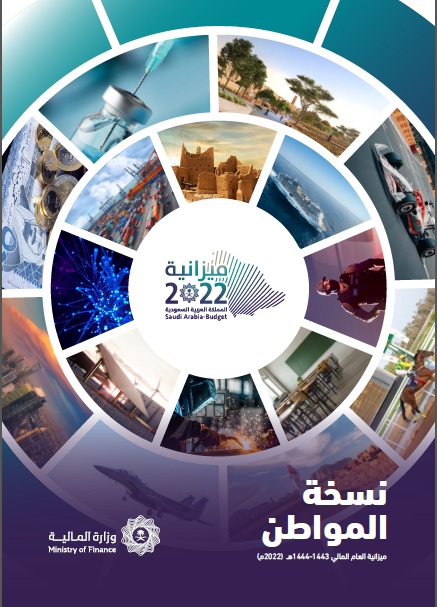
His Excellency concluded his statement by noting that the 2022 budget is the result of planning and collaborative efforts among all government agencies, where efforts were made, resources were allocated, and energies were mobilized to prepare this budget appropriately so that it achieves its strategic objectives with the utmost transparency and clarity, based on the government’s direct commitment to financial and economic conditions, through the issuance of budget-related reports such as performance reports: quarterly, semi-annual, and annual reports, as well as the preliminary statement, in addition to the budget statement and the citizen’s version, in line with the Kingdom’s Vision 2030.