
The White Land Program revealed that the fees collected have helped more than 185,000 Saudi families since the program’s launch to secure suitable housing options, including land and residential units, in a number of cities and regions across the Kingdom.
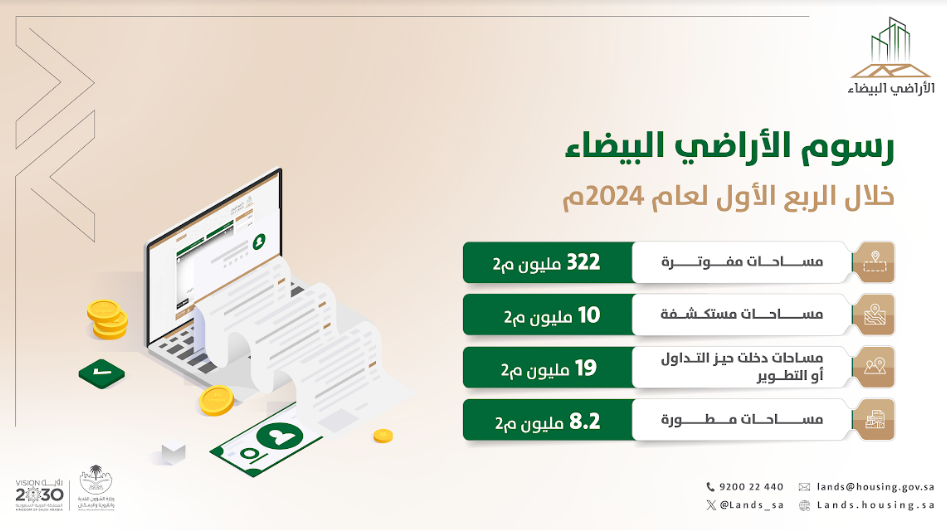
The program has issued more than 8,000 White Land fee invoices since its launch through the end of 2021, with the total area registered in the program exceeding 500 million square meters distributed across major cities (Riyadh, Jeddah, Makkah, and Dammam), confirming the allocation of two billion riyals from fee revenues for the development of infrastructure projects and the provision of services in more than 80 residential projects across various cities in the Kingdom, from the program’s inception through the end of last year, 2021.
The program indicated that the total area of land developed by its owners, land under development, and land on the market that has entered the real estate supply market amounts to 102 million square meters, while the areas identified by the program exceeded 155 million square meters, in line with the program’s objectives to provide developed residential land within the designated urban boundaries of cities.
This comes as an extension of the program’s role in increasing the residential real estate supply of developed land, achieving market balance, and protecting fair competition, with the aim of increasing the rate of home ownership among Saudi families to 70 percent by 2030 in accordance with the targets of the Housing Program—one of the programs of the Kingdom’s Vision 2030.
Last month, the White Land Program announced the launch of the second phase and the expansion of the target area to include the city of Riyadh, following the completion of all necessary regulatory procedures in cooperation with relevant authorities, departments, and committees, in an effort to achieve the program’s three main objectives, which include increasing the supply of developed land, achieving a balance between supply and demand, and protecting fair competition and combating monopolies.