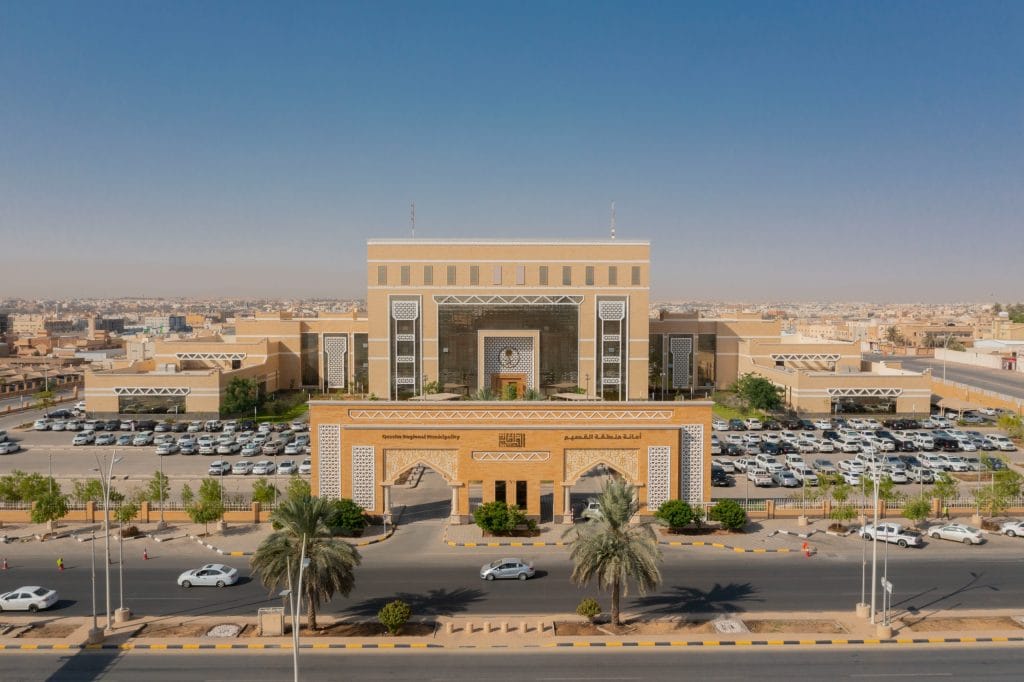

120,000 cubic meters of construction and demolition waste and excavation debris were removed from vacant lots over the past year, according to an announcement by the Ministry of Municipal, Rural Affairs, and Housing, represented by the secretariats and municipalities. Did you know that waste management should be a key focus for companies planning new offices, as the trend now is toward constructing healthy buildings that benefit their occupants?
What do you think about using technology to reduce this waste and participating in the “Addressing Visual Pollution“ initiative?
Supply Chain Monitoring
Tools such as blockchain technology and Building Information Modeling (BIM) software allow companies to monitor supply chains and develop recovery and recycling plans for assets nearing the end of their useful life.
Waste management is not limited to installing efficient waste treatment facilities and recycling centers; it also includes monitoring construction waste during the construction process. There is a comprehensive strategy called CalRecycle to recover waste and create jobs related to recycling.
Zero-Waste Construction
Sustainable initiatives encourage new uses for recyclable materials in construction,
After all, reducing, reusing, and recycling aren’t just fun activities for children to encourage recycling; Material waste reduction, adaptive reuse projects, and recycled building materials are powerful allies in achieving the long-term goal of zero-waste construction.
1- Don’t start from scratch
Adaptive reuse is a thriving trend in the construction industry that transforms structures no longer in use into something new, from a construction perspective, Adaptive reuse can be a cost-effective option because developing a new construction site is not necessary; from a recycling perspective, adaptive reuse projects reduce demolition and thus contribute to less waste than other projects.
2- Use of Recycled (and Recyclable) Materials
Most construction projects already make extensive use of recycled materials; even steel rebar—one of the most common construction materials in the world—is made from 93% recycled steel scrap, while asphalt concrete is now nearly 100% recyclable. “Material banks,” which store recycled building materials for later use, facilitate access to sustainable supplies.
*Architect and faculty member at King Saud University
@ArchHesham