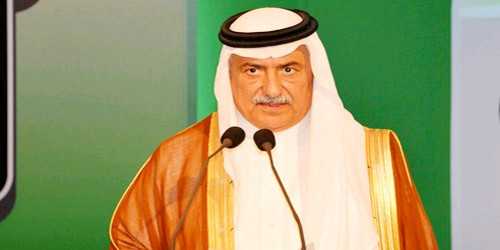

Finance Minister Dr. Ibrahim bin Abdulaziz Al-Assaf opened the Euromoney Saudi Arabia 2015 conference, which kicked off yesterday in Riyadh for its 10th edition. Organized by the Ministry of Finance under the title «Opportunities and Financial Markets,» and addresses the real investment and commercial opportunities created by the Kingdom’s economic strategy, with the participation of global financial sector leaders and a number of international figures in the financial sector.
Ministry of Finance: Our financial position is strong
During the opening ceremony, the Minister of Finance reassured investors and business leaders of the Kingdom’s strong financial position despite the decline in oil prices since last year. He noted that the general budget for the current fiscal year continues to prioritize development programs, thereby helping to stimulate private-sector activity outside the oil sector and boost growth and employment rates. He added: "There is no doubt that the Kingdom, as is the case with oil-revenue-dependent countries, will face some challenges in the coming period; this requires precautionary and proactive measures, the continuation of reform and economic diversification programs, the expansion of the general revenue base, rationalizing public spending, and enhancing its efficiency and effectiveness.
$49 billion in government contracts
Al-Assaf revealed that the number of government project contracts issued in 2014, including projects funded by surpluses from previous budget revenues, reached 2,572 contracts, with a total value of approximately $49 billion. He explained that the 2015 state budget underscored the close link between public spending trends and the goals and priorities of the development plan, while working to avoid the significant negative impacts of oil price fluctuations. This was aided—by the grace of God—by the significant efforts made in recent years to strengthen public finances and enhance fiscal soundness by reducing public debt.
The global economy is recovering
Al-Assaf explained that the global economy continued to recover over the past year, although growth remained moderate and varied across different countries and regions. He noted that, on the other hand, growth rates in emerging economies—led by China—continued to slow, and a number of other major emerging economies were affected by falling commodity prices. He noted that despite this, the group of developing and emerging economies contributed about three-quarters of global economic growth in 2014. At the regional level, he noted that despite a relative improvement in the economic growth rate in the Middle East and North Africa region in 2014 compared to the previous year, economic growth rates in the region remain weak, affected by security and political developments in a number of areas, while falling oil prices pose a challenge to oil-exporting countries, including the Kingdom. Al-Assaf said: The global economic outlook faces a number of risks, including political tensions, security unrest, recession risks, and increased volatility in international financial markets resulting from a shift in market participants" assessment of investment risks in financial assets, especially if interest rates in the United States rise faster and to a greater extent than expected, as monetary policy returns to normal amid the recovery of U.S. economic growth rates. He also expressed optimism that the global economy is beginning to emerge from the current situation characterized by low growth and the risk of severe recession, noting that indicators from Europe and Japan in particular are optimistic, though he does not expect a quick return to the overall growth levels seen in the past decade.
Saudi economic growth rates are strong
The Minister of Finance reviewed some economic and financial developments at the local level; the Saudi economy has witnessed strong growth rates over the past five years, averaging approximately 5.1% annually. He noted that this growth came against the backdrop of continued expansion in economic activities in non-oil sectors, with annual growth rates exceeding 5.1%; this helped offset the impact of fluctuations in oil sector growth rates on macroeconomic performance. He also highlighted the government’s ongoing efforts to develop partnerships with the private sector and provide an enabling environment for private investment, which have resulted in private sector output growth rates in non-oil sectors ranging between 1.6% and 1.8% over the past five years; bringing the share of private sector output to approximately 1.7% of non-oil sector output, which constitutes about 56.5% of real GDP in 2014. He noted that the factors contributing to this growth included the opportunities created by government spending on development and infrastructure projects and programs.
A promising future for the sukuk market
Regarding the financial sector, the Minister of Finance explained that the Kingdom continues to strengthen the sector overall, that the banking sector has continued to grow, and that the Saudi Arabian Monetary Authority has continued its efforts to enhance its resilience, while the Capital Market Authority continues to work on developing and deepening the financial market; recently, approval was granted to open the market to qualified foreign financial institutions, as well as to encourage the issuance of bonds and sukuk alongside stocks to diversify investment instruments and financing opportunities. He expressed optimism about the future of the sukuk and bond market in the Kingdom, which will open up promising prospects for private sector entities to finance their projects and expansions, given the availability of liquidity in the local market and growing investor interest.
Recent Regulatory Changes
Al-Asaf emphasized that the Kingdom is witnessing extremely important developments on both the political and economic fronts under the leadership of the Custodian of the Two Holy Mosques, King Salman bin Abdulaziz – may God preserve him – the most recent of which was the swearing-in of His Royal Highness Prince Mohammed bin Nayef bin Abdulaziz as Crown Prince, and His Royal Highness Prince Mohammed bin Salman bin Abdulaziz as Deputy Crown Prince. He highlighted the organizational decisions in the economic, political, and security spheres, which involve concentrating decision-making in two main councils: the Council of Political and Security Affairs and the Council of Economic and Development Affairs, as replacements for many existing councils and committees. He believed that this would facilitate faster decision-making, expressing his hope that it would further streamline business operations to enhance the investment-friendly environment.