
Amlak - Abdullah Al-Salih
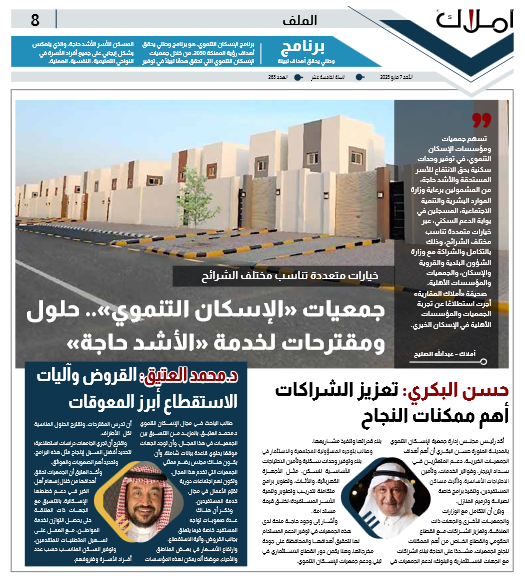
Associations and institutions Development Housing, in providing usufruct housing units for eligible and needy families, who are covered by the Ministry of Human Resources and Social Development, registered in the housing support portal, through multiple options that suit different segments, in integration and partnership with the Ministry of Municipal and Rural Affairs and Housing, and civil societies and institutions.
Amlak Real Estate newspaper conducted a survey on the experience of associations and NGOs in charitable housing.

Hassan Al-Bakri: Strengthening partnerships is key to success
The Chairman of the Board of Directors of the Development Housing Association in Medina, Hassan Al-Bakri stressed that the most important objectives of charities are to support those who are unable to pay rent and utility bills, provide basic needs, furnish the housing of beneficiaries and implement special programs for maintenance and restoration of homes.
He explained that integration with ministries, other associations and related entities, and strengthening partnerships with the government and private sectors are among the most important possibilities for the success of associations, stressing the need to build partnerships with investment entities and banks to support associations in building their capacities and implementing their projects.
He called for directing social responsibility and investment in building and providing housing units, providing basic housing needs, such as electrical appliances and furniture, and developing integrated programs for training, development and development of beneficiary families to create sustainable value.
He stressed the need to build partnerships with investment entities and banks to support associations in building their capacities and implementing their projects. He pointed out that there is an urgent need for these associations to provide sustainable support to achieve their goals and maintain the quality of their outputs, and here lies the role of the investment sector in adopting and supporting developmental housing associations.
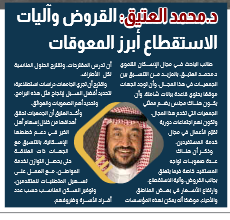
D: Loans and deduction mechanisms are the main obstacles
Dr. Mohammed Al-Ateeq
Researcher in the field of development housing Dr. Mohammed Al-Ateeq called for more coordination between associations in this field, and that the authorities create a website containing a comprehensive database, and that there be a council that includes representatives of associations that serve this field, and have regular meetings to evaluate the work in the field of serving beneficiaries. Researcher in the field of development housing.
He stated that there are several difficulties facing the beneficiary, especially with regard to the aspect of loans, the deduction mechanism, and the high prices in some areas and neighborhoods, explaining that these institutions can study the proposals and propose appropriate solutions for all parties. He suggested that universities should conduct a survey of the associations that serve the field, and have regular meetings to evaluate the work in serving the beneficiaries.
<He suggested that universities conduct surveys to determine the best ways to make such programs successful and identify the most important difficulties and obstacles.
Al-Ateeq emphasized that the associations achieve their goals through the contribution of philanthropists in supporting their housing plans, in coordination with the relevant authorities so that balance is achieved to serve the citizen, while working to facilitate the requirements for applicants and provide appropriate housing according to the number of family members and their circumstances. He suggested that universities conduct surveys to determine the best ways to make such programs successful and identify the most important difficulties and obstacles.
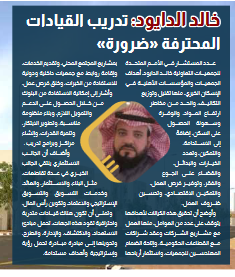
Khaled Al-Dayoud: Professional leadership training "a necessity"
Khaled Al-Dayoud, a consultant at the United Nations for cooperative societies, enumerated the objectives of NGOs and institutions in charitable housing, including reducing and distributing costs, reducing the risk of rising materials, abundance and accessibility of housing, sustainability, empowerment, multiple options and alternatives, eliminating hunger and poverty, providing job opportunities, economic empowerment, and improving working conditions.
He explained that the realization of these entities" objectives depends on a number of factors, including working with corporate projects and partnerships with government sectors, allowing engineers to join the associations, investing their profits in local community projects, providing services, and establishing links with local and international associations to benefit from expertise and create job opportunities.
He pointed out the possibility of benefiting from banks by obtaining the necessary support and funding, building an appropriate system, developing innovation, developing capacities, and establishing training centers and programs.
He added that the investment side meets the philanthropic side at several intersections, such as construction, investment, return, marketing services, strategic marketing, accreditation, and capital formation. He hoped that there would be an opportunity to benefit from banks through the necessary support and financing, building an appropriate system, developing innovation, developing innovation, and establishing centers and training programs.
He hoped that there will be trained and professional leaders leading these organizations, carrying the principles of readiness, discovery, management, and presentation, and transforming them into an initiative with a vision, strategy, and sustainable goals.
Abdullah Al-Zubaidi: 8 steps to achieve goals Abdullah Al-Zubaidi, Deputy Executive Director of the Al-Birr Community Association in Al-Mudhaylif, founder of the Athar website for non-profit sector development, said: Abdullah Al-Zubaidi: The objectives of NGOs and institutions in charitable housing are to provide affordable and appropriate housing solutions for needy and deserving groups of citizens, contribute to achieving urban and social development in society, and promote the values of solidarity and solidarity among its members. Zubaidi said.
He explained that these associations and institutions implement various charitable housing projects, such as building, maintaining and rehabilitating housing, providing housing loans, grants or subsidies, providing guarantees or guarantees to obtain housing financing, providing land or real estate for charitable housing, or encouraging donations and real estate endowments to support charitable housing. He explained that these associations and institutions implement various charitable housing projects.
These associations and institutions are subject to the laws and regulations governing civil work in the Kingdom, and cooperate with the relevant government agencies in determining the criteria and conditions of eligibility for charitable housing, and submitting reports and statistics related to their performance and achievements.
He stated that these associations can achieve their goals towards their members by following a number of steps, including identifying the needs and challenges facing the beneficiaries of their services and searching for appropriate solutions, in addition to developing a clear and specific vision and mission that expresses its purpose, values and method of work. He pointed out that it is necessary to develop a clear and specific vision and mission that expresses its purpose, values and method of work.
<He pointed out the need to develop thoughtful and organized work plans and strategies that define general and specific goals, benchmarks and required resources, and build effective partnerships with donors, supporters and collaborators from the public, private and civil society sectors.
He emphasized the importance of employing qualified and trained cadres committed to the ethics of charitable and humanitarian work, applying quality, transparency and accountability standards in all stages of planning, implementation and evaluation, using technology and innovation in developing its services and facilitating access to them, expanding the scope of impact and launching towards the regional or international level if possible. He suggested the establishment of a charitable fund.
He proposed the establishment of a charitable fund that attracts donations from philanthropists and wealthy individuals, and invests them in buying or building residential properties that are distributed to needy families through the ownership or rental system, and the fund furnishes these properties with basic necessities and oversees their maintenance and development.