
It's important to keep up with everything new and innovative in the real estate and design industry, not to be trendy but to learn about innovative materials, systems and products to live more sustainably and benefit the planet. <It's important to keep up with everything new and innovative in design and real estate, not to be trendy but to learn about innovative materials, systems, and products to live more sustainably and benefit the planet. Also, new uses of rooms can maximize the square footage and surroundings to bring joy to our lives. The following ten trends are worth considering because they can positively impact whether homeowners reside in single or multi-family residences.
Homeowners are more willing to stay put
With interest rates on the 30-year fixed mortgage still rising, home prices holding steady and inventory still low, many homeowners are planning to stay put, improve or expand their current square footage. Laurel Vernazza, a home design expert at The Plan Collection - a New York-based company that sells pre-drawn plans - says that for those with no plans to move, the wish list includes the following:
- Sustainable features
- Accessory dwelling units as zoning laws change
- Baseball fields
- Remodeled basements with saunas
- Media centers and game rooms
- Home offices with work-from-home continuity
- Outdoor space, not only at ground level but above it as well
- AI-driven technology to make homes easier to use and more energy efficient
Homeowners want to be active but minimize maintenance and energy consumption. They prefer sustainable, locally sourced materials to minimize their carbon footprint and support local businesses, which is especially true for Millennials and Generation Z. Many materials reflect better waterproofing, and garages may have space for battery backup systems in the event of a power outage, says architect Jonathan. Buryak, AIA, LEED AP, principal of KTGY in Oakland, California.
Specialized needs of older residents
Architectural firms like The Architectural Team (TAT) out of Boston are designing facilities to meet specialized needs, such as The Cordwainer, which will have private and double rooms and a host of amenities including a two-story atrium, performance center and game room to stimulate the audience. Brain and Memory Care Garden. The bedrooms will be split between two neighborhoods so residents can walk around safely, says TAT architect Anthony Viverito. It's also important to use light to help adjust circadian rhythms and mood. Tamlyn Liesenfeld, president and CEO of Anthemion Senior Lifestyles, which owns and operates The Cordwainer in Norwell, Massachusetts, says: “The vibrant elements and focus on unique spaces to energize activities and entertainment require a departure from traditional practices.”
With the number of aging baby boomers reaching 76.4 million, more attention is being paid to their housing needs when they are unable to remain at home, including many of the estimated 6.7 million people with Alzheimer's disease.
With the number of aging baby boomers reaching 76.4 million, more attention is being paid to their housing needs when they are unable to remain at home, including many of the estimated 6.7 million people with Alzheimer's disease.
Smaller single-family and independent homes
<Homes are shrinking in size, with the average single-family home now at 2,261 square feet, while the average size of new single-family homes has dropped to 2,469 square feet, according to the National Association of Home Builders. One of the most popular styles is the ranch home. This style also offers flexibility that can be opened up inside and out, according to Vernazza. Buryak says townhomes and stacked apartments have gained popularity because of the need for smaller spaces in dense locations.The main reasons for smaller single-family homes are rising mortgage rates and lifestyle changes that favor fewer bedrooms. In terms of detached homes and stacked apartments, the economics of for-sale properties work with the current market funding for developers more than rentals. The shortage of land makes attached and stacked units smart choices.
The desire to own larger apartments
At the same time that single-family homes are shrinking, apartments are increasing from an average of 870 square feet before the coronavirus pandemic to nearly 1,000 square feet, says architect Sean M. Stadler, FAIA, LEED AP, managing director at WDG Architecture's Washington, D.C. office.
Stadler says many tenants want more space to work from home and prefer more bedrooms, if they can afford it.
Stadler says many renters want more space to work from home and prefer more bedrooms, if they can afford it.
Sustainable energy use by homeowners on the rise
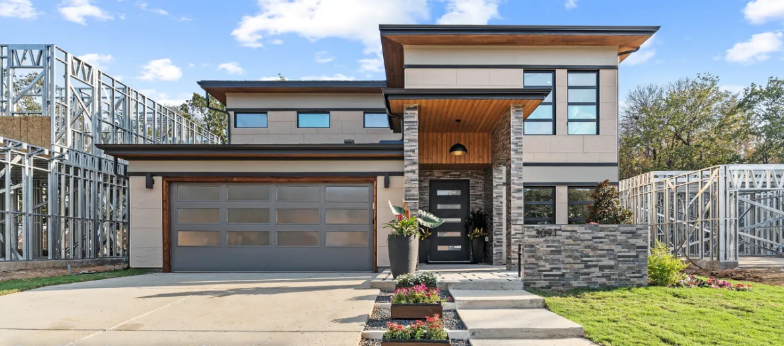
Sustainability is not going anywhere. In fact, it's growing in popularity, and it received a boost in January 2023, when the Department of Energy announced federally subsidized incentives to help builders make DOE-certified zero-energy, energy-ready homes their standard. One example of a builder focused on energy efficiency and minimizing construction waste is Netze Homes, based outside Dallas, which uses steel it recycles from cars. It claims its homes are 20 times stronger than those built with wood. Because the frame is factory-made to exacting specifications, the homes are more airtight, and the resulting reduced air exchange makes them more efficient. <Sustainable homes do a better job of withstanding extreme weather, are fire-resistant, and limit termite damage, wood rot and mold. Energy-efficient homes help residents save up to 35% in electricity bills and reduce waste by 40% since the frame was formed at the factory. Proponents say these homes have reduced carbon emissions by 50% compared to the industry average.
Demand for luxury spec buildings on the rise
Demand for luxury homes and townhomes continues to grow, especially in South Florida, according to JCDecaux, president of Centennial Bank's Southeast Division. Waterfront locations are especially desirable. He says: “Some of the demand may have eased so that there may now be 10 to 20 buyers instead of 100 in a home, but it's still strong and prices are still high.” He says favorite features include modern design with flat roofs, wood details, pool, open floor plan and beautiful kitchens.
After the slowdown from 2012 to 2014, spec construction has picked up due to increased immigration. Jose R. Boschetti Jr, managing partner of the Boschetti Group in South Miami, Florida, also sees demand from buyers who want simple design and maintenance-free living with artificial turf, ceramic floors, smart features and pools in close proximity to a home to maximize indoor/outdoor connectivity.
Jose R. Boschetti Jr.
An abundance of multi-family amenities in small buildings
People are still looking for features in small buildings, says architect Joshua Zehnder of Joshua Zehnder Architecture and Design in Princeton, NJ. The four-story, six-unit mixed-income building, Nelson Glass House, reflects the “amenity creep” trend. “It's spreading to smaller buildings,” he says. The units have terraces, shared parking, bike storage, ”zoom rooms” for online meetings and a café on the ground floor. He says: “Just having a good location is no longer enough.” Other popular amenities, he says, are a grocery store, a pet track, a packing center, a lounge and lobby for interaction - sometimes with classrooms - and electric vehicle charging stations.
Other popular amenities are a grocery store, a pet track, a packing center, a lounge and lounge for interaction - sometimes with classrooms - and electric vehicle charging stations.
Some buildings use amenities such as EV stations to increase revenue, according to Swtch Energy, a company that provides EV charging solutions and that works with multi-tenant properties. Many buildings add programming through a property management company like FirstService Residential, says Katie Ward, the company's regional president in Texas. She says the trend has evolved to property management not only planning the space, but creating a culture of adapting connections to needs through events. <Stadler says amenities allow smaller buildings to compete with larger buildings, retain residents and attract newcomers. One challenge is having amenities that are attractive when the building opens, as the delivery timeline could be five years.
Stadler says the amenities allow smaller buildings to compete with larger buildings, retain residents and attract newcomers.
Recent and ongoing trends in kitchens
The kitchen remains the heart of the home with old trends in place along with new trends gaining traction, says designer Mick Di Giulio of Di Giulio Kitchen Design out of Chicago. The number of induction stoves continues to increase, in part because new home construction regulations in some municipalities require phasing out gas ranges for safety and sustainability, according to The Plan Collection.
De Giulio says an organized pantry. More light through large windows or LED lights in warmer colors; artisan and handcrafted features such as hand-cut wenge wood; and a mix of materials such as German silver, stainless steel with special finishes, and bronze is very popular, as is the island.
De Giulio says. <In most cases, the kitchen is one of the most used and most seen rooms in the house. People are still eager to gather in the kitchen, and within the space, certain trends are emerging. Di Giulio says a kitchen remodel makes sense, because if done well, it can last for 30 years, even though appliances may need to be replaced along the way.
Di Giulio says a kitchen remodel makes sense, because if done well, it can last for 30 years, even though appliances may need to be replaced along the way.
Landscapes and biodiversity
Whether in communities or private backyards, homeowners want to preserve ecosystems. In smaller communities, even in urban areas, various forms of community conservation or “farming” are emerging, such as Atlanta's Pendergrast Farm. The twenty energy-efficient homes, equipped with solar panels and wired for electric vehicle charging stations, will have a Home Energy Rating System rating of 50, which will use 50 percent less energy than comparable new homes. Seventy percent of its land will be preserved for forestry and a working farm.
In private backyards, a “rewilding” process uses native plants to create habitat. Hilary Peters of Mariani Landscape in Lake Bluff, Illinois, says this trend is very popular among clients interested in restoring ecosystems and biodiversity. By bringing native plants into the landscape, homeowners can create a space that fulfills needs and supports wildlife.
These communities combine features that reflect homeowners" interest in conservation, and the scarcity of land makes this viable. Likewise, homeowners recognize their impact on their environment and the need to protect wildlife. Peters says anything simple helps, installing a birdhouse or water feature or using native plants and herbs makes a difference. She advises against using varieties that don't always favor pollinators.
Neutral and dark colors in outdoor designs
<Amy Wax, a residential and commercial color consultant in Montclair, N.J., says neutrals are more popular. ”It's a safe choice, provides the opportunity to decorate the home with more emphasis on landscaping, and gives homeowners the opportunity to market their home without having to repaint.“ She says: ”It's not the muted hues of the past." Many neutrals are darker, such as midnight blue, charcoal gray, and true drama black.Dark exterior accents express confidence with a bold street presence. Adding a dark blue front door or a yellow or hot pink cab accent is fair game. Durability should be evaluated as dark colors can fade, so it's best to apply a low-gloss paint to protect surfaces.