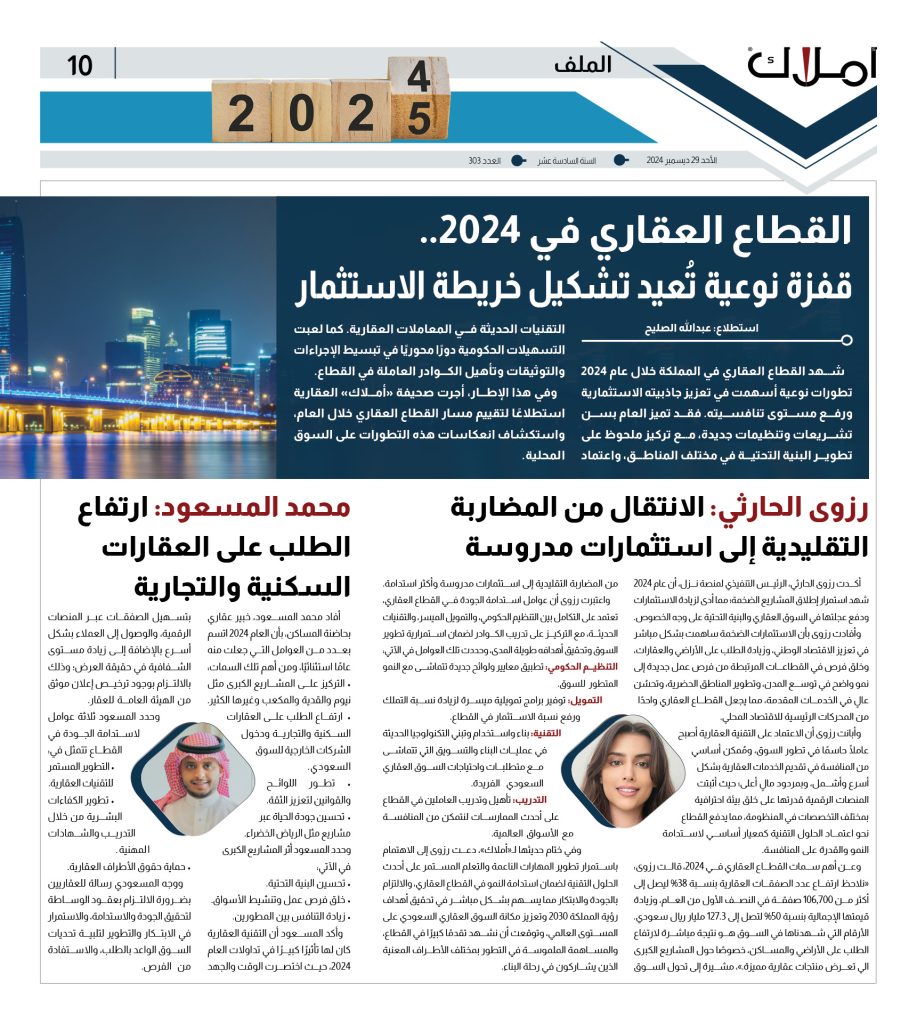

The real estate sector in 2024: A qualitative leap that will reshape the investment landscape
Survey by: Abdullah Al-Saleh
The various developments introduced in the real estate sector have improved the attractiveness of real estate investment and enhanced the level of competitiveness, as it has been characterized by the continuous enactment of legislation and regulations and the focus on infrastructure in various regions of the Kingdom, in addition to the adoption of real estate technologies in most trading transactions, as well as government facilities in completing procedures and documentation and qualifying those involved in the sector.
The newspaper “ Amlak Real Estate” conducted a survey on how the real estate sector was headed in 2024.
Razwa Al-Harthi : The market has shifted from traditional speculation to well-considered investments.

Razwa Al-Harthi, CEO of the Nuzul platform, confirmed that 2024 witnessed the continued launch of mega-projects, which led to increased investments and accelerated their pace in the real estate and infrastructure market in particular.
Razwa stated that the massive investments have directly contributed to strengthening the national economy, increasing demand for land and real estate, and creating opportunities in related sectors, from new job opportunities to clear growth in urban expansion, development of urban areas, and a high improvement in services provided, making the real estate sector one of the main drivers of the local economy.
Razwa explained that reliance on real estate technology has become a crucial factor in the development of the market, and a fundamental enabler of competition in providing real estate services faster, more comprehensively, and with higher financial returns. Digital platforms have proven their ability to create a professional environment with various specializations in the system, which pushes the sector towards adopting technological solutions as a basic standard for sustainable growth and competitiveness.
Regarding the most important features of the real estate sector in 2024, Razwa said: “ We have observed a 381 TP3T increase in the number of real estate transactions, reaching more than 106,700 transactions in the first half of the year, and a 501 TP3T increase in their total value, reaching SAR 127.3 billion. The figures we have witnessed in the market are a direct result of the increased demand for land and housing, especially around major projects that offer distinctive real estate products.” She pointed out the market’s shift from traditional speculation to more well-considered and sustainable investments.
Razwa described the factors for sustaining quality in the real estate sector as depending on the integration of government regulation, accessible financing, and modern technologies, with a focus on training personnel to ensure the continued development of the market and the achievement of its long-term goals. She identified these factors as follows:
Government regulation: Implementing new standards and regulations that keep pace with the evolving growth of the market.
Financing: Providing accessible financing programs to increase ownership rates and raise the investment rate in the sector.
Technology: Building, using and adopting modern technology in construction and marketing processes that align with the unique requirements and needs of the Saudi real estate market.
Training: Qualifying and training workers in the sector on the latest practices so that we can compete with global markets.
In concluding her remarks to “ Amlak”, Razwa called for continued attention to developing soft skills and continuous learning on the latest technological solutions to ensure the sustainability of growth in the real estate sector, and a commitment to quality and innovation, which directly contributes to achieving the goals of the Kingdom’s Vision 2030 and enhancing the position of the Saudi real estate market at the global level. She expected that we will witness significant progress in the sector, and a tangible contribution to development by the various stakeholders who participate in the building journey.
Mohammed Al-Masoud: Increased demand for residential and commercial real estate

Mohammed Al-Masoud, a real estate expert at the Housing Incubator Foundation, stated that 2024 was characterized by a number of factors that made it an exceptional year, and among the most important of these features are:
- The focus is on major projects such as NEOM, Qiddiya, The Cube, and many others.
- Increased demand for residential and commercial real estate and the entry of foreign companies into the Saudi market.
– Regulations and laws are being developed to enhance trust.
Improving the quality of life through projects such as Green Riyadh.
Al-Masoud identified the impact of major projects as follows:
* Improve the infrastructure.
* Creating job opportunities and stimulating markets.
Increased competition among developers.
Al-Masoud emphasized that real estate technology had a significant impact on transactions in 2024, as it saved time and effort by facilitating deals through digital platforms, reaching customers faster, and increasing the level of transparency in the reality of the offer, by adhering to the existence of a documented advertising license from the General Authority for Real Estate.
Al-Masoud identified three factors for sustaining quality in the sector:
-Continuous development of real estate technologies.
-Developing human competencies through training and professional certifications.
-Protecting the rights of real estate parties.
Al-Masoudi addressed a message to real estate professionals stressing the need to adhere to brokerage contracts to achieve quality and sustainability, to continue innovating and developing to meet the challenges of a promising market with high demand, and to take advantage of opportunities.
Abdulmajid Al-Talhi: Real estate technology has contributed to accelerating the completion of transactions.

For his part, Abdulmajid Al-Talhi, General Manager of Maskan Muthawq Real Estate Company, stated that the real estate sector in the Kingdom witnessed significant developments during 2024, adding substantial economic and investment value. These developments contributed to enhancing the sector's efficiency, which positively impacted market maturity and future trends.
Al-Talhi added that the mega-projects launched by the Kingdom as part of Vision 2030, such as NEOM, the Red Sea Project, and the Riyadh Metro, have not only created a boom in infrastructure development but have also reshaped the real estate investment landscape. He emphasized that the Kingdom will continue to strengthen its position as a global hub for hosting major international events and occasions throughout 2024, which has directly contributed to revitalizing the real estate sector and supporting it with new investment opportunities.
Al-Talhi stressed that major projects have had a tangible positive impact on the real estate sector and related sectors, such as construction, tourism and infrastructure, in addition to supporting sectors such as real estate finance, as they have contributed to raising market efficiency, attracting investors and enhancing integration with the national economy.
Regarding the impact of real estate technology on transaction completion, Al-Talhi explained that it has contributed to accelerating and facilitating transactions and increasing their transparency for both investors and clients. This is clearly demonstrated by the positive impact of the real estate registry, the " Ejar" platform, standardized contracts, real estate platform licenses, and other technologies in the sector.
He pointed out that sustaining quality in the real estate sector is an ongoing process encompassing several key factors that ensure the long-term success of projects. The Ministry of Municipalities and Housing has been keen to guarantee this sustainability by focusing on the use of modern construction technologies, integrated urban planning, sustainable maintenance, compliance with environmental standards, design innovation, and transparent governance.
Al-Talhi concluded his remarks by emphasizing that the opportunities and challenges will remain significant as we enter 2025, requiring more cooperation, flexibility, and readiness to capitalize on future transformations that will contribute to strengthening the leadership of the real estate sector, and looking forward to more successes and achievements in developing the real estate market and realizing the shared vision for a better future.