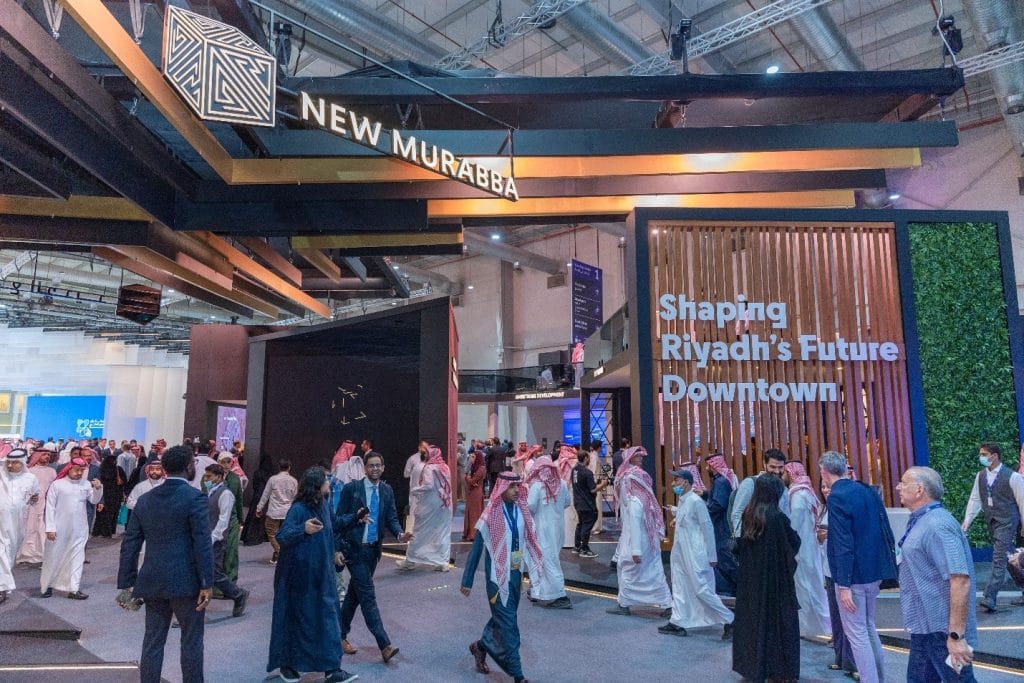
The third edition of the “Public Investment Fund and Private Sector Forum” and its accompanying exhibition at the King Abdulaziz International Conference Center in Riyadh, which will run from February 12–13, 2025. The forum, which is the largest platform of its kind in the Kingdom for the private sector, aims to strengthen partnerships and cooperation opportunities with the local private sector.
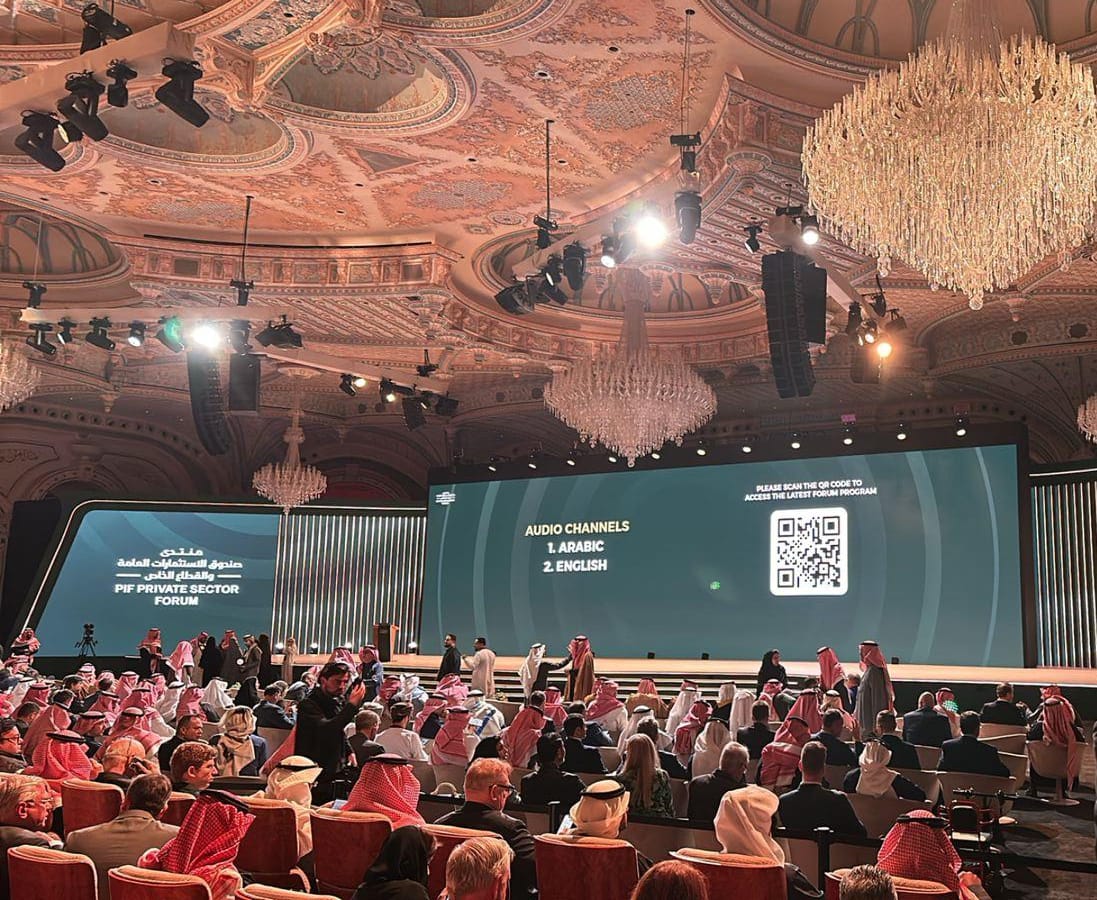
This is in line with Public Investment Fund Forum with the directives of His Royal Highness Prince Mohammed bin Salman bin Abdulaziz Al Saud, Crown Prince, Prime Minister, and Chairman of the Board of Directors of the Public Investment Fund—may God protect him— in engaging local and international investors in the continued growth of strategic sectors in the Kingdom and increasing the private sector’s contribution to GDP to 65.1%, in line with Saudi Vision 2030. The number of participants in this year’s forum is expected to exceed 10,000.
The forum, which will be held under the theme “A Shared Ambition for a Prosperous Economy,” be attended by a number of Their Excellencies, ministers, and senior officials from the Fund and its portfolio companies, as well as representatives from government agencies and leading private sector executives across the Kingdom’s strategic sectors, in addition to more than 100 booths for the Fund’s portfolio companies.
On this occasion, Jerry Todd, Head of National Development at the Public Investment Fund, stated: “The Private Sector Forum serves as a platform to enhance opportunities for cooperation and partnership between the Public Investment Fund and its portfolio companies with the local private sector. Now in its third edition, the Forum continues to grow in size, scope, and ambition, reflecting the Fund’s efforts to strengthen engagement with the private sector, empower it, and increase its contribution to achieving a more diversified economy with local supply chains supported by advanced technology.”
The forum will discuss Public Investment Fund Forum will discuss, over the course of two days, a number of topics in a series of panel discussions and workshops focused on exploring opportunities that contribute to empowering and strengthening the role of the private sector, in line with the Fund’s strategy to increase its contribution and that of its portfolio companies to local content to 60%.
The forum will showcase Public Investment Fund initiatives and programs aimed at strengthening partnerships with the private sector, including the “Mas’ahara” local content development program “Masahama,” which the Public Investment Fund launched at the first edition of the forum. The program aims to increase the Fund’s and its portfolio companies“ contribution to local content, and has contributed to an increase in spending on local content from 69 billion Saudi riyals in 2020 to 153 billion Saudi riyals in 2023, representing a 122% increase.
In addition, the ”Industrial Business Accelerator“ program was launched in September of last year with the aim of empowering industrial startups. The program received 350 applications, 13 of which were selected from small and medium-sized enterprises, The program aims to develop competitive and innovative products and services for participating companies and to scale their businesses through training and mentoring sessions led by experts in industry, strategy, operational excellence, sales, and sustainability, by activating communication channels with the Fund’s portfolio companies, which contributed to the signing of 12 commercial agreements, in addition to two agreements aimed at product development with the Fund’s portfolio companies.
The Fund also launched the ”Private Sector Platform,“ a portal for private sector companies to build partnerships with the Fund and its portfolio companies in strategic sectors within the Kingdom; more than 2,000 investors have registered on the platform since its launch in 2023. In addition, the ”Contractor Financing“ program—the first of its kind in the Kingdom and the region—aims to facilitate financing solutions between the Fund’s companies and the private sector.
This year’s edition of the forum will feature the announcement of the winners of the ”Masahama Design“ competition, in collaboration with Roshen Group, to empower talented Saudi designers and promote the use of local materials in construction and real estate development projects. Contestants were divided between the ”Emerging Architects“ track, which included 373 Saudi participants (107 teams) from 24 universities, and the ”Emerging Design Firms" track, which included more than 160 companies across the Kingdom.
In his opening remarks, Yasser Al-Rumayyan, Governor of the Public Investment Fund, confirmed that total spending on local content through the Fund and its portfolio companies reached 400 billion Saudi riyals during the period from 2020 to 2023, supported by the "Masahama" program, which helped increase the local content ratio from 47% to 53% during the same period, with plans to continue raising this ratio in the coming years.
40 billion riyals in new investment opportunities
Al-Ramyan noted that the Public Investment Fund’s private sector platform offers investment opportunities worth up to 40 billion Saudi riyals, emphasizing that the partnership with the private sector is a central part of the Fund’s strategy, which aligns with Saudi Vision 2030 aimed at building an integrated economic model in collaboration with the private sector and its leaders.
The Fund: A Driving Force for Investment
Al-Rumayyan added that the Public Investment Fund continues to serve as a driving force for investment by launching new sectors and opportunities that support the Kingdom’s economic transformation and help shape the future of the global economy.
He emphasized the importance of strengthening partnerships with the private sector and developing capabilities to enhance competitiveness and keep pace with economic growth, calling for leveraging the partnership opportunities available with the Fund and its companies.
The Public Investment Fund and Private Sector Forum is the largest platform of its kind in the Kingdom, and aims to strengthen cooperation with the private sector, in line with Crown Prince Mohammed bin Salman’s directives to increase the private sector’s contribution to GDP to 65% as part of the Vision 2030 targets.
Rapid Growth in Local Content
The ”Masahama“ program has seen remarkable growth in its support for local content, with spending on it rising from 69 billion riyals in 2020 to 153 billion riyals in 2023, an increase of 122%.
The forum is held under the theme "A Shared Ambition for a Thriving Economy," and brings together a number of ministers and senior officials, as well as representatives from leading private sector companies, with over 100 booths showcasing the Fund’s portfolio companies. The aim is to highlight initiatives and programs that strengthen partnerships with the private sector and accelerate the pace of economic growth in the Kingdom.
Meanwhile, Minister of Municipal and Housing Affairs Majed Al-Hogail confirmed that the volume of investments in the Kingdom’s housing sector has exceeded 200 billion riyals, noting that partnership with the private sector is the main driver of growth in these investments.
Al-Hogail’s remarks came during his speech at the "Public Investment Fund and Private Sector Forum," where he explained that the value of contracts signed in the municipal sector exceeded 19 billion riyals over the past three years, reflecting the continued growth in urban development.
The minister noted that the Kingdom has more than 600 regional centers characterized by economic and demographic diversity, with plans to expand cities in accordance with sustainability principles aligned with the goals of Saudi Vision 2030.
Vision 2030 and Enhancing Quality of Life
Al-Hogail emphasized that Vision 2030 aims to diversify the economy and create new economic activities to improve the urban landscape and raise the quality of services in Saudi cities, noting that the municipal and housing sectors contributed 16.1% of GDP last year, while the real estate, construction, and building sectors account for a similar or higher percentage of foreign direct investment inflows.
The minister explained that the ministry continues to develop legislative and regulatory frameworks, noting that in 2024, three local plans were completed, and work is underway on 33 new plans in partnership with the Authority Support Center to complete them by 2025.
A Leap in the Mortgage Market
Al-Hogail revealed that the real estate finance market has grown by 370% since 2018, reaching a volume of 800 billion riyals, reflecting investors” confidence in the Saudi real estate market.
The minister added that infrastructure and urban services are now available within 800 meters of any citizen, resident, or visitor, contributing to ease of mobility and strengthening the local economy.
Al-Hogail emphasized the importance of building sustainable cities that offer a high quality of life to attract investment, noting that the implementation of more than 660 urban interventions over the past two years has helped make cities more livable for residents, in addition to their role in boosting economic returns.
His Excellency the Minister of Municipalities and Housing, Mr. Majid bin Abdullah Al-Hogail, that the Kingdom’s Vision 2030 has focused heavily on economic diversification by creating new economic activities, upgrading the quality of services provided in cities, and improving the urban landscape.
This came during a panel discussion titled "The Ministerial Vision for the Government’s Role in Supporting and Empowering the Private Sector," as part of the proceedings of Public Investment Fund and Private Sector Forum held in Riyadh for the third time.
He emphasized that urban development is a comprehensive transformation that redefines the concept of cities, making them more sustainable, more attractive to investment, and better able to provide a high quality of life for citizens, which in turn has a clear impact on economic aspects, noting that the municipal and housing sectors" contribution to GDP reached 14% of real GDP for 2024, while the contributions of the construction and real estate sectors amounted to over 16% of total foreign direct investment inflows.
He explained that the Ministry of Municipalities and Housing has adopted a transformative approach to urban development, working on a number of initiatives to achieve this, including a new generation of regional plans, creating an ideal urban environment for residents in all cities of the Kingdom, and updating municipal guidelines, requirements, and standards.
He noted that the private sector is a partner in urban development, pointing out that in the past three years alone, investment contracts in the municipal sector worth nearly 19 billion riyals have been signed, while on the housing front and through the NHC, His Excellency confirmed that investments exceeded 140 billion riyals for the development of residential suburbs, through partnerships with 65 real estate developers.
He noted that the current municipal project portfolio has exceeded 24 billion Saudi riyals, with efforts underway to strengthen the private sector’s role in this field, noting that the total number of Saudis working in the sector exceeds 500,000 young men and women across more than 318,000 different establishments.
Meanwhile, Minister of Transport and Logistics Saleh Al-Jasser revealed that 80% of the targeted investments in the transport and logistics sector will come from the private sector, as part of efforts to strengthen the public-private partnership.
The minister’s remarks came during a panel discussion as part of the Public Investment Fund and Private Sector Forum, which kicked off today in Riyadh, where he emphasized that these investments will be made through various models of partnership and integration between the two sectors.
Al-Jasser noted that the partnership with the private sector included contracts in the maritime and ports sector worth over 18 billion Saudi riyals, emphasizing that the vast majority of investments in ports come through the private sector.
The minister explained that the total investment opportunities to be offered through public-private partnership models amount to 240 billion riyals, covering various sectors of transportation and logistics.
As part of the expansion of the partnership with the private sector, Al-Jasser noted that four airports—Abha, Taif, Hail, and Al-Qassim—have been offered to the private sector for investment in construction and management.
Al-Jasser emphasized that the Saudi private sector is a key partner in all the achievements made in the transportation and logistics sector since the launch of the National Strategy for Transportation and Logistics in 2021, which aims to strengthen the Kingdom’s position as a global logistics hub.
For his part, His Excellency the Minister of Investment, Engineer Khalid bin Abdulaziz Al-Falih, revealed that the number of companies that have established regional headquarters in the Kingdom has risen to nearly 600, noting that the number of registered investment licenses jumped from 4,000 in 2018 and 2019 to 40,000 currently, and total investment doubled to reach 1.2 trillion riyals, accounting for 30% of the Saudi economy’s total size.
He said: "72% of the investment came from the private sector, and the portfolio and companies Public Investment Fund accounted for only 13% of that, indicating that the Kingdom is a strong global investment destination thanks to its stimulating economic environment and the diversity of investment opportunities across various sectors, and has contributed to economic reforms under Vision 2030, enhancing the competitiveness of the local market and attracting major global companies. The rapid growth in foreign investment inflows also reflects investors" confidence in the Saudi economy and its stability.
This came during a panel discussion titled "The Ministerial Vision for the Government’s Role in Supporting and Empowering the Private Sector" as part of the proceedings of the Public Investment Fund and Private Sector Forum in its third edition, held in Riyadh over two days. His Excellency discussed the role of the private sector and its impact on national economic growth since the launch of Vision 2030, as well as the tangible progress in the investment environment.
His Excellency explained that the Saudi economy has undergone remarkable diversification, with non-oil economic activities now accounting for 52.1% of the total economy, noting that even during periods of decline in oil activities due to the Kingdom’s standard production policies, the growth rate of non-oil activity remained positive, ranging between 4% and 5%.
He noted that the Saudi economy has surpassed the 4 trillion riyal mark—approximately $1.1 trillion—achieving unprecedented leaps in foreign investment inflows, with its balance doubling to 900 billion riyals since the launch of the Kingdom’s Vision 2030, affirming that the Kingdom continues on its accelerated path toward achieving its investment and economic targets.
His Excellency emphasized that the Kingdom is working to create a stimulating and integrated investment environment, without focusing on a single sector as the sole driver of the future, but rather aiming to develop all economic sectors, noting that the Saudi Public Investment Fund has become a model for the establishment of sovereign wealth funds that play a pivotal role in driving the economy.
Al-Falih affirmed that the Kingdom continues to achieve its investment goals in line with the vision of His Royal Highness the Crown Prince—may God protect him—emphasizing that cooperation between the government and the private sector will remain the primary driver of pioneering and innovative projects that open new horizons for economic growth and development.