
Founding Day Dossier...
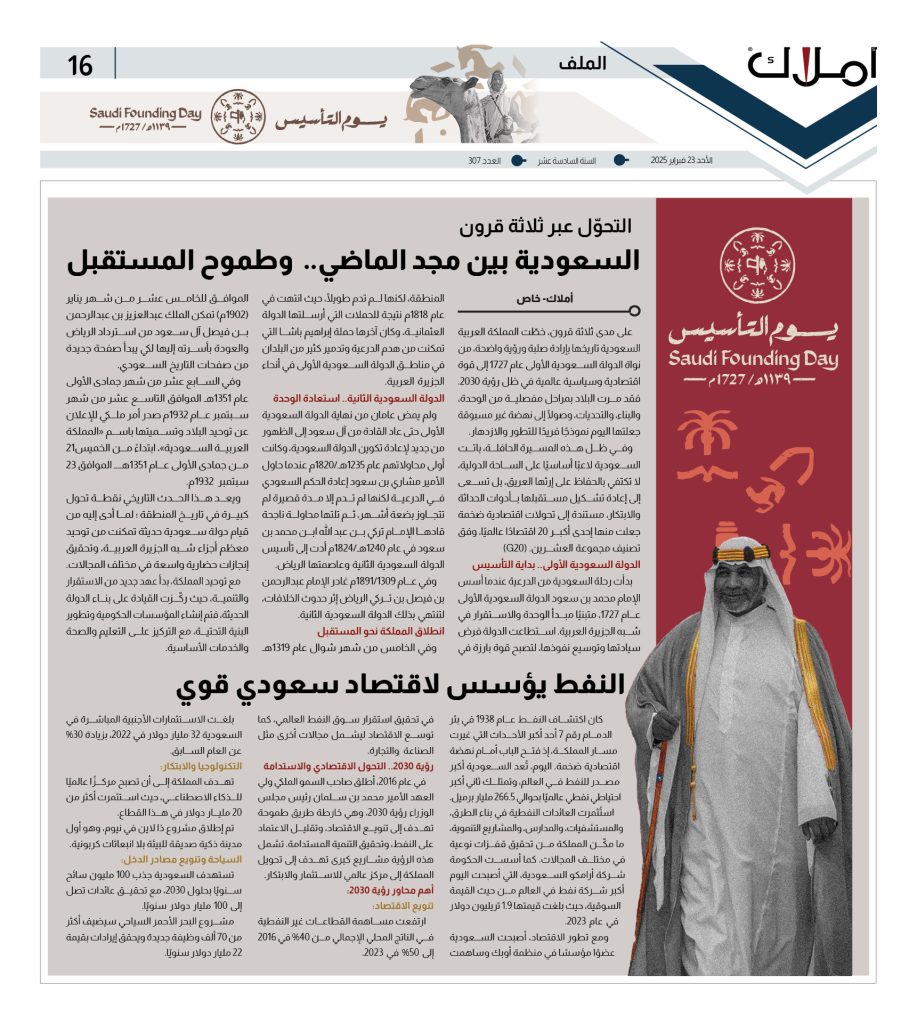
Transformation over three centuries Saudi Arabia between past glory and future ambition
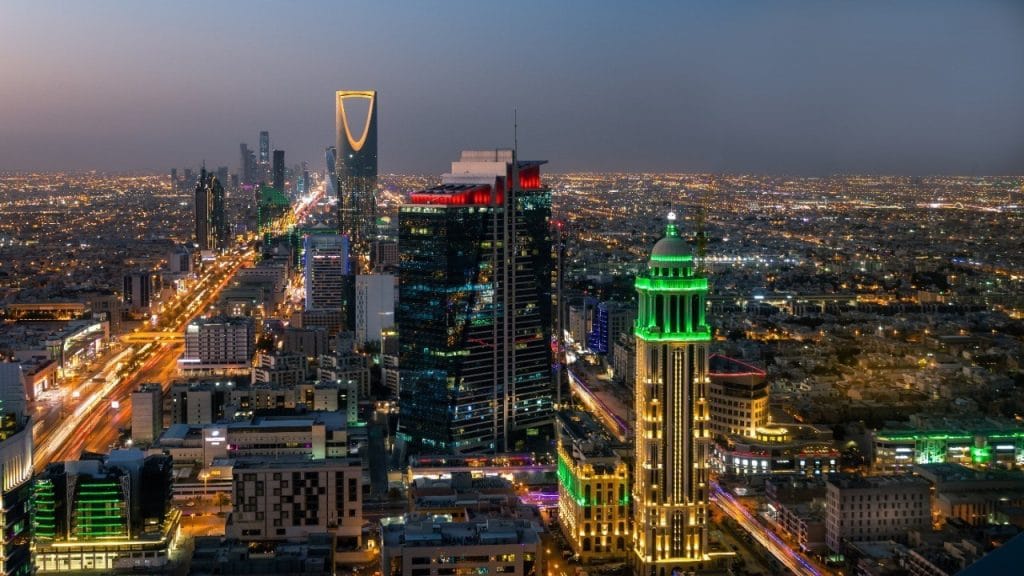
Over three centuries, the Kingdom of Saudi Arabia has written its history with a firm will and a clear vision, from the nucleus of the first Saudi state in 1727 to a global economic and political powerhouse under Vision 2030. The country has gone through pivotal stages of unity, construction, and challenges, reaching an unprecedented renaissance that has made it today a unique model of development and prosperity. <Saudi Arabia has become a key player on the international stage, not only preserving its ancient heritage, but seeking to reshape its future with the tools of modernity and innovation, based on huge economic transformations that have made it one of the 20 largest economies in the world, according to the G20 ranking. (G20)
The First Saudi State. The beginning of the foundation
The Saudi journey began in Diriyah when Imam Muhammad bin Saud founded the first Saudi state in 1727, adopting the principle of unity and stability in the Arabian Peninsula. The state was able to impose its sovereignty and expand its influence, becoming a prominent power in the region, but it did not last long, as it ended in 1818 AD as a result of the campaigns sent by the Ottoman Empire, the last of which was the campaign of Ibrahim Pasha, which managed to destroy Diriyah and destroy many countries in the areas of the first Saudi state across the Arabian Peninsula.
The Second Saudi State. Reunification
Barely two years after the end of the first Saudi state, leaders from the House of Saud reappeared to re-establish the Saudi state, and their first attempt was in 1235 AH/1820 AD when Prince Mishari bin Saud tried to restore Saudi rule in Diriyah, but it lasted only a short time, which did not exceed a few months, followed by a successful attempt led by Imam Turki bin Abdullah bin Muhammad bin Saud in 1240 AH/1824 AD, which led to the establishment of the second Saudi state with its capital in Riyadh.
Riyadh was the capital of the second Saudi state. In 1309/1891 AD, Imam Abdulrahman bin Faisal bin Turki left Riyadh due to disagreements, thus ending the second Saudi state.
Launching the Kingdom into the future
On the fifth of Shawwal 1319 AH, corresponding to the fifteenth of January (1902 AD), King Abdulaziz bin Abdulrahman bin Faisal Al Saud was able to retake Riyadh and return his family to it to start a new page of Saudi history.
On the seventeenth of Shawwal 1319 AH, corresponding to the fifteenth of January (1902 AD).
On the seventeenth of Jumada I, 1351 AH, corresponding to the nineteenth of September 1932 AD, a royal decree was issued to announce the unification of the country and its name » the Kingdom of Saudi Arabia», starting on Thursday, 21 Jumada I, 1351 AH, corresponding to September 23, 1932 AD (the first of the mizan).
This historic event is considered to be the first in the history of Saudi Arabia. This historic event is considered a major turning point in the history of the region, as it led to the establishment of a modern Saudi state that was able to unify most parts of the Arabian Peninsula and achieve wide civilizational achievements in various fields.
With the unification of the Kingdom, the era of the Kingdom of Saudi Arabia began. With the unification of the Kingdom, a new era of stability and development began, as the leadership focused on building a modern state, establishing government institutions and developing infrastructure, with a focus on education, health and basic services.
With the unification of the Kingdom, a new era of stability and development began.
Oil establishes a strong Saudi economy
The discovery of oil in 1938 at the Dammam No. 7 well was one of the biggest events that changed the course of the Kingdom, opening the door to a massive economic renaissance. Today, Saudi Arabia is the world's largest oil exporter, with the world's second-largest oil reserves at 266.5 billion barrels. <Oil revenues were invested in building roads, hospitals, schools, and development projects, enabling the kingdom to make quantum leaps in various fields. The government also established Saudi Aramco, which today is the world's largest oil company by market capitalization, valued at $1.9 trillion in 2023.
As the economy developed, oil revenues were invested in building roads, hospitals, schools, and development projects, enabling the Kingdom to make leaps and bounds. <As the economy developed, Saudi Arabia became a founding member of OPEC and contributed to the stabilization of the global oil market, and the economy expanded into other areas such as industry and trade.
Vision 2030. Economic Transformation and Sustainability
<In 2016, His Royal Highness Crown Prince Mohammed bin Salman, Prime Minister, launched Vision 2030, an ambitious roadmap aimed at diversifying the economy, reducing dependence on oil, and achieving sustainable development. This vision includes major projects aimed at transforming the Kingdom into a global center for investment and innovation.
The most important axes of Vision 2030:
Diversification of the economy:
The contribution of non-oil sectors to GDP increased from 40% in 2016 to 50% in 2023.
Non-oil sectors" contribution to GDP increased from 40% in 2016 to 50% in 2023. Foreign direct investment in Saudi Arabia reached $32 billion in 2022, up 30% from the previous year.
Foreign direct investment in Saudi Arabia reached $32 billion in 2022, up 30% from the previous year.
Technology and Innovation:
The Kingdom aims to become a global center for artificial intelligence, having invested more than $20 billion in the sector.
The Line was launched in NEOM, the first eco-friendly, carbon-neutral smart city.
The Line was launched in NEOM, the first eco-friendly, carbon-neutral smart city.
Tourism and diversification of income sources
Saudi Arabia aims to attract 100 million tourists a year by 2030, with revenues of up to $100 billion annually.
The Red Sea Tourism Project will add more than 70,000 new jobs and generate $22 billion in revenue annually.
The Red Sea Tourism Project will add more than 70,000 new jobs and generate $22 billion in revenue annually.