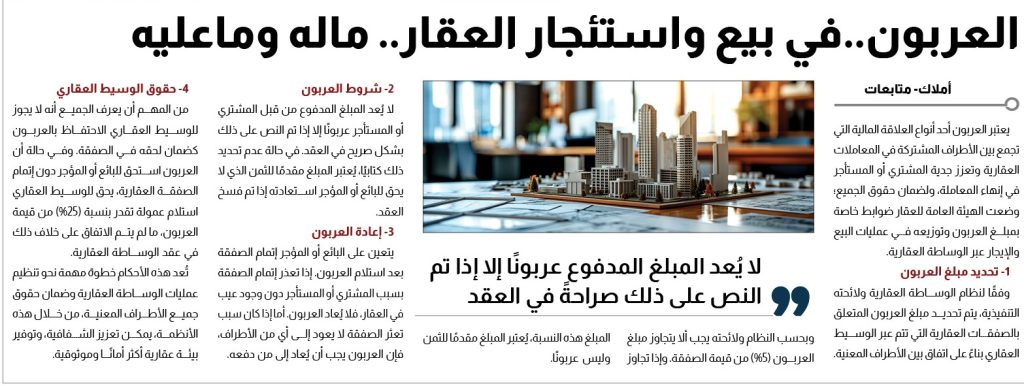

The deposit is considered one of the types of financial relationship that unites the parties involved in real estate transactions and enhances the seriousness of the buyer or tenant in ending the transaction, and to ensure the rights of all; the General Real Estate Authority has set controls on the amount of the deposit and its distribution in sales and rental operations through real estate brokerage.
1- Determining the amount of the deposit
<According to the Real Estate Brokerage Law and its Executive Regulations, the amount of the deposit related to real estate transactions conducted through a real estate broker is determined based on an agreement between the parties involved. The amount of the deposit should not exceed (5%) of the value of the transaction. If the amount exceeds this percentage, the amount is considered a down payment and not a deposit.2- Down Payment Terms
The amount paid by the buyer or lessee is not a deposit unless it is expressly stated in the contract. If this is not specified in writing, the amount is considered a down payment which the seller or lessor is not entitled to recover if the contract is terminated.
3- Return of the deposit
The seller or lessor must complete the transaction after receiving the deposit. If the transaction cannot be completed due to the buyer or tenant and there is no defect in the property, the deposit will not be returned. If the failure of the transaction is not due to any of the parties, the deposit must be returned to the person who paid it.
.
4
- The rights of a real estate broker
It is important for everyone to know that a real estate broker may not hold the deposit as security for his or her right to the transaction. In the event that the deposit is due to the seller or lessor without the real estate transaction being completed, the real estate broker is entitled to receive a commission estimated at (25%) of the value of the deposit, unless otherwise agreed upon in the real estate brokerage contract.
These provisions are a step forward in real estate brokerage. These provisions are an important step towards regulating real estate brokerage operations and guaranteeing the rights of all parties involved. Through these regulations, transparency can be enhanced and a safer and more reliable real estate environment can be created.