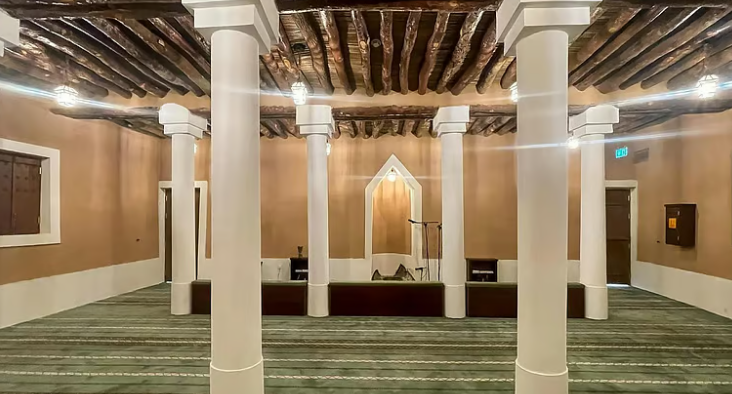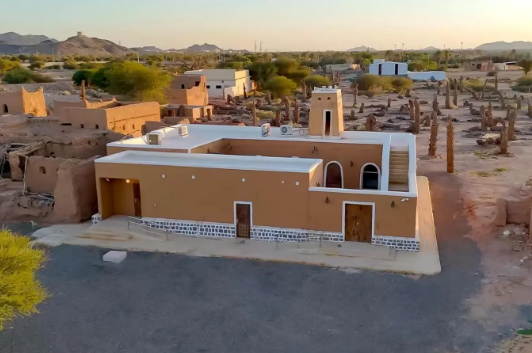

Ruweiba Mosque in Buraydah, Qassim, is one of the most prominent mosques covered by Prince Mohammed bin Salman's project to develop historic mosques in its second phase, as part of the project's efforts to preserve the authentic architectural identity of the Kingdom's historic mosques. The project implements careful development processes that preserve the distinctive materials and spatial elements of the mosque, while allowing limited additions that do not affect its unique historical character, especially its heritage roof, which consists of mud, wood, and palm leaves.
More than 130 years of history
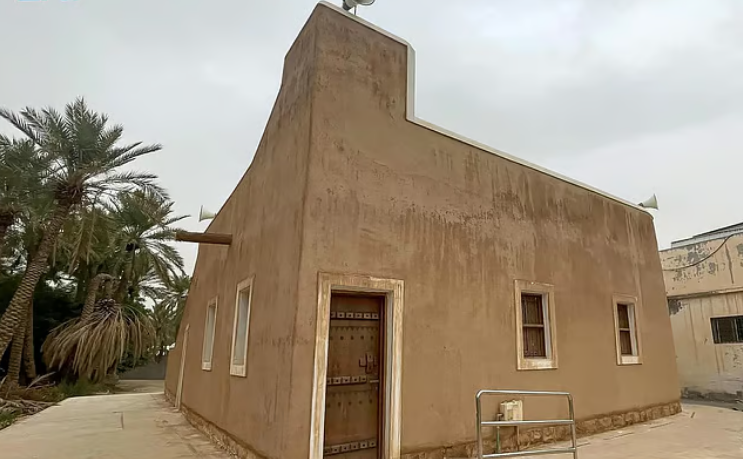
Ruweiba Mosque dates back more than 130 years and is located about 7.5 kilometers southeast of Buraydah municipality. Since its construction, the mosque has undergone only one renovation in 1364 AH and has retained its authentic heritage character. Despite the passage of time, prayers are still held there today, as it was previously a center for prayers and the study of the Holy Quran, in addition to its role as a headquarters for teaching reading, writing and various legal sciences, making it a scientific and cultural beacon for the people of the region.
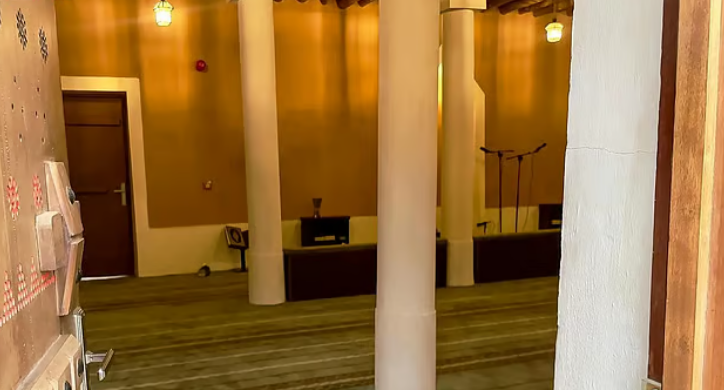
An authentic Najdi style that reflects the environment and culture
Roueiba Mosque is characterized by its traditional roof, which embodies the Najdi style of traditional architecture, known for its ability to adapt to the local environment and the hot desert climate. The structural elements of this roof - lintels, perpendicular trunks, and an asban layer covered with a clay finish - are a perfect example of Najd heritage architecture, with the final clay layer acting as an insulating material that protects the roof from rain and maintains its stability.
Before the development work. Before the development work began, the area of the mosque was 203.93 square meters, which will increase to 232.61 square meters after the completion of the restoration work, while increasing the capacity of worshipers from 60 to 74, reflecting the project's keenness to combine thoughtful expansion with the preservation of the original historical elements.
H4>
Development that combines authenticity and sustainability
<Prince Mohammed bin Salman's project to develop historic mosques is based on a methodology that balances ancient and contemporary building standards, with the aim of promoting sustainability while preserving the heritage identity. The work is carried out by Saudi companies specialized in heritage buildings, and Saudi engineers are involved to ensure that all stages of development are carried out in a way that preserves the unique architectural identity of each mosque from the moment it was established.
<a href="_COPY
The development of the Ruweiba Mosque is part of the second phase of the Historic Mosque Development Project, which was launched after the success of the first phase, which included the restoration and rehabilitation of 30 historic mosques in 10 regions. The project aims to achieve 4 main objectives, including: Rehabilitating historic mosques for worship and prayer, restoring the architectural authenticity of these mosques, highlighting the civilizational and historical dimension of the Kingdom, and enhancing the religious and cultural status of historic mosques.
The project reflects the general direction of the Kingdom's Vision 2030, which pays great attention to consolidating the cultural and civilizational dimension by preserving and utilizing the original architectural characteristics in the development of modern mosque designs, combining originality and development and enhancing the Kingdom's cultural identity. Development of historic mosques reflects the general direction of the Kingdom's Vision 2030.
Continuing the march of heritage preservation