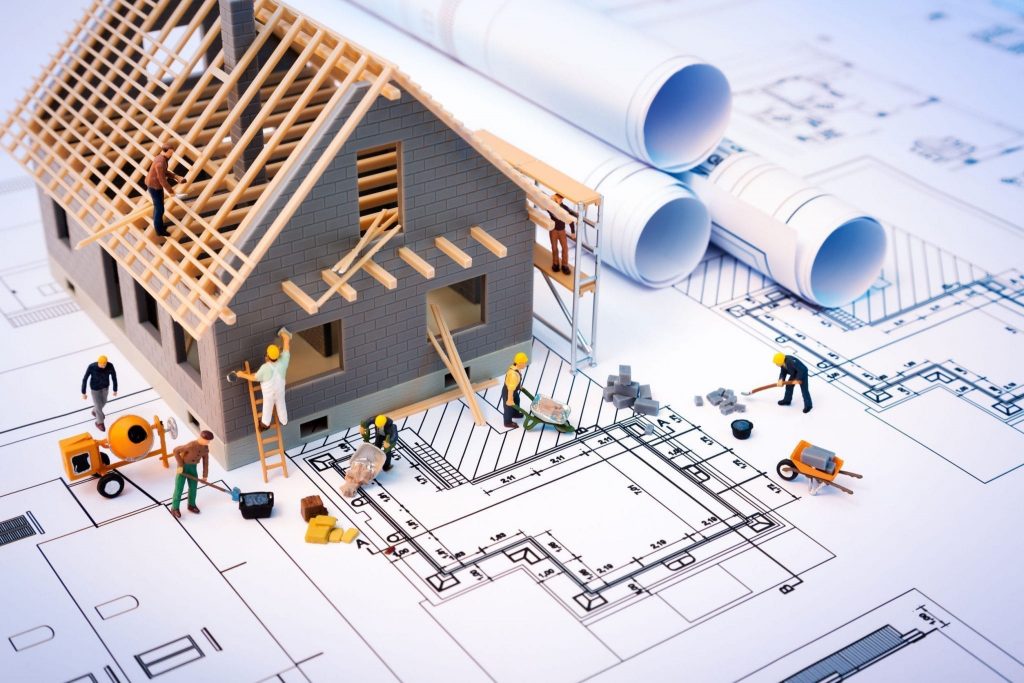

In the world of real estate, money doesn't wait for bricks and mortar to be laid before it starts moving. Often, major investment decisions are made, funding flows, and deals are finalized while projects are still under construction. This is where the importance of real estate appraisal during the construction phase becomes clear—an art that goes beyond simply calculating areas and plans; it extends to anticipating future needs, assessing potential, and measuring risks.
So how is a real estate project that has not yet been completed evaluated? What criteria do appraisers and experts rely on? Does this type of evaluation hold investment opportunities or hidden risks? The answers are in the following report.
What is property valuation during the construction phase?
It is the process of estimating the fair market value of a real estate project that is still under construction or has not been fully completed, and it depends on a set of technical, financial and operational criteria, including the project’s location, design, completion rate, approved plans, licenses, remaining construction costs and the project’s expected feasibility upon completion.
This type of assessment is a vital tool for several parties:
Real estate developers who need additional funding.
Banks that offer loans secured by the project.
Investors who are considering getting involved in the project.
Regulatory bodies that monitor the real estate market in terms of transparency and sustainability.
Technical criteria for evaluating incomplete projects:
1. Analysis of engineering and architectural plans:
The project design, number of units, type of finishing, and spaces are examined to ensure they meet market requirements and demand trends.
2. Review of licenses and legal permits:
The project must have official permits from regulatory authorities, taking into account any potential obligations or violations.
3. Percentage of completion and cost of completion:
The higher the percentage of completion, the closer the valuation will be to the full market value. If the project is in its early stages, the cost of completion and economic variables are deducted from the final valuation.
4. Project location and market dynamics:
Location plays a crucial role in the evaluation, in addition to the state of the real estate market in the area, and the prices of similar units.
5. Expected Return After Completion (DCF):
The discounted cash flow model is used to estimate future value, especially if the project is of an investment nature (commercial, administrative, tourism).
Challenges in project evaluation during construction:
Uncertainty in costs:
The costs of materials and construction processes may rise suddenly, making the financial estimate subject to change.
Implementation delays:
The project may falter due to funding or bureaucratic problems, which will affect its appeal and viability.
The assessment relies on future-oriented assumptions:
Such as occupancy rates, or sale pricing upon completion, which may not correspond to future reality.
The absence of actual performance indicators:
Unlike ready-made projects, operational data (such as actual rent or operating costs) cannot be used, which puts the evaluation in a more estimated framework.
When is it preferable to conduct an assessment during construction?
When submitting the project for bank financing.
In the event of a new investment partner entering the market.
When rescheduling debts or increasing capital.
For accounting purposes within real estate companies.
To assess the value of real estate guarantees with governmental or judicial authorities.
What is the difference between valuation during construction and traditional real estate valuation?

The role of experience in the accuracy of evaluation:
The more experience a real estate appraiser has, the better equipped they are to handle variables, assess risks, and conduct technical analysis of a project. Large institutions often employ accredited appraisal firms with specialized teams in engineering, finance, and the real estate market.
Are there international standards governing the evaluation?
Yes, many organizations adopt the standards issued by:
IVS – International Valuation Standards.
RICS – Royal Institution of Chartered Surveyors.
Gulf or local evaluation standards depending on the country.
These standards set clear frameworks for evaluating real estate assets at their various stages, and ensure integrity, professionalism and transparency.
Evaluating what has not yet been built… an art that requires knowledge and caution.
Despite the challenges, real estate appraisal during the construction phase remains a crucial element in the modern real estate development system. It serves as the compass guiding financing, determining value, and managing risks, provided it is based on thorough studies, extensive experience, and a realistic future outlook.
Ultimately, the evaluation at this stage is not just a financial estimate, but a test of confidence in the vision, planning, and execution.