في عالم يتسارع فيه تدفق الأموال وتتنوع فيه طرق المعاملات، لم تعد الجرائم المالية ترتدي زيًّا تقليديًّا، بل تتخفى خلف عقود غامضة وتحويلات ضخمة بلا مبرر. وبينما يظن البعض أن هذه التفاصيل لا تعنيهم، قد يجدون أنفسهم فجأة في مواجهة التحقيقات. فكيف تميّز النشاط المالي السليم من النشاط المشبوه؟ وما هي العلامات التي يجب التوقف عندها فورًا؟
أطلقت الهيئة العامة للعقار تحذيرات توعوية بشأن الأنشطة المالية المشبوهة، مشيرة إلى مجموعة من العلامات التي يجب أخذها على محمل الجد لحماية الأفراد والمؤسسات من التورط غير المقصود في أعمال قد تكون مرتبطة بغسل الأموال أو تمويل الإرهاب أو الاحتيال المالي.
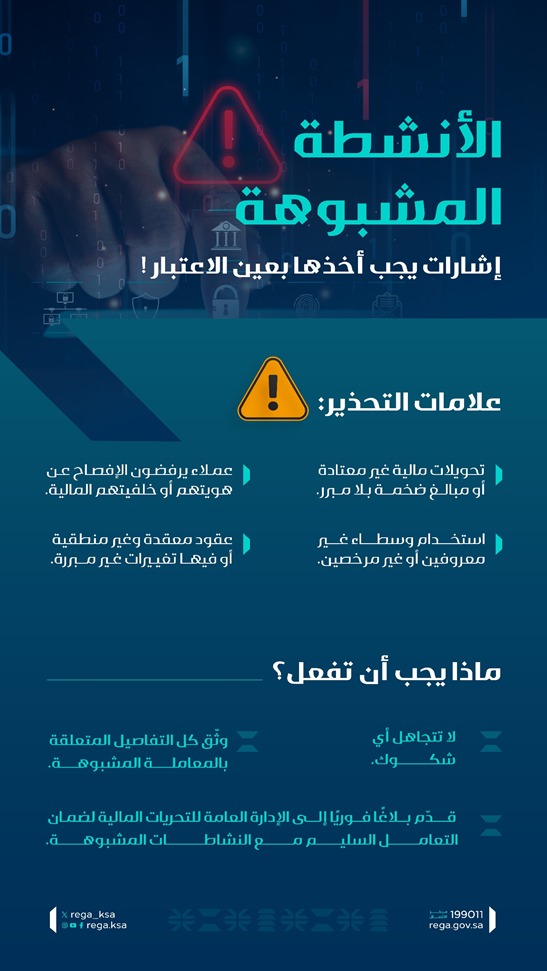
أبرز علامات التحذير:
تحويلات مالية غير مبرّرة أو بمبالغ ضخمة دون تبرير منطقي.
عملاء يرفضون الإفصاح عن هوياتهم أو مصادر أموالهم أو خلفياتهم المالية.
استخدام وسطاء غير معروفين أو غير مرخصين لإجراء التحويلات أو المعاملات.
عقود معقّدة أو صيغ غير مألوفة، أو تغيرات غير مبررة في الاتفاقيات المالية.
هذه المؤشرات لا تعني بالضرورة تورطًا مباشرًا، لكنها تُعد إشارات حمراء تستدعي مزيدًا من التدقيق، خاصة في ظل ازدياد وتيرة استخدام الأدوات الرقمية لإخفاء هوية الأطراف المتورطة.
ماذا يجب أن تفعل؟
لا تتجاهل أي معاملة تثير الشك أو تبدو غير منطقية.
قم بتوثيق كافة التفاصيل المتعلقة بالمعاملة المشبوهة.
تقدم ببلاغ رسمي إلى الإدارة العامة للتحريات المالية لضمان التعامل السليم مع مثل هذه الأنشطة.
أهمية التبليغ والتوعية:
الوعي بالأنشطة المشبوهة لا يقتصر على العاملين في القطاع المالي أو القانوني فقط، بل هو مسؤولية جماعية تشمل كل من يتعامل بالتحويلات البنكية، والعقود، والاتفاقيات التجارية. وتؤكد الجهات الرقابية أن سرعة التبليغ والمبادرة في رصد الأنشطة المشبوهة يساهمان بشكل مباشر في حماية الاقتصاد الوطني، ويحدان من تسلل الأموال غير المشروعة إلى الدورة الاقتصادية.