
As cities accelerate their march toward modernity and smart urban design, architectural facades are no longer merely silent facades; rather, they now reflect the building’s identity, the designer’s vision, and the investors" aspirations. At the heart of this visual and architectural revolution, composite aluminum panels (cladding) as the top choice for commercial and contemporary facades, combining beauty, durability, and functionality, and bringing about a quantum leap in the design of building facades design.
What are cladding panels and their components?
Cladding panels (Aluminum Composite Panels – ACP) are a material consisting of two layers of aluminum with an inner layer of plastic (usually polyethylene) or fire-resistant materials, giving the panel unique properties of lightness, durability, and ease of installation.
This technology was initially developed to meet the needs of high-end commercial buildings, but it quickly spread to include residential towers, airports, shopping centers, hospitals, and even the interior facades of luxury homes.
Advantages of Cladding
- Unparalleled Visual Beauty
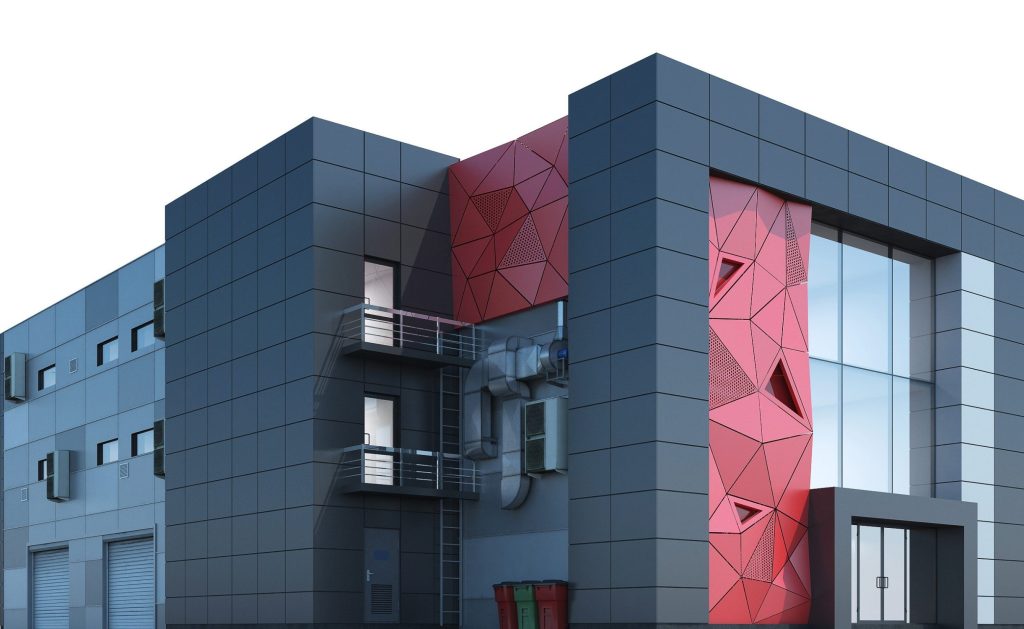
- Cladding is available in countless color combinations and can mimic materials such as wood, marble, and glass.
- It gives the building a glossy or matte appearance as desired, with the ability to design three-dimensional facades.
- High resistance to weathering
- Cladding is resistant to UV rays, corrosion, and moisture, making it ideal for hot or humid climates such as the Gulf region.
- Lightweight and easy to install
- Up to 90% lighter than traditional building materials, reducing the load on structures.
- Installs quickly and easily, saving time and costs on construction projects.
- Effective thermal and acoustic insulation
- Helps lower indoor temperatures and reduce external noise, thereby improving energy efficiency and lowering air conditioning bills.
- Low maintenance and affordable
- Resistant to dirt and rust, and easily cleaned with soap and water, making it a cost-effective choice in the long term.
Common Applications for Cladding Panels
- Facades of high-rises and commercial complexes
- Medical centers and hospitals
- Facades of showrooms and exhibition halls
- Gas stations and airports
- Luxury interior facades in villas
Cladding Shapes the Future of Building Facades
Some architects say that ”cladding panels today represent an ideal solution for facades in major real estate projects, not only in terms of aesthetics, but also because of the design flexibility and speed of installation they offer. Furthermore, continuous improvements in insulation and fire resistance properties further enhance their appeal.“
They believe that ”the shift toward cladding reflects a growing awareness of energy efficiency and smart buildings. With the availability of internationally certified, fire-resistant types, it has become possible to achieve the highest levels of safety without compromising aesthetics."
Challenges to Consider
Despite its many advantages, there are some challenges associated with the use of cladding, most notably:
The need to select fire-resistant types, especially in high-rise towers and densely populated buildings.
The importance of professional installation to prevent water leakage or structural instability.
Some low-quality types may be affected by heat and lose their color over time, so it is essential to rely on certified companies.
A Thriving Industry Locally and Globally
The cladding panel industry is experiencing rapid growth in the Arab region, especially with local manufacturers entering the market, which reduces import costs and supports local content. Amid urban expansion plans and a real estate boom, market experts expect annual growth of between 8 and 12% in demand for cladding in the Middle East and North Africa.