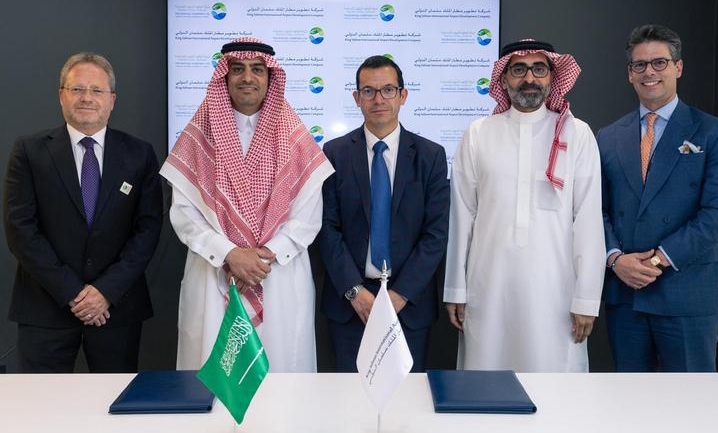

King Salman International Airport Development Company (KSIA), a Public Investment Fund (PIF) company, has announced the signing of a Memorandum of Understanding (MoU) with Biofuels Company Limited, in a move that aims to enhance cooperation in the use of biodiesel as a direct alternative to fossil diesel during the construction phase of the airport, with the possibility of expanding its use during the operational phase in the future if needed.
Under the agreement, the biofuels company will contribute to supporting KSIA by providing alternative energy solutions through B100 biodiesel fuel for use in construction works, contributing to reducing the carbon footprint and emissions resulting from the project, in line with the Kingdom's targets to achieve zero net neutrality.
Marco Mejia, Acting CEO of King Salman International Airport Development Company, said that the cooperation represents a practical step towards building an airport that respects the highest standards of environmental sustainability and reflects the adoption of alternative energy solutions that keep pace with global trends in reducing emissions, noting the importance of qualitative partnerships to achieve goals in line with the objectives of the Kingdom's Vision 2030 towards a more sustainable future.
For his part, Abdullah Al-Otaibi, Executive Director of Biofuels Company, pointed to the partnership with the King Salman International Airport Development Company, in one of the most prominent infrastructure projects in the Kingdom, in providing high-quality biofuel, which contributes to supporting the Kingdom's vision towards a more sustainable future and reduces dependence on fossil fuels within major projects.
He added that Biofuels Limited is a leading national company in the collection and refining of vegetable oils and animal fats into high-efficiency biodiesel, and provides services to a number of entities within the Kingdom through its industrial facilities in Jubail city.
This MoU is part of KSIA's commitment to implement sustainable practices that minimize environmental impact and support resource efficiency, and is an extension of its efforts to achieve the highest environmental standards since the early stages of project development.
Under the agreement, the biofuels company will contribute to supporting KSIA by providing alternative energy solutions through B100 biodiesel fuel for use in construction works, contributing to reducing the carbon footprint and emissions resulting from the project, in line with the Kingdom's targets to achieve zero net neutrality.
Marco Mejia, Acting CEO of King Salman International Airport Development Company, said that the cooperation represents a practical step towards building an airport that respects the highest standards of environmental sustainability and reflects the adoption of alternative energy solutions that keep pace with global trends in reducing emissions, noting the importance of qualitative partnerships to achieve goals in line with the objectives of the Kingdom's Vision 2030 towards a more sustainable future.
For his part, Abdullah Al-Otaibi, Executive Director of Biofuels Company, pointed to the partnership with the King Salman International Airport Development Company, in one of the most prominent infrastructure projects in the Kingdom, in providing high-quality biofuel, which contributes to supporting the Kingdom's vision towards a more sustainable future and reduces dependence on fossil fuels within major projects.
He added that Biofuels Limited is a leading national company in the collection and refining of vegetable oils and animal fats into high-efficiency biodiesel, and provides services to a number of entities within the Kingdom through its industrial facilities in Jubail city.
This MoU is part of KSIA's commitment to implement sustainable practices that minimize environmental impact and support resource efficiency, and is an extension of its efforts to achieve the highest environmental standards since the early stages of project development.
The MoU is part of KSIA's commitment to implement sustainable practices that minimize environmental impact and support resource efficiency.