A workshop held in the UAE on partnership for diversification, job creation, and ensuring sustained growth in the industrial sector among the Gulf Cooperation Council (GCC) countries and the Republic of Korea revealed the depth of investment relations between South Korea and the Gulf states, with the Gulf region garnering significant attention from Korean investors, particularly in the fields of construction and oil, and South Korea aspiring to joint industrial cooperation.
South Korean Exports to the Gulf
A paper presented by Dr. Ali Hamid Al-Mulla, Assistant Secretary-General for the Industrial Projects Sector at the Gulf Organization for Industrial Consulting, indicated that South Korean exports to the Gulf are estimated at 3.5 % of Korean exports go to the Gulf Cooperation Council (GCC) countries, and are primarily concentrated on auto parts, machinery, electrical equipment, organic chemicals, ships, boats, and floating structures, The report emphasized that there is significant potential for a substantial increase in these exports.
Gulf exports to Korea
Exports from the Gulf Cooperation Council (GCC) countries to Korea are primarily concentrated in the areas of mineral fuels, mineral oils, and their distillation products; chemical products; fertilizers; aluminum; polymers; plastic products; and sugar, and Gulf countries supplied 71.2 % of Korea’s crude oil imports and 52.4 % of its natural gas imports in 2013, in the manufacturing, electricity, transportation, and related sectors, in addition to investment opportunities in the construction sector, including the construction of highways, ports, and industrial facilities.
Gulf Attraction to Korea
In his paper, Dr. Al-Mulla noted that the Gulf investment market has succeeded in attracting South Korea, which views it as a safe haven, as we find that 39.8 % of the construction and infrastructure projects won by South Korea abroad are in the Gulf region. He considered Korean cooperation – Gulf cooperation to be unstable because it relies more on oil price volatility and the Gulf construction market than on stable foundations for bilateral cooperation. He explained that “Gulf–South Korean economic relations need to be diversified and expanded to include other industrial sectors, and cooperation between the two sides must also include the participation of medium-sized companies and entrepreneurs from the private sector.”
Future Investment Opportunities
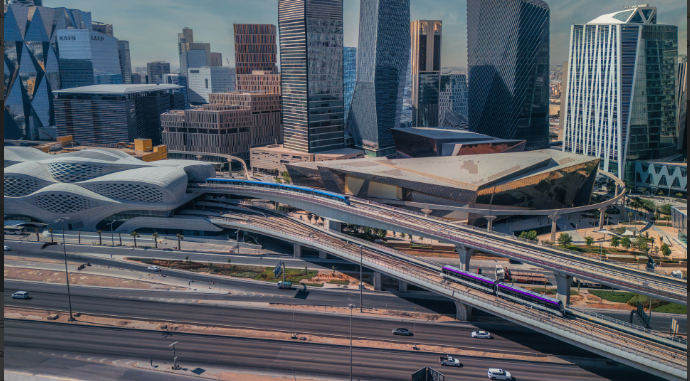
The Gulf railway sector is considered one of the most promising and forward-looking industries for Gulf-Korean cooperation, Dr. Al-Mulla added that Gulf governments offer various incentives to support small and medium-sized enterprises seeking opportunities in this sector, and that the opportunity is ripe for Korean companies to join Gulf investors in successful joint ventures, while a large number of Gulf investors are seeking to collaborate with Korean companies in the field of knowledge-based industries, particularly electronics and nanotechnology.
Highlights of the Workshop
The workshop was organized by the “Gulf Organization for Industrial Consulting” (GOIC) in collaboration with the Korea Institute for Industrial Economics and Trade(KIET). The forum focused on partnerships aimed at diversification, job creation, and ensuring sustained growth in the industrial sector between the Gulf Cooperation Council (GCC) countries and the Republic of Korea. It took place at the InterContinental Abu Dhabi Hotel (United Arab Emirates), under the patronage of the UAE Ministry of Economy and the National Economic Advisory Council (NEAC), and in cooperation with the Embassy of the Republic of Korea in the United Arab Emirates, the Korea-Arab Society (KAS), and the Korea Trade-Investment Promotion Agency (KOTRA).