
Amidst global economic shifts and continued volatility in real estate prices, investors are increasingly debating how best to achieve sustainable financial growth. While traditional real estate investment through the purchase and rental of assets remains a stable source of income that provides some form of stability, a more dynamic and aggressive trend is emerging: real estate asset rotation, a modern investment strategy that seeks to maximize returns by repeatedly repurposing assets in innovative ways.
Real estate asset rotation is a modern investment strategy that seeks to maximize returns by repeatedly and creatively repurposing assets.
Real Estate Asset Rotation
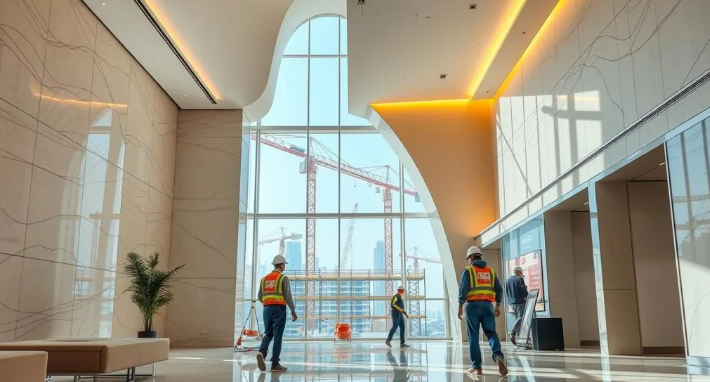
Recycling real estate assets is based on a simple yet rich idea: Real estate is not a closed income stream, but a living asset that can be reconfigured and infused with new value at every stage. The process begins with smart buying, where the investor acquires properties that are often undervalued, either due to their poor technical condition or temporary market conditions. Then comes the development phase, the core of the process, which includes infrastructure renovation, remodeling to suit market needs, and even a complete change of use, such as converting residential buildings into commercial or office buildings."
These steps are all part of the process. <These steps make the asset more attractive, allowing it to be put on the market at a higher price, and this is where the big difference between traditional investment and asset recycling comes into play. While leasing typically provides an annual return of 4 to 8 percent, asset recycling can yield capital gains of up to 20 or 40 percent over a single investment cycle, making the cumulative rate of return on capital much higher in the medium to long term.
These steps combine to make the asset more attractive, allowing it to be placed on the market at a higher price.
Quick Profits
It's not just about making quick profits, it's about a new philosophy in real estate investing, one that believes that capital can work more productively if it's constantly moving rather than resting on fixed returns. Reinvesting the proceeds from the sale of assets into new opportunities enhances an investor's ability to grow exponentially, giving them a competitive advantage in a rapidly changing market.
Seizing Opportunities
However, asset rotation is not risk-free. Economic fluctuations or a sudden recession could delay sales or reduce expected profits. High development and construction costs can drain a significant portion of the capital, especially if the process is not managed with careful calculations. In addition, an investor needs a strong marketing network and extensive field experience to seize opportunities and overcome challenges.
Strategic Vision
Despite these challenges, real estate market experts assert that asset rotation is today one of the most viable investment trends for rapid and sustainable growth, provided it is based on a clear strategic vision and sound financial management. It combines two elements that are rarely combined in real estate investment: The relative safety of real estate as a fixed asset, and the high dynamism of continuous repurposing and development.
<The future of real estate investment will not be limited to fixed rental returns, but rather the ability of the investor to turn every asset he owns into a new project that is reworked and developed in a way that opens up unlimited prospects for profit. It is a paradigm shift from "holding real estate“ to ”operating real estate“ as an active financial instrument, making real estate asset recycling not just an investment option, but a strategic approach for a more resilient and profitable future.
The future of real estate investment will not be limited to fixed rental returns.