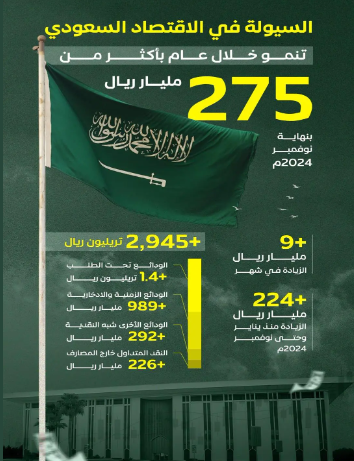

حققت مستويات السيولة “النقود المتاحة” في منظومة الاقتصاد السعودي، نموًا سنويًا بقيمة تُقدر بـ 275,155 مليار ريال، وبنسبة 10.3%، لتبلغ مستوى 2,945,656 مليون ريال بنهاية شهر نوفمبر 2024م، مقارنة بـ 2,670,501 مليون ريال لنفس الفترة المماثلة من العام 2023م، ويعكس مستوياتها عرض النقود بمفهومه الواسع والشامل (ن3)، وذلك وفق ما أوضحته بيانات النشرة الإحصائية الشهرية للبنك المركزي السعودي لشهر نوفمبر.
وحقق مستوى السيولة نموًا شهريًا بقيمة تجاوزت الـ 9,567 مليارات ريال، وبنسبة 0.3%، مقارنة بـ 2,936,089 مليون ريال بنهاية شهر أكتوبر 2024م.
كما سجلت السيولة نموًا منذ بداية العام 2024م وحتى نهاية شهر نوفمبر من نفس العام، بقيمة تجاوزت الـ 224,699 مليار ريال وبنسبة 8.3%، مقارنة بـ 2,720,957 مليون ريال بنهاية شهر يناير.
وتُعد تلك المستويات من السيولة القوية محركًا للمنظومة الاقتصادية والتجارية، ومساهمة في تحقيق معدلات إيجابية بمسيرة التنمية الاقتصادية.
وباستعراض المكونات الأربعة لعرض النقود (ن3) بمفهومه الواسع والشامل فقد سجلت “الودائع تحت الطلب” التي تُعد الأكبر مساهمة في الإجمالي بنسبة 48.8%، وبقيمة 1,436,392 مليون ريال بنهاية شهر نوفمبر 2024م، بينما سجلت “الودائع الزمنية والادخارية” 989,986 مليارات ريال، حيث تُعد ثاني أكبر المساهمين في إجمالي عرض النقود بنسبة 33.6%.
وبلغت “الودائع الأخرى شبه النقدية” مستوى 292,630 مليار ريال بنسبة مساهمة 9.9% في إجمالي عرض النقود، لتُعد ثالث أكبر المساهمين، وجاء رابعًا، “النقد المتداول خارج المصارف” بقيمة 226,647 مليار ريال، بنسبة مساهمة بلغت نحو 7.7% في إجمالي عرض النقود.
يشار إلى أن الودائع شبه النقدية تتكون من ودائع المقيمين بالعملات الأجنبية، والودائع مقابل الاعتمادات المستندية، والتحويلات القائمة، وعمليات إعادة الشراء (الريبو) التي نفذتها المصارف مع القطاع الخاص.
كما تحتوي السيولة المحلية على (ن1) الذي يشمل النقد المتداول خارج البنوك، إضافةً إلى الودائع تحت الطلب فقط، و (ن2) يشمل (ن1) إضافة إلى الودائع الزمنية والادخارية، والتعريف الواسع (ن3) يشمل (ن2) إضافة إلى الودائع الأخرى شبه النقدية.