By: Ahmed Al-Shimi
Exclusive — Amlak
Saudi Real Estate Sector Most Attractive to Investors, Backed by a Strong Economy
Mortgage Mechanisms Boost High Demand in Both the Short and Long Term
Residential real estate accounts for 70% of total economic activity, and the government is working to narrow the gap between supply and demand
3% is the private sector’s share of the mortgage market
Development of the hospitality sector is a key driver for the real estate sector’s recovery
Rising land prices and construction costs have dashed dreams of home ownership
The British magazine Middle East Monitor reported that while global real estate markets have experienced a notable slowdown over the past 18 months, the Kingdom of Saudi Arabia has maintained its position as one of the largest economies in the Middle East, boasting a highly diversified real estate sector that attracts investors both domestically and internationally.
Based on the unique structure of the Saudi economy—supported by massive oil revenues and the government’s efforts to diversify its sources of income—as well as the growing population and high rates of expatriate employment, which account for approximately 28% of the total population, demand for real estate and housing of all types is rising. However, the main challenge is how to manage massive government spending in a way that alleviates the housing crisis and makes it easier for citizens to access housing units.
Although the recent period has seen a sort of stagnation due to government decisions to regulate the expatriate workforce, rising prices of construction materials, and the layoff of more than 100,000 workers, as well as rising labor demand and a 15% increase in wages—with contractors asserting that these measures could hinder construction companies” ability to complete projects valued at approximately 3 trillion Saudi riyals by 2020—
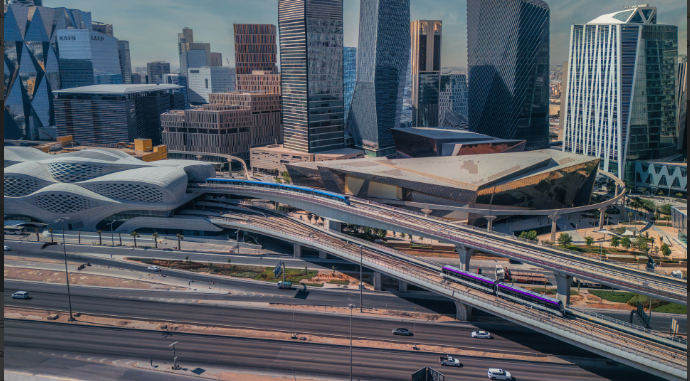
The government has allocated approximately 65 billion riyals for infrastructure projects, an increase of 16% over 2012, including 30 billion riyals for developing the road network and constructing ports, marine terminals, and airports—all of which create a favorable environment for the real estate market to flourish.
Residential real estate accounts for about 70% of total real estate activity, and despite the efforts of the government of the Custodian of the Two Holy Mosques—may God preserve him—to provide housing units and inject massive funding, the significant population growth poses an obstacle to bridging the gap between supply and demand, as the population is expected to reach 29 million by 2015, Furthermore, the mortgage laws, mechanisms, regulations, and procedures recently adopted by the government will further fuel the inherently high demand for real estate, which is likely to continue at the same pace in the medium and long term.
Experts explain that mortgage mechanisms provide a clear and transparent framework for financing the purchase of residential and commercial real estate, creating a secure business environment that complies with international standards, in addition to increasing market liquidity, reducing disputes, and establishing sound rules for transactions, which in turn boosts confidence among developers and buyers.
These government measures should encourage private-sector participation in the real estate finance market; however, private institutions” participation remains at no more than 3%, compared to 50% in developed countries, 7% in the UAE, and 6% in Kuwait.
The hospitality sector is one of the strongest drivers of real estate activity, particularly since it is largely insulated from changes and fluctuations in the local and global markets, with 50% of the Kingdom’s tourism revenue coming from religious tourism; the magazine described the government’s measures in this regard as “very encouraging.”
Estimates project that the Kingdom’s real estate market will grow by 30% by the end of this year, a rate higher than that of other real estate markets in the region; in Egypt, the rate stands at 13%, in the UAE at 25%, and 12% in Qatar. Nevertheless, the Kingdom needs to build 300,000 housing units over the next five years and 973,000 units by 2015.
Real estate experts emphasize that rising land prices remain a problem in the Saudi market that requires a solution, calling for strict mechanisms to prevent unregulated speculation that ultimately leads to price increases without market justification, noting that this problem has made the dream of owning a single-family home unattainable for a large segment of the population.
Consequently, many real estate development companies have turned to building multi-story residential buildings (apartment complexes), as this segment has been one of the most active markets recently, with a large proportion of consumers gravitating toward it to avoid the exorbitant costs associated with building a single-family home.
The magazine concludes its report by stating that government housing programs will generate numerous real estate opportunities and significantly curb price increases, as well as meet the housing needs of a broad segment of the population. Furthermore, they will reduce demand for land, leading to a noticeable decline in prices in the coming period.